Comparing lengths Extra Challenge Math Worksheets for Ages 6-9
6 filtered results
-
From - To
Enhance your child’s mathematical skills with our "Comparing Lengths Extra Challenge Math Worksheets" designed for ages 6-9. These engaging worksheets offer a variety of exercises that empower young learners to explore and compare lengths, developing their measuring and analytical skills. Each worksheet is thoughtfully crafted to present fun challenges, encouraging kids to think critically while using everyday objects. With vibrant visuals and creative scenarios, your child will enjoy learning as they build a solid foundation in comparison and measurement concepts. Perfect for supplementary practice at home or in the classroom, these worksheets promise to make mastering lengths an exciting adventure!
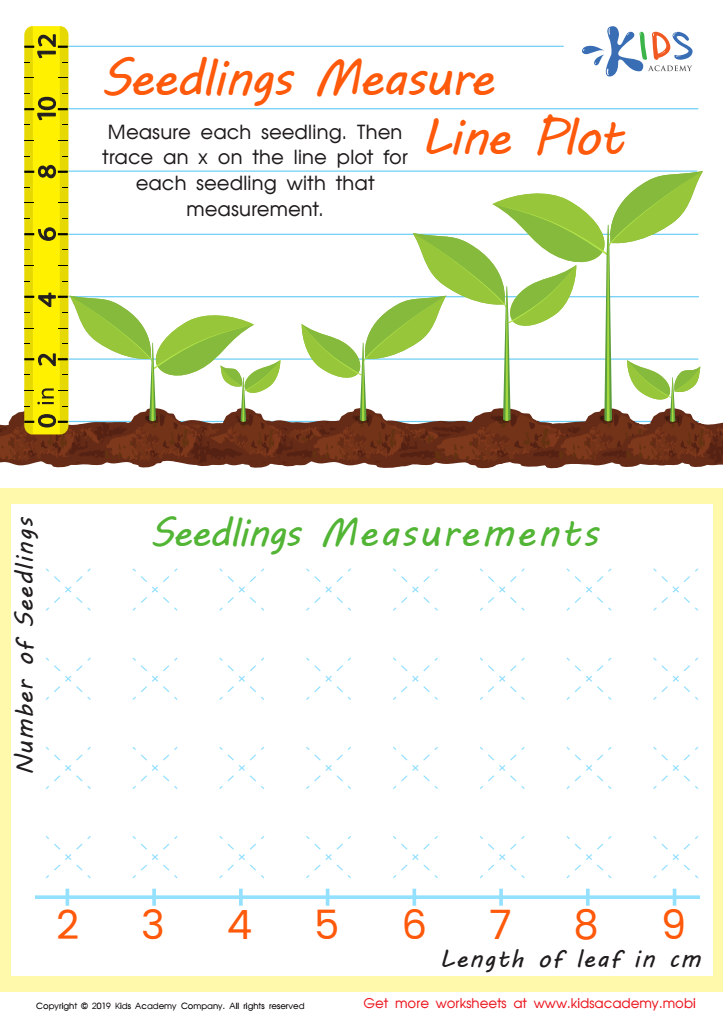
Seedling Measure Line Plot Worksheet
 Assign to My Students
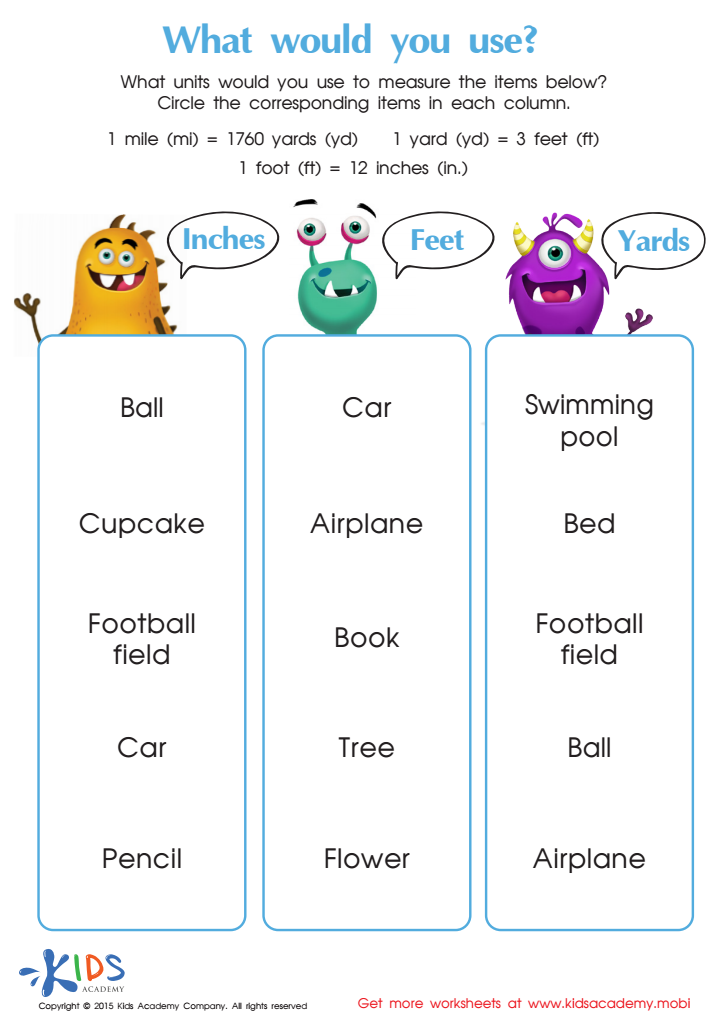
Learning about measuring objects in inches, feet and yards Worksheet
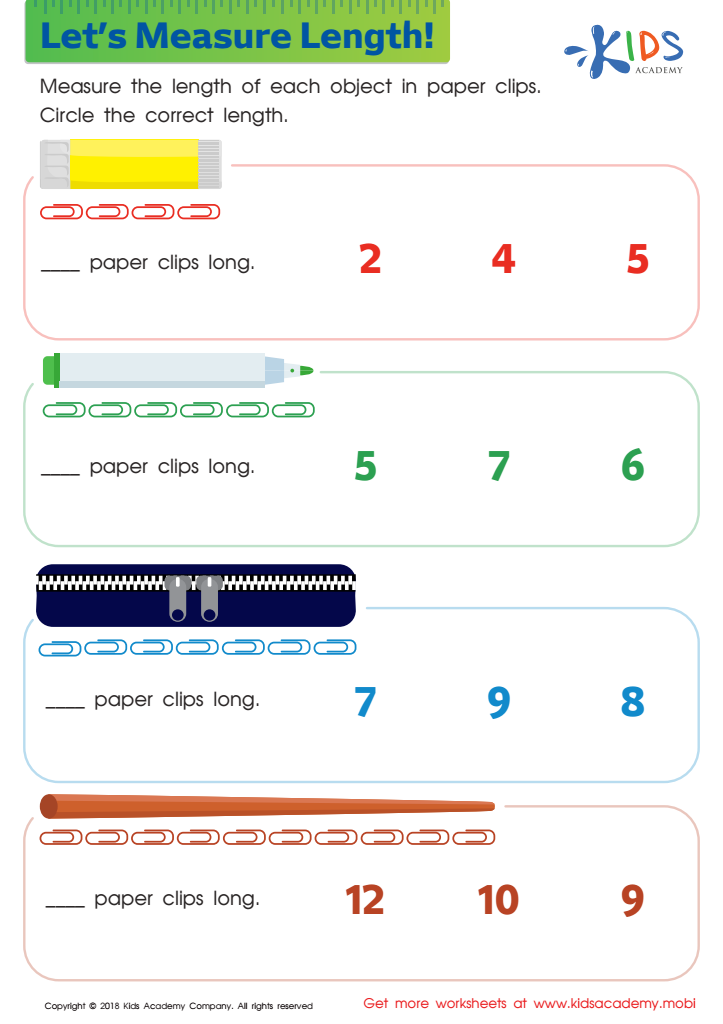
Lets Measure Length Worksheet
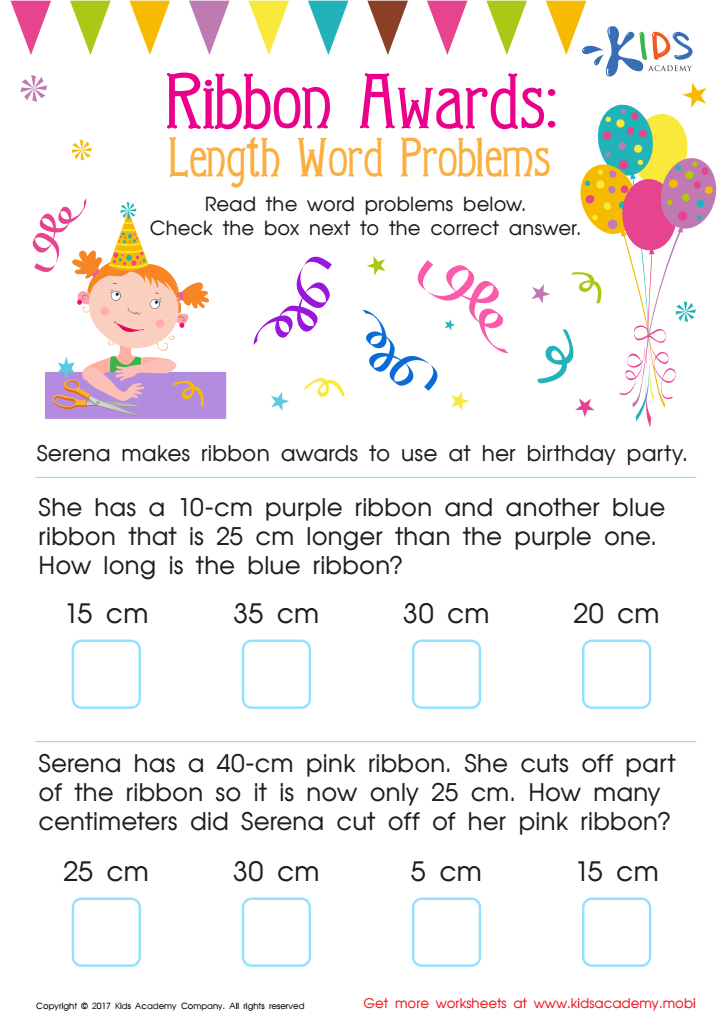
Length Word Problems Worksheet
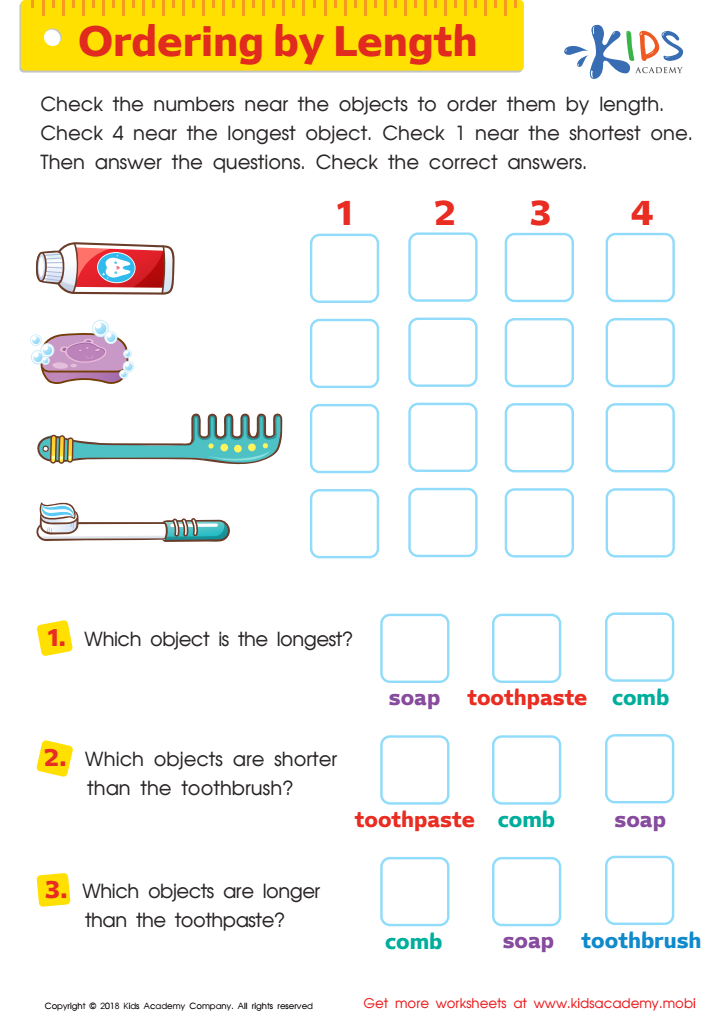
Ordering by Length Worksheet
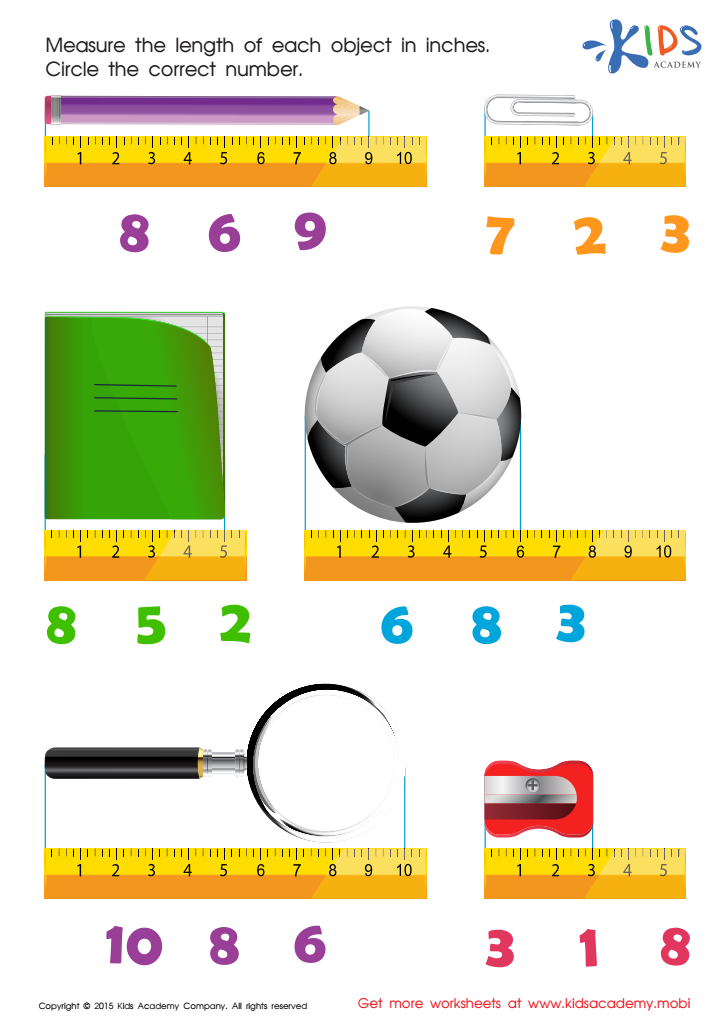
Learning measuring objects in inches Worksheet






Comparing lengths is a fundamental mathematical skill that young learners aged 6-9 need to develop, as it lays the groundwork for understanding measurement and spatial reasoning. Parents and teachers should care about engaging children in comparing lengths because it fosters critical thinking and problem-solving abilities. When children measure and compare different objects, they learn to approach problems methodically and make logical connections between numerical values and physical attributes.
Moreover, this skill transcends the classroom and applies to everyday life scenarios, such as cooking, crafting, and even understanding distances. This functional literacy in measurement helps children make sense of the world around them, enhancing their confidence and independence.
Additionally, incorporating engaging, hands-on activities in length comparison can ignite a child's interest in mathematics, making it more approachable and enjoyable. Such activities can also encourage collaboration, as children can work together to share their findings and strategies.
By investing in comparing lengths, parents and teachers are not only questioning conventional math practices but aiming to create a solid foundation for future math skills. Ultimately, this skill promotes a holistic approach to learning, encouraging children to engage with math actively and meaningfully, cultivating a future generation prepared for complex problem-solving.