
Time reading skills Extra Challenge Time Worksheets for 7-Year-Olds
5 filtered results
Difficulty Level
Grade
Age
-
From - To
Subject
Activity
Standards
Enhance your child's time-reading abilities with our Extra Challenge Time Worksheets designed specifically for 7-year-olds! These engaging resources will help young learners develop essential skills in reading analog clocks, understanding time concepts, and solving time-related problems. Our worksheets offer a variety of challenges that encourage critical thinking and foster independence in learning. With colorful visuals and interactive formats, children will enjoy mastering time-telling while improving their mathematical reasoning. Perfect for at-home practice or classroom use, these worksheets are an excellent way to ensure your child builds confidence and enthusiasm in their time-reading skills. Explore our collection now!
Favorites
With answer key
Interactive
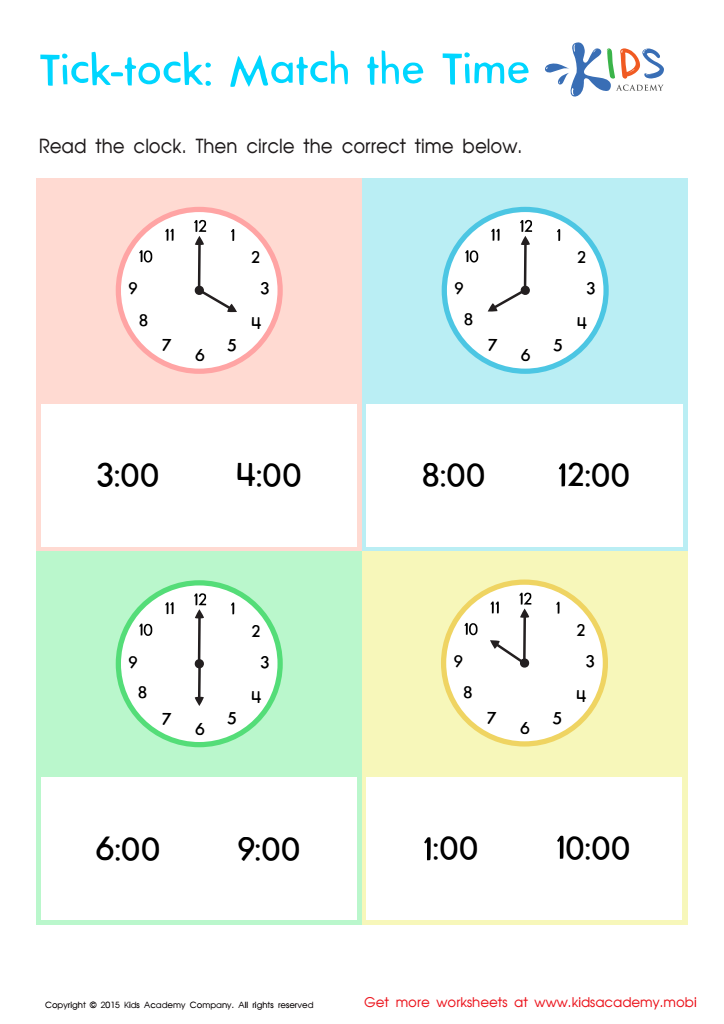
Telling The Time Worksheet: Part 4
Test your skills in telling the time! Circle the right time on 4 analog clock faces.
 Assign to My Students
Telling The Time Worksheet: Part 4
Worksheet
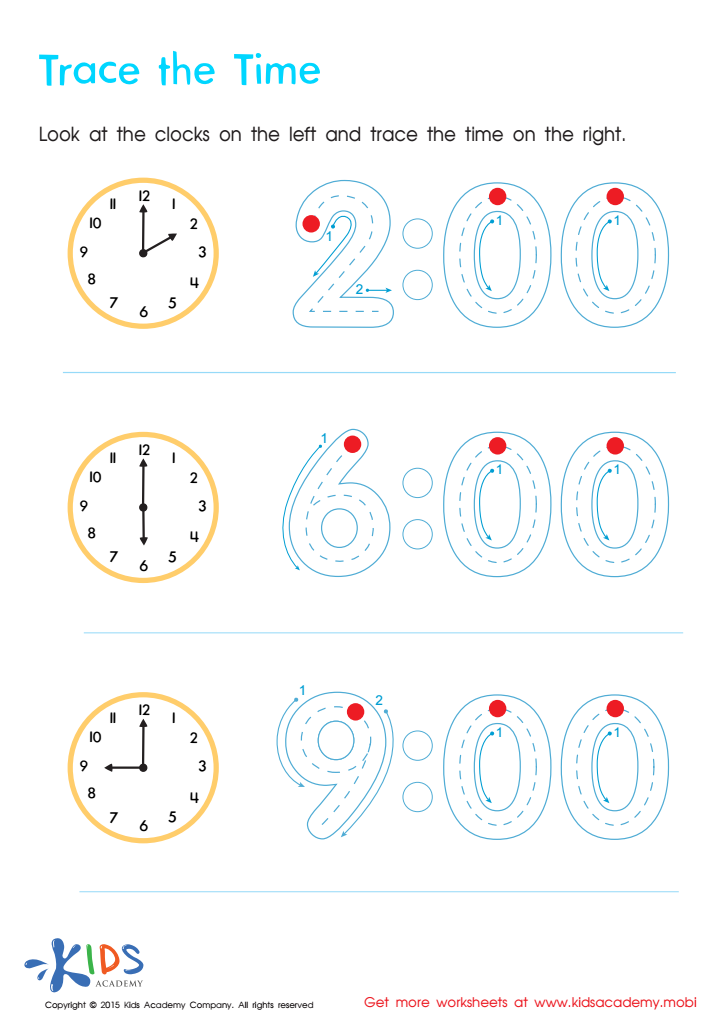
Telling The Time Worksheet: Part 2
Help your kids learn to tell the time with this free math worksheet from Kids Academy. Have them look at the clock faces and trace the time on the right - is it a full hour or half an hour? Get more practice with our wide selection of math worksheets for kindergarten.
Telling The Time Worksheet: Part 2
Worksheet
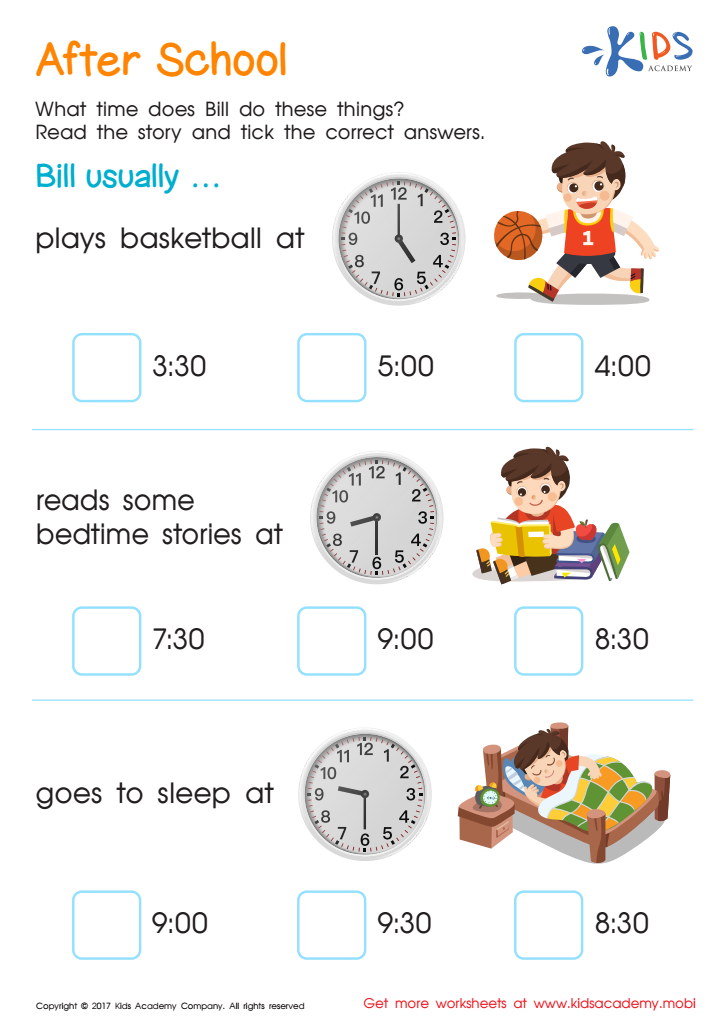
After School Time Printable
Meet Bill, a fun character who does the same things as all of us! This time-telling printable worksheet, 'After School', is an enjoyable way for your child to get familiar with Bill. It's a quick and cute activity to help understand the clocks and learn more about this new friend.
After School Time Printable
Worksheet
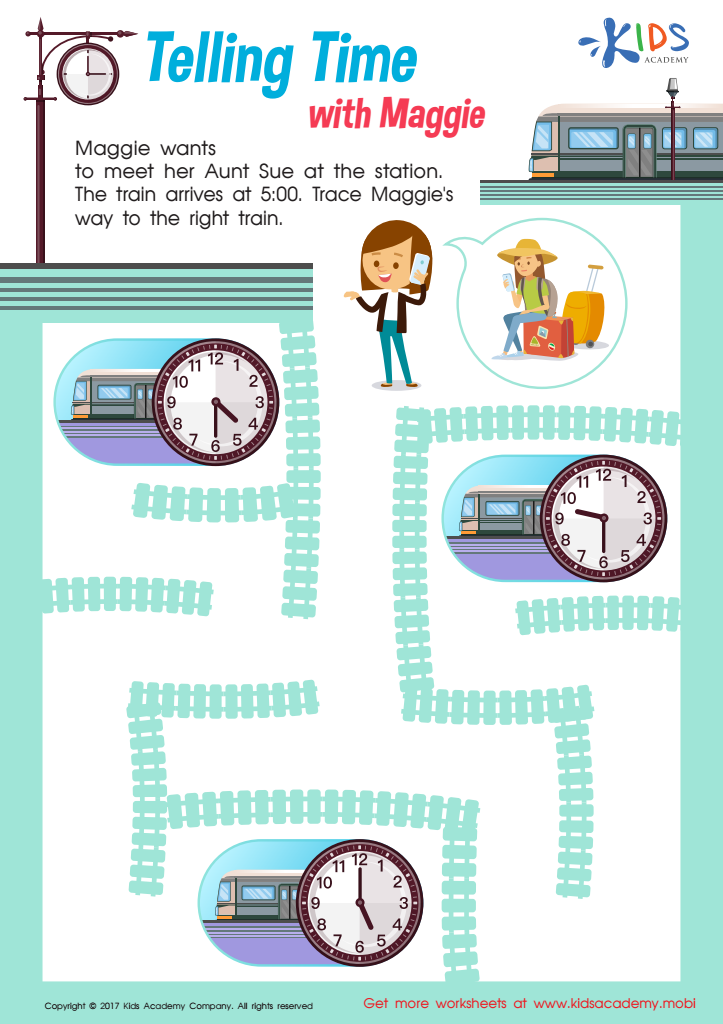
Telling Time With Maggie Time Worksheet
Help Maggie catch her train! Navigate the maze and read clocks to get her to her destination. Join her on a fun time-telling adventure with this puzzling worksheet. Your child will love it!
Telling Time With Maggie Time Worksheet
Worksheet
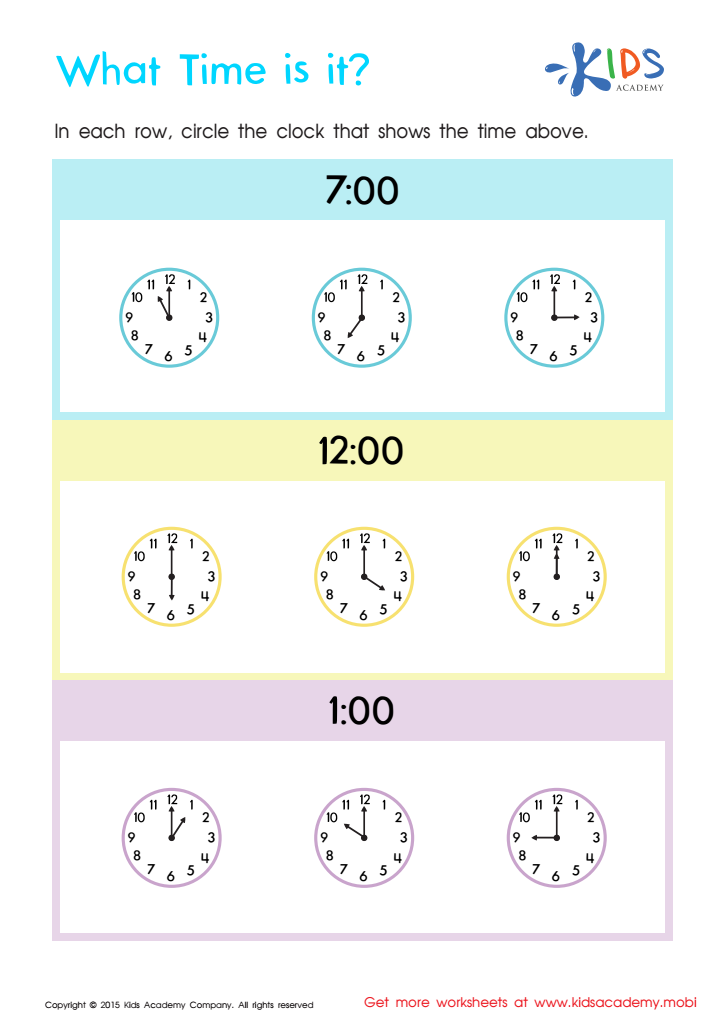
Telling The Time Worksheet: Part 3
Make learning to read clocks fun with our free printable worksheets! Have kids circle the clocks that show the time, remembering that the short hand is for hours and the long one is for minutes. For more worksheets, visit Kids Academy and explore the wonderful world of math with your little learners.
Telling The Time Worksheet: Part 3
Worksheet
Join Kids Academy for Free
Who is primarily going to use this learning content?






Parents and teachers should prioritize Time reading skills for 7-year-olds because these foundational skills are crucial for a child’s overall development and daily life. At this age, children are beginning to establish their independence and understanding of the world around them. An ability to read and interpret time not only helps them manage daily activities but also fosters a sense of responsibility and self-management.
Moreover, mastering time reading skills enhances a child's math competencies, as understanding clocks involves counting and recognizing numerical patterns. As children approach more complex mathematical concepts, a strong grasp of time can deepen their analytical thinking.
In addition, being able to read time accurately encourages punctuality and awareness of schedules, which are essential soft skills for academic success and future endeavors. Children learn to appreciate the value of time management, which can lead to improved focus and productivity.
Lastly, Time reading skills can facilitate discussions about routines and planning, ultimately strengthening the parent-child or teacher-student relationship. By engaging with aspects of time reading, adults can create supportive environments that promote growth and confidence in young learners. Hence, fostering these skills equips children for academic success and prepares them for the demands of modern life.








