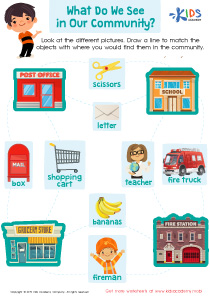
Mental math skills Extra Challenge Multiplication Worksheets for 8-Year-Olds
3 filtered results
-
From - To
Boost your child's mental math skills with our Extra Challenge Multiplication Worksheets designed specifically for 8-year-olds! These engaging and stimulating worksheets promote quick, efficient thinking and help young learners master multiplication without relying on calculators. With a variety of fun exercises, your child will develop confidence in their mathematical abilities while tackling challenges appropriate for their age group. Perfect for both classroom use and at-home practice, our resources are tailored to reinforce multiplication concepts and encourage a love for math. Empower your child to think strategically and enhance their problem-solving skills with our thoughtfully crafted mental math challenges today!
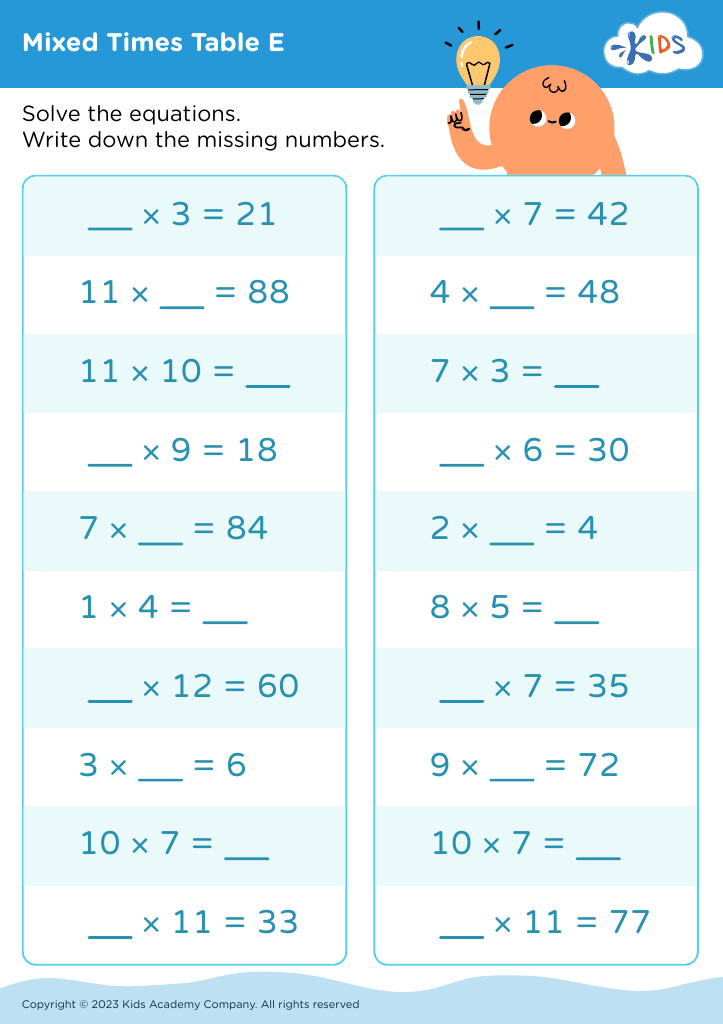
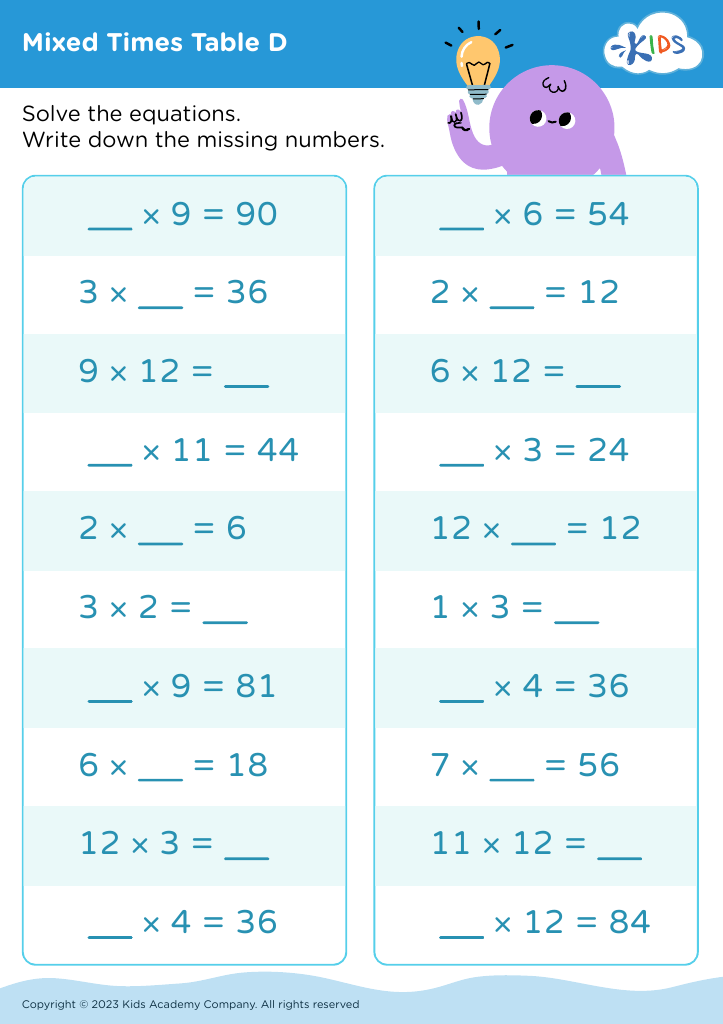
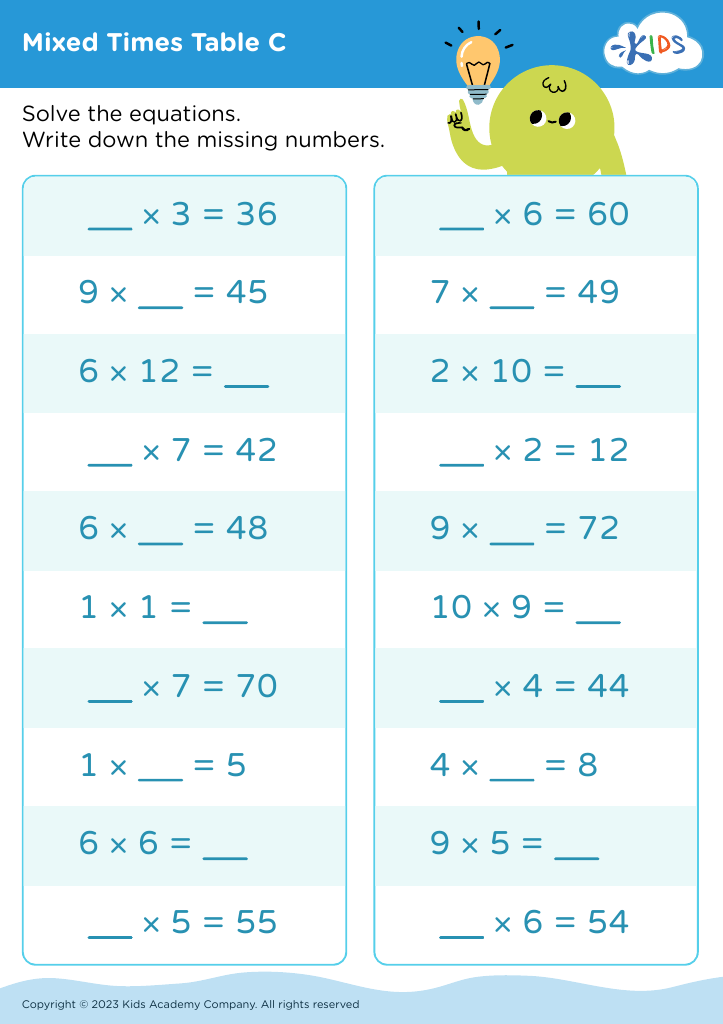








Mental math skills, particularly in multiplication, are essential for 8-year-olds as they form the building blocks for more advanced mathematical concepts. When parents or teachers emphasize these skills, they help children develop quick thinking and enhance their problem-solving abilities. Mastering multiplication through mental math fosters number sense, allowing kids to understand relationships between numbers and improve their overall mathematical fluency.
Moreover, mental math promotes confidence in young learners. When children can perform calculations in their heads, they are more likely to participate actively in math-related activities, reducing anxiety around problem-solving. This competence not only aids progression in math but also has transversal benefits in critical thinking and creativity.
An extra challenge, such as advanced multiplication techniques, further stimulates cognitive development. It encourages kids to think critically, learn strategies to simplify complex problems, and build resilience through practice and perseverance. Additionally, mastering these skills prepares them for real-life applications, such as budgeting, timing, or cooking, where quick calculations are necessary.
Overall, nurturing mental math skills in children equips them with invaluable tools for academic success and daily life, making it crucial for parents and teachers to prioritize this vital area of learning.