Word Recognition Extra Challenge Writing Worksheets
3 filtered results
Difficulty Level
Grade
Age
-
From - To
Subject
Activity
Standards
Enhance your child's reading and writing skills with our "Word Recognition Extra Challenge Writing Worksheets." Designed for early learners, these worksheets provide a fun and engaging way to improve word recognition through various challenging activities. Children will practice identifying, writing, and using words in context, fostering both literacy and creativity. Perfect for home or classroom use, these worksheets are suitable for kids seeking an extra challenge in word recognition. Each page encourages cognitive development while making learning enjoyable. Empower your child to become a confident reader and writer by exploring our diverse and stimulating activities today!
Favorites
With answer key
Interactive
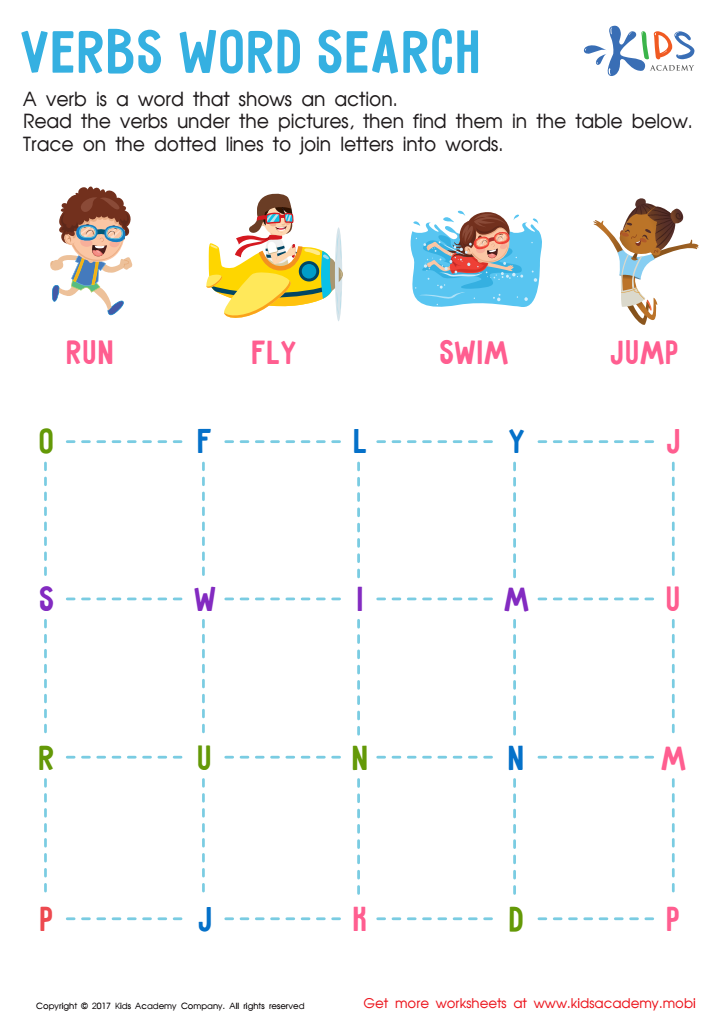
Verbs Word Search Worksheet
Ask your child if they understand the meaning of the word "verb". If not, explain that it's a word that shows an action. Give examples of familiar verbs. Then look at the pictures in the tracing sheet and read the words. Ask your child to follow the dotted lines to find the hidden words. Perfect tool to teach spot and use verbs!
 Assign to My Students
Verbs Word Search Worksheet
Worksheet
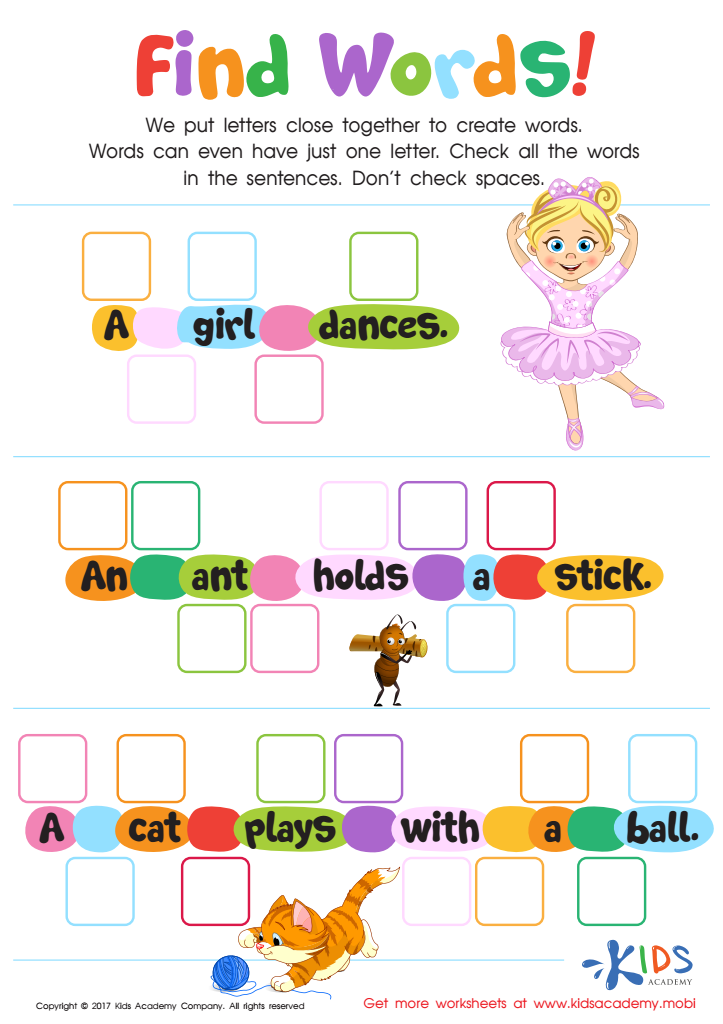
Find Words Worksheet
Help your little learner recognize that one letter words can be words too using this fun worksheet! As they work on it, they'll learn how to spot the gaps between words and become more familiar with written language. Download it now and get them started!
Find Words Worksheet
Worksheet
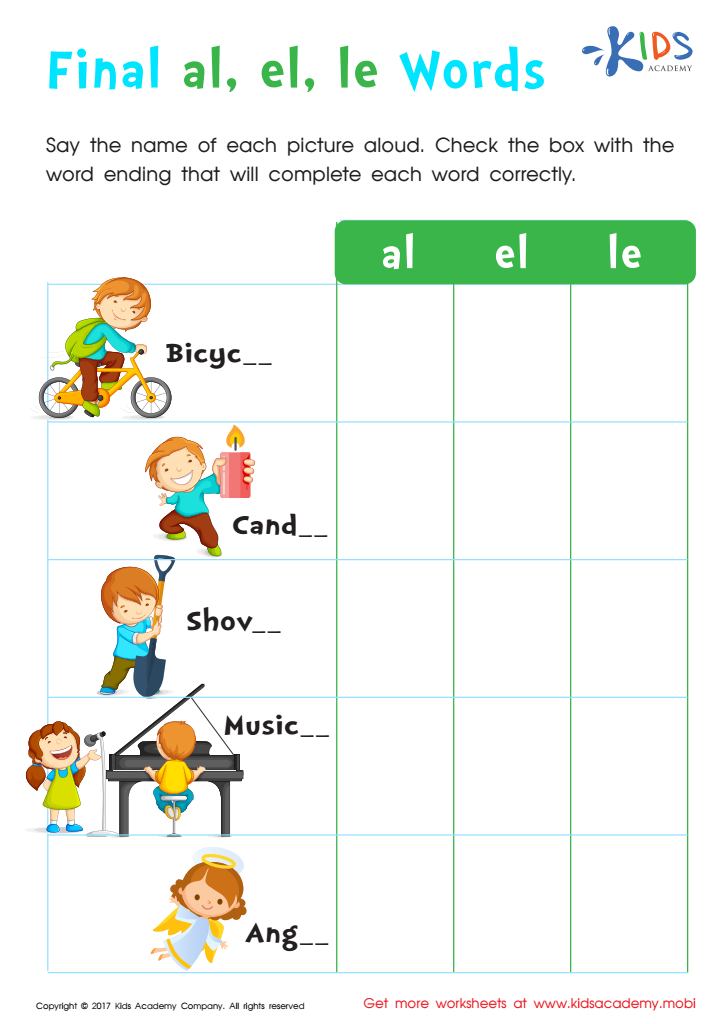
Spelling Words Ending with –le, –el and –al Worksheet
Spelling tricky words with the same ending sounds can be fun with this worksheet! Kids learn to spell -le, -el, and -al words while enjoying colorful pictures. It's a great way to refine their usage of tricky word endings.
Spelling Words Ending with –le, –el and –al Worksheet
Worksheet
Join Kids Academy for Free
Who is primarily going to use this learning content?







Word Recognition Extra Challenge Writing is an essential tool for fostering literacy skills in early education. Parents and teachers should care about this practice for several reasons.
Firstly, word recognition is foundational for reading fluency. When students can quickly identify words, they comprehend text better, leading to a more enjoyable learning experience. Extra challenge writing activities encourage students to retrieve and use challenging vocabulary in context, reinforcing their understanding and retention.
Moreover, engaging students in writing helps develop their expressive language skills. It encourages them to think critically about word meanings, fosters creativity, and promotes applied literacy. Writing also enhances fine motor skills, especially in younger learners, providing an opportunity for an integrated learning approach.
Additionally, as literacy research underscores the significance of early intervention, implementing these extra challenges equips children with necessary strategies to tackle more complex texts in the future. It cultivates a growth mindset—embracing challenges as opportunities to learn.
Ultimately, Word Recognition Extra Challenge Writing equips students with essential skills, preparing them for academic success and instilling a love for reading and writing that can last a lifetime. By prioritizing this practice, parents and teachers collaborate to build a strong literacy foundation for their children.