Handwriting improvement Kindergarten ABC Letters Worksheets
3 filtered results
Difficulty Level
Grade
Age
-
From - To
Subject
Activity
Standards
Discover our engaging Handwriting Improvement Kindergarten ABC Letters Worksheets, designed to help young learners master their handwriting skills while enjoying the process! These worksheets feature fun activities that focus on letter formation, stroke practice, and recognition of uppercase and lowercase letters. With a variety of exercises tailor-made for kindergarteners, children will gain confidence in their writing abilities and improve their fine motor skills. Perfect for teachers and parents alike, our printable worksheets foster a love for learning and encourage self-expression through writing. Start your child’s handwriting journey today and watch them flourish in their literacy skills!
Favorites
With answer key
Interactive
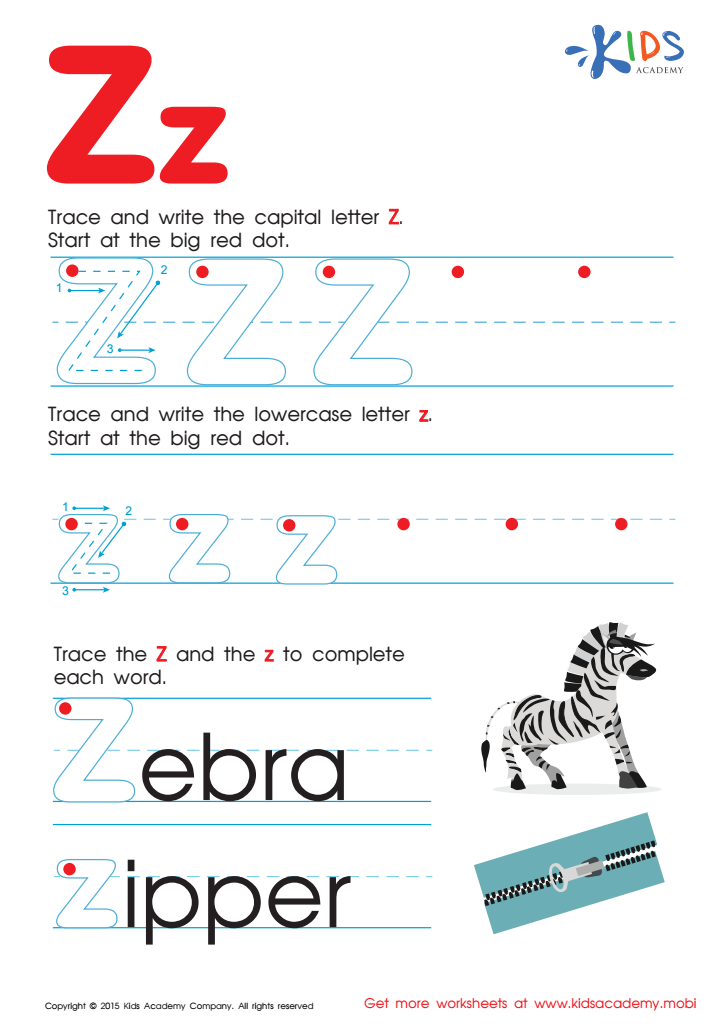
Letter Z Tracing Page
Trace and write capital "Z" and lowercase "z". Complete words "zebra" and "zipper". Be attentive and have fun! (80 words)
 Assign to My Students
Letter Z Tracing Page
Worksheet




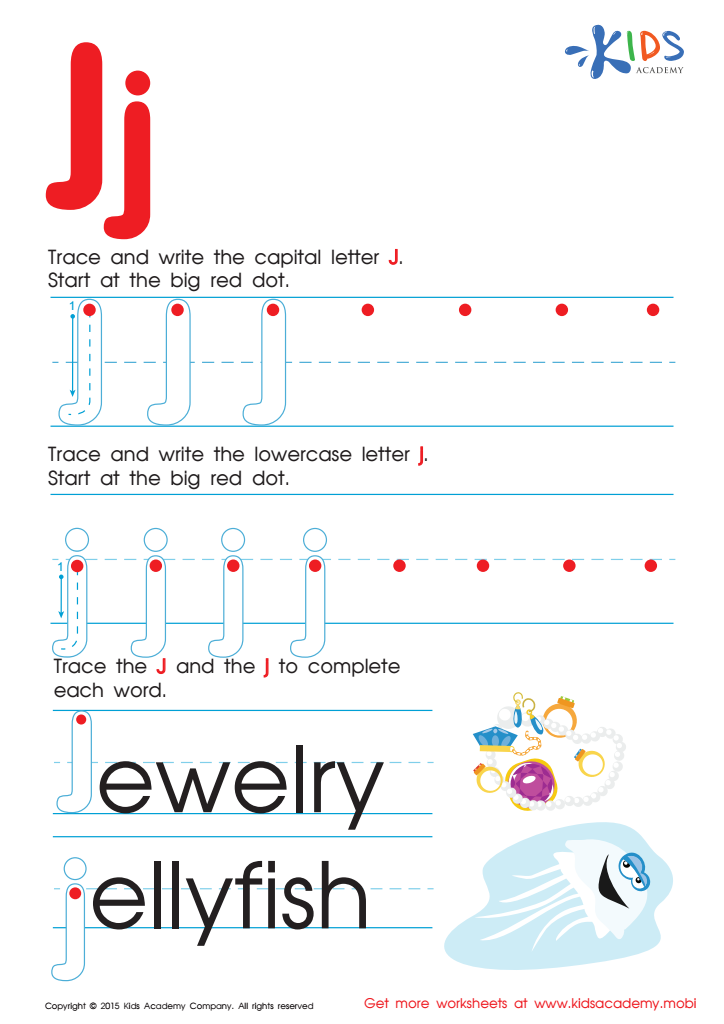
Letter J Tracing Page
Trace and write the letter "J" with our ABC worksheet - start at the big red dot! Have fun completing words like jewelry, jellyfish and more. Check out our kindergarten activities for more alphabet practice.
Letter J Tracing Page
Worksheet
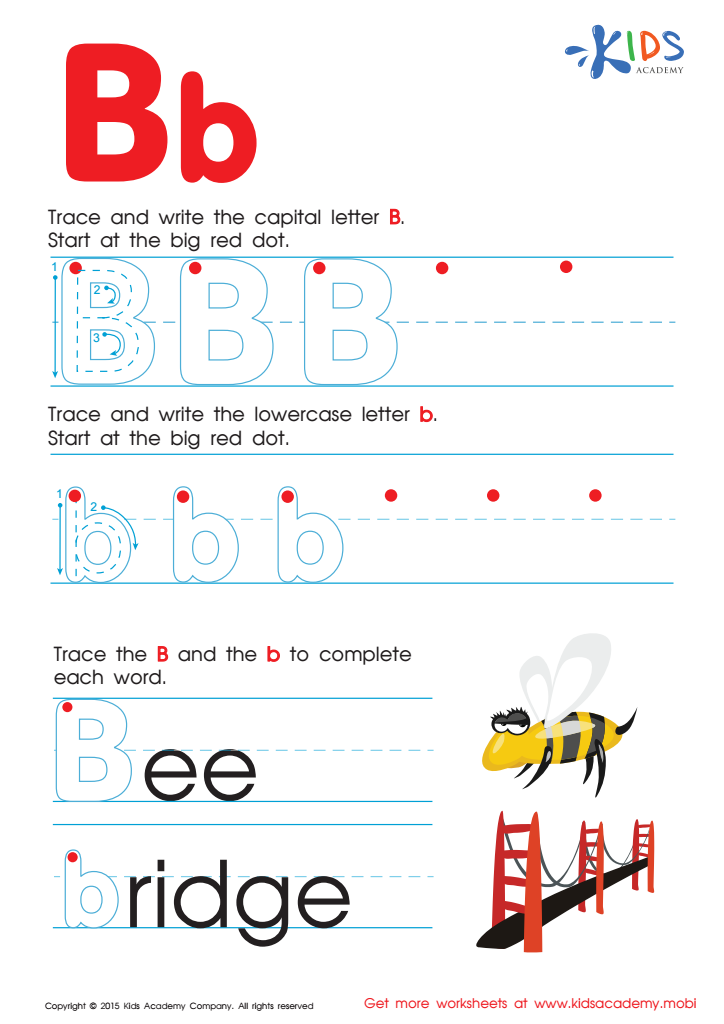
Letter B Tracing Page
Ready to learn the Alphabet? Put your pencil on the red dot and trace & write both capital & lowercase "B". Then have a look at the pictures. Catch the bee, cross the bridge & write the letters to complete the words. More ABC worksheets for kindergarten available!
Letter B Tracing Page
Worksheet
Join Kids Academy for Free
Who is primarily going to use this learning content?








Handwriting improvement is a crucial aspect of early childhood education, particularly for kindergarten students learning their ABCs. Proper handwriting skills not only enhance a child's ability to communicate effectively but also contribute to their overall cognitive development.
First, strong handwriting lays the foundation for literacy skills. Children who develop legible and consistent handwriting are more likely to feel confident in expressing their ideas in writing, thus fostering a love for reading and writing from an early age. Additionally, the physical act of writing helps reinforce letter recognition and phonemic awareness, reinforcing learning across other subject areas.
Moreover, fine motor skills play a significant role in handwriting development. Activities that focus on writing help strengthen hand-eye coordination and dexterity, which are essential for numerous daily tasks.
Furthermore, improved handwriting can impact a child’s academic performance. Teachers often assess students' proficiency based on written assignments, and neat handwriting can prevent misunderstandings.
Lastly, self-esteem is closely tied to a child’s writing abilities; kids who can write with confidence are more likely to participate in classroom discussions and activities. For all these reasons, parents and teachers should prioritize handwriting improvement in young learners, setting them up for future success.