Motor skills development Kindergarten ABC Letters Worksheets
3 filtered results
-
From - To
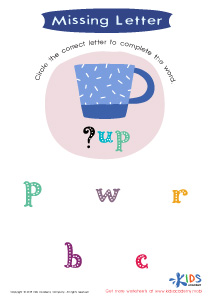
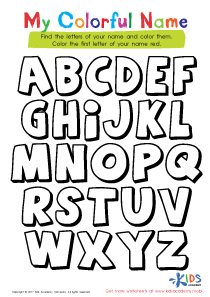
Our "Motor Skills Development Kindergarten ABC Letters Worksheets" are expertly designed to engage young learners in alphabet mastery while honing their fine motor skills. Each worksheet combines fun and educational activities, such as tracing and coloring, to help children recognize letters and improve hand-eye coordination. Perfect for cognitive and motor development, our vibrant worksheets provide an interactive platform for kids to familiarize themselves with the alphabet while preparing them for future writing tasks. Ideal for home or classroom use, these resources make learning enjoyable and advantageous during these formative years. Give your little ones a head start on their educational journey!
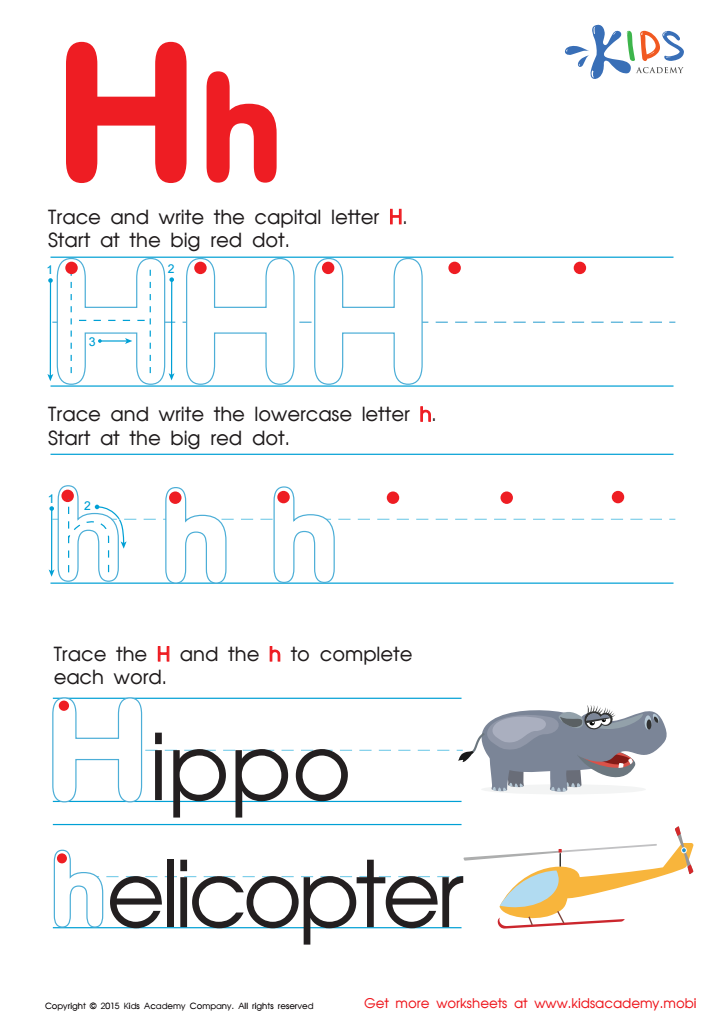
Letter H Tracing Page

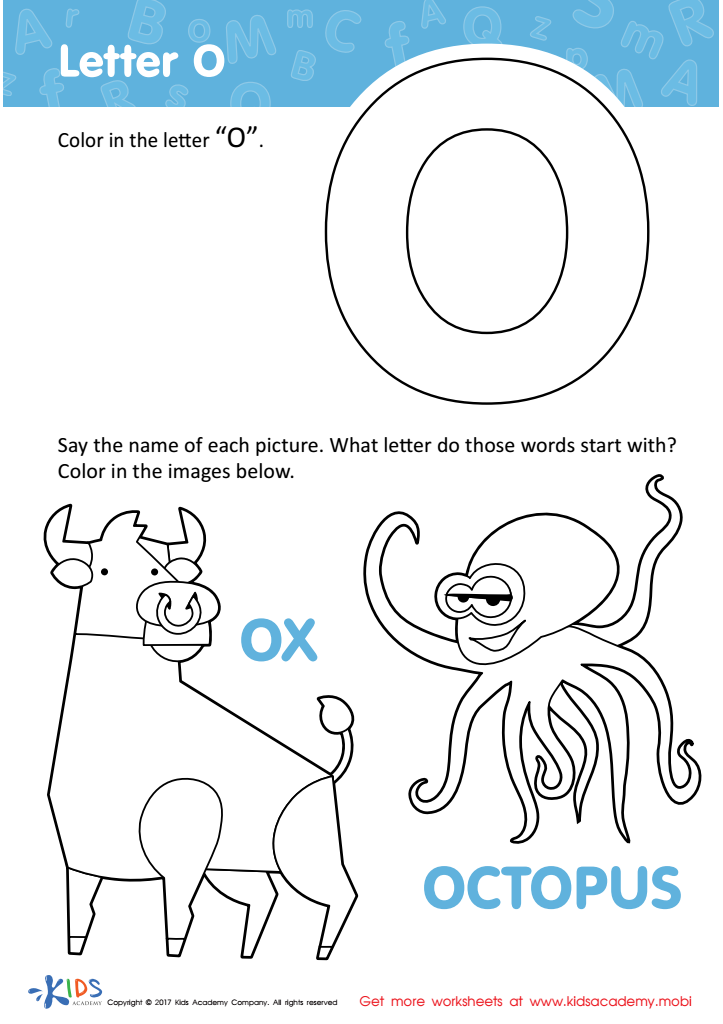
Letter O Coloring Sheet
 Assign to My Students
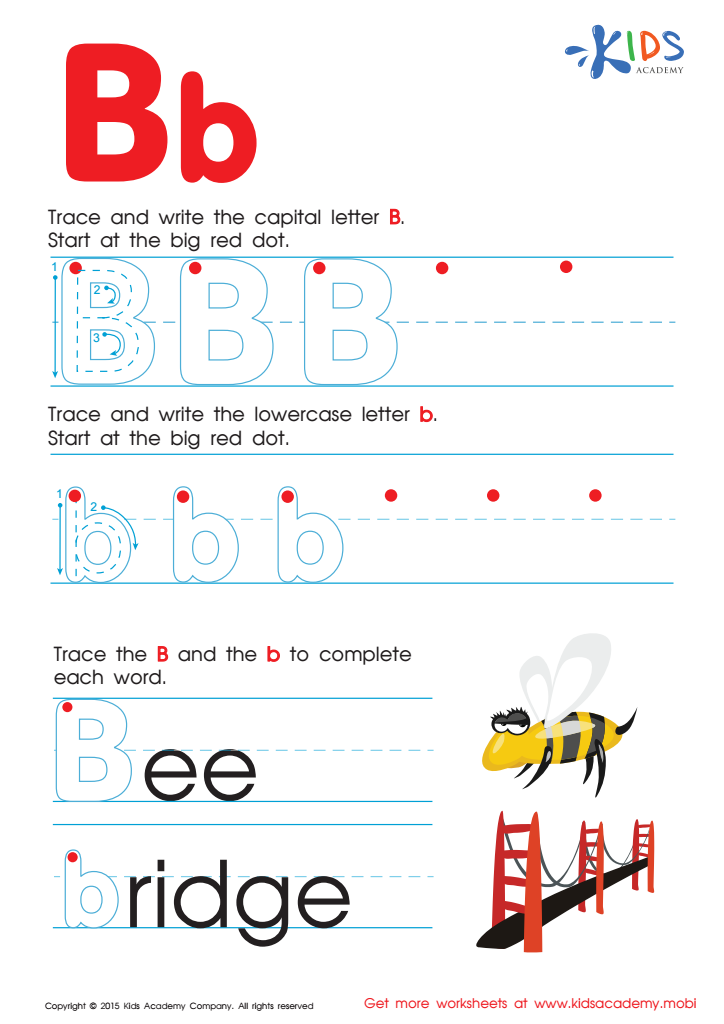
Letter B Tracing Page








Motor skills development is crucial for young children, especially in kindergarten, as it forms the foundation for many future academic and life skills. Parents and teachers should prioritize this aspect because it directly influences children's ability to learn and understand ABC letters, an essential component of early literacy.
Fine motor skills, which involve the coordination of small muscles in the hands and fingers, are necessary for tasks such as holding a pencil, tracing, writing letters, and even using scissors. By improving these skills, children can more effectively engage in activities that help them recognize and form letters, thereby enhancing their reading and writing abilities. Moreover, motor skills development fosters hand-eye coordination, which is critical for tasks requiring precision and control.
Additionally, the development of gross motor skills, involving larger muscles for actions like sitting upright and maintaining posture, supports a child's ability to concentrate during learning activities. When children have well-developed motor skills, they are more confident and independent, eager to participate in classroom activities. This active participation boosts their self-esteem and social interactions, fostering a positive attitude towards learning.
In essence, motor skills development is integral not just for literacy, but for overall physical, cognitive, and emotional growth. Thus, engaging young learners in activities that promote these skills ensures a well-rounded educational foundation.