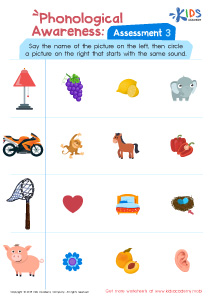
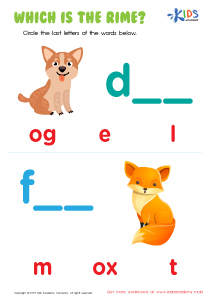
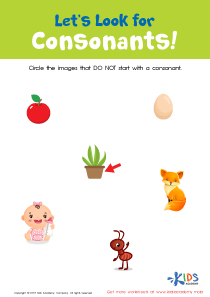
Phonics Skills Kindergarten Beginning Sounds Worksheets
3 filtered results
-
From - To
Enhance your kindergartener's reading foundation with our "Phonics Skills Kindergarten Beginning Sounds Worksheets." Designed to make learning fun and effective, these worksheets help young learners identify and master the initial sounds of words. By engaging in these interactive exercises, children develop essential early reading skills, including letter recognition, pronunciation, and phonemic awareness. Tailored to suit kindergarten-level learners, our printable worksheets provide a variety of activities that cater to different learning styles. Equip your child with the tools they need to succeed in reading with our expertly crafted phonics worksheets. Start their learning adventure today!
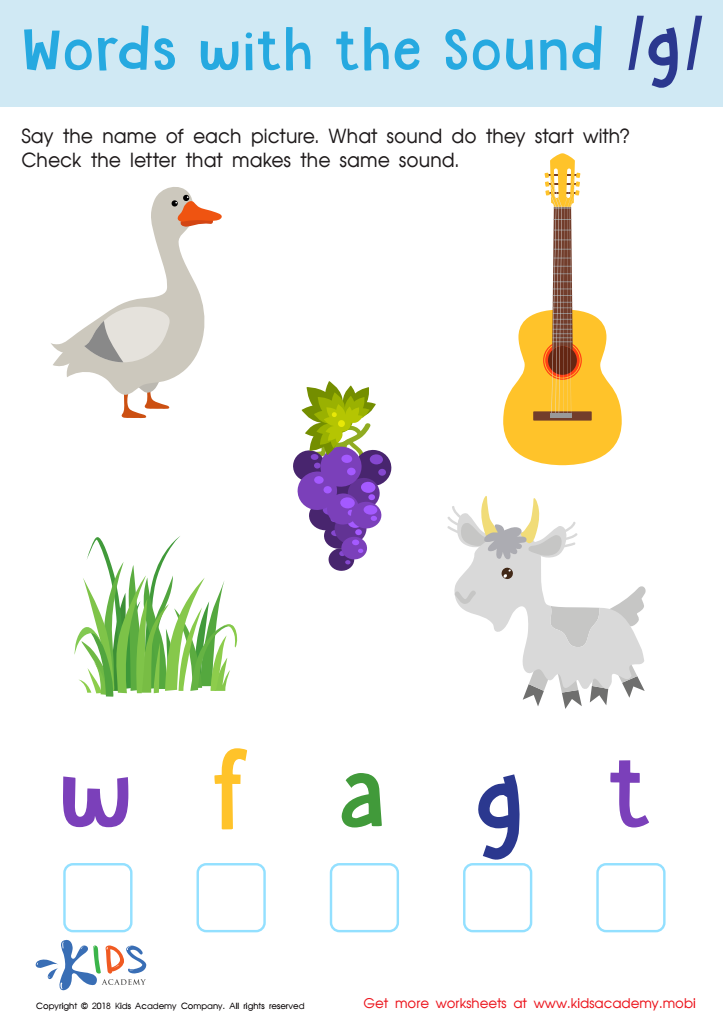
Words with sound g Reading Worksheet
 Assign to My Students
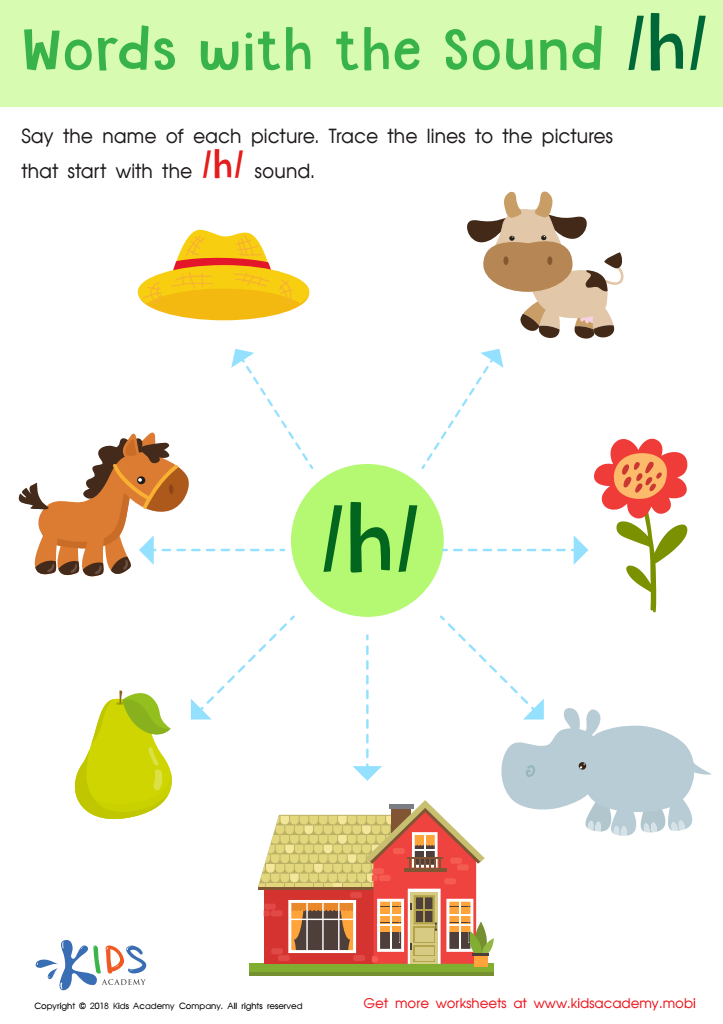
Words with sound h Reading Worksheet
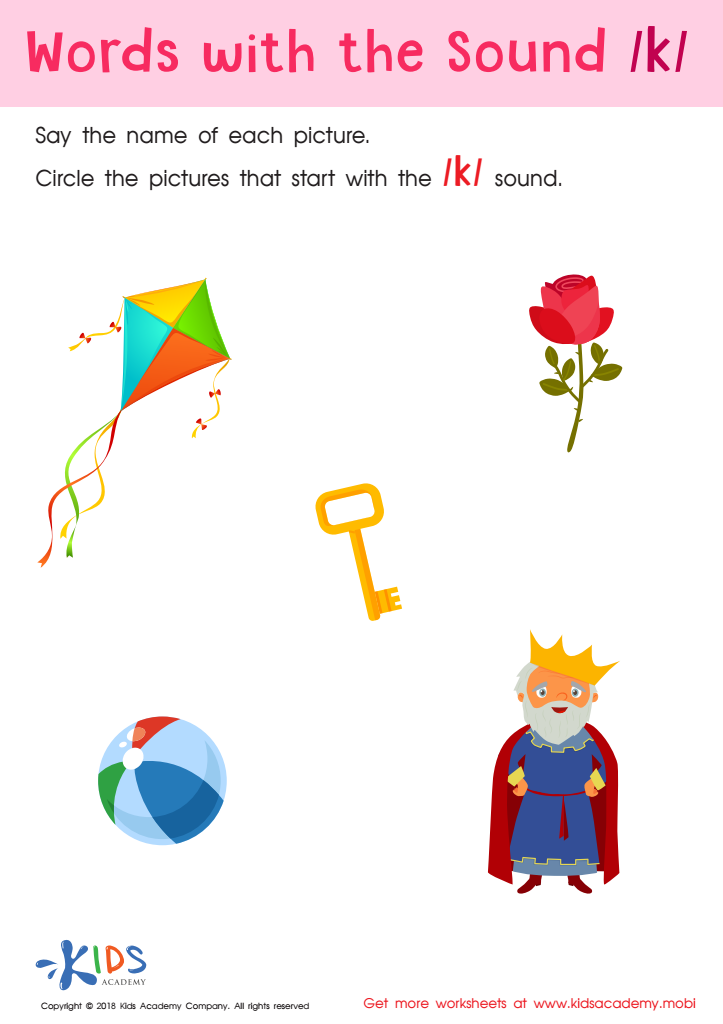
Words with sound k Reading Worksheet




Phonics skills, specifically the understanding of beginning sounds in kindergarten, are fundamental for early literacy development. Parents and teachers should prioritize these skills because they serve as the building blocks for reading and writing. By grasping the connection between letters and their corresponding sounds, children can develop phonemic awareness, which is crucial for decoding new words, enhancing vocabulary, and improving spelling.
Early phonics instruction helps children recognize patterns within words, fostering their ability to segment and blend sounds fluently. This foundational knowledge paves the way for more advanced literacy tasks, such as reading comprehension and creative writing. Without a strong grasp of beginning sounds, children may struggle to progress in their reading proficiency, potentially leading to academic challenges and a lack of confidence in their learning abilities.
Moreover, developing phonics skills nurtures a lifelong love for reading by making the process enjoyable and rewarding. As children become more proficient readers, they are more likely to be engaged in learning, develop critical thinking skills, and perform better across various subjects. Thus, investing time and effort in teaching phonics and beginning sounds benefits not only a child's immediate reading progress but also their overall educational trajectory and enthusiasm for learning.