Phonics Skills Kindergarten Consonants Worksheets
5 filtered results
Difficulty Level
Grade
Age
-
From - To
Subject
Activity
Standards
Empower young readers with our "Phonics Skills Kindergarten Consonants Worksheets"! Specially designed for kindergarten learners, these engaging worksheets focus on mastering consonant sounds, an essential foundation for reading. Through fun, interactive activities, children will learn to identify, pronounce, and write consonants, bridging the gap between letters and sounds. Our worksheets support literacy development and build phonemic awareness, blending education with entertainment. Perfect for both classroom and home learning, these resources are aligned with educational standards, ensuring your child gets the head start they need in reading. Boost your child's confidence and skills with our effective phonics worksheets!
Favorites
With answer key
Interactive
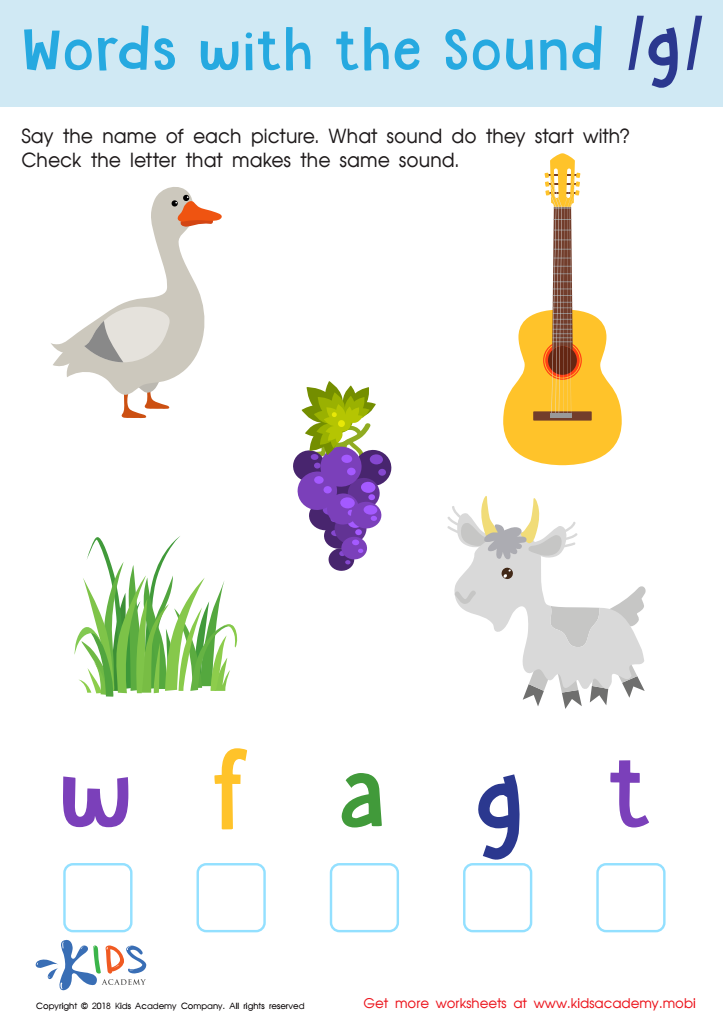
Words with sound g Reading Worksheet
Help your child learn the soft "g" sound with this phonics worksheet. Ask them to name each picture, then identify the letter sound it begins with. If it's "g", they can check the box. Have them repeat each word, listening for the soft "g" sound before moving on to the next page.
 Assign to My Students
Words with sound g Reading Worksheet
Worksheet
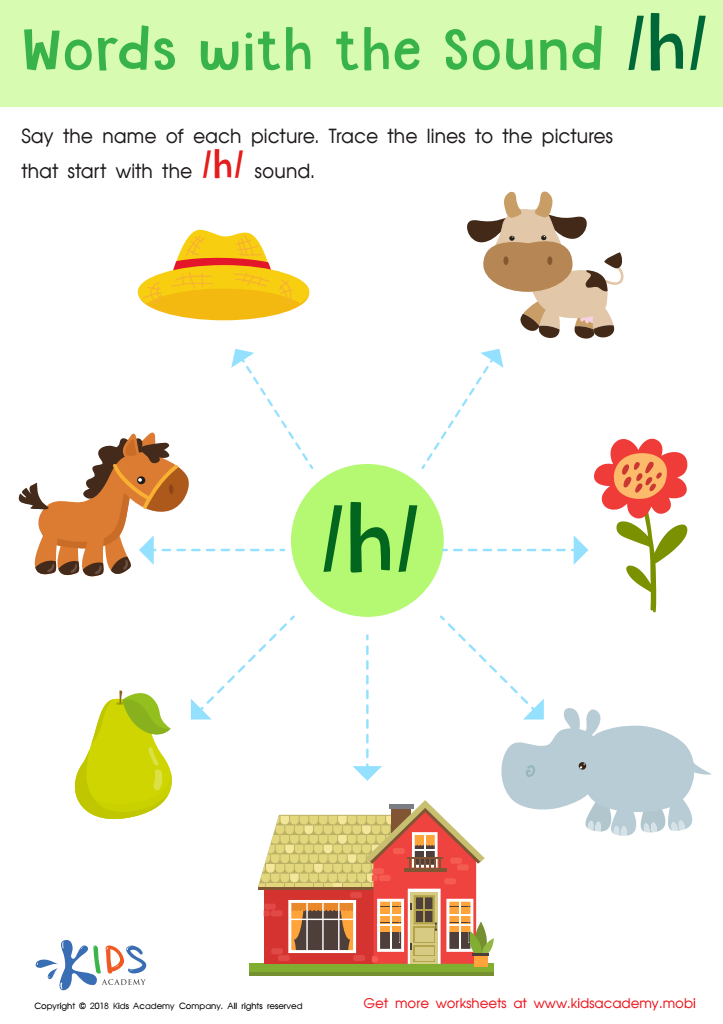
Words with sound h Reading Worksheet
The letter H can often be heard in words! Check your child's knowledge with an engaging worksheet from Kids Academy. Ask them to go around a circle and name each image aloud. Listen for the starting sound and trace the line from the middle letter to the images with the sound. This is a great way to practice phonics!
Words with sound h Reading Worksheet
Worksheet
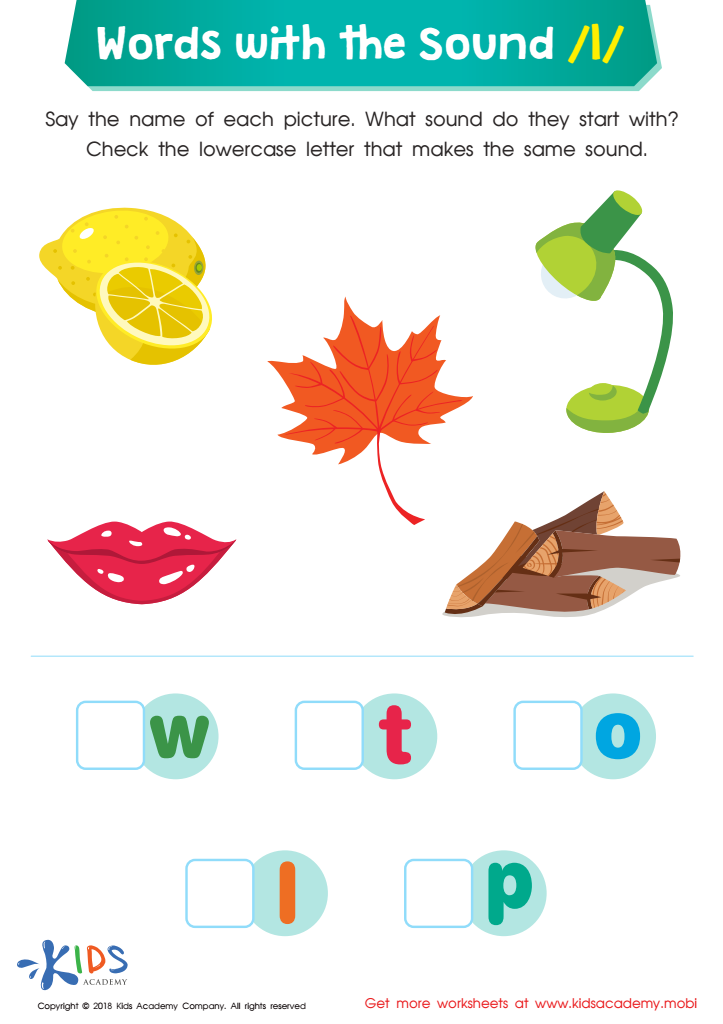
Words with Sound L Reading Worksheet
This PDF worksheet is great for helping emerging readers isolate initial sounds. Kids name familiar pictures, then identify the correct letter for the "l" sound. This worksheet strengthens fine motor skills, plus builds visual discernment. It's fun and colorful too!
Words with Sound L Reading Worksheet
Worksheet
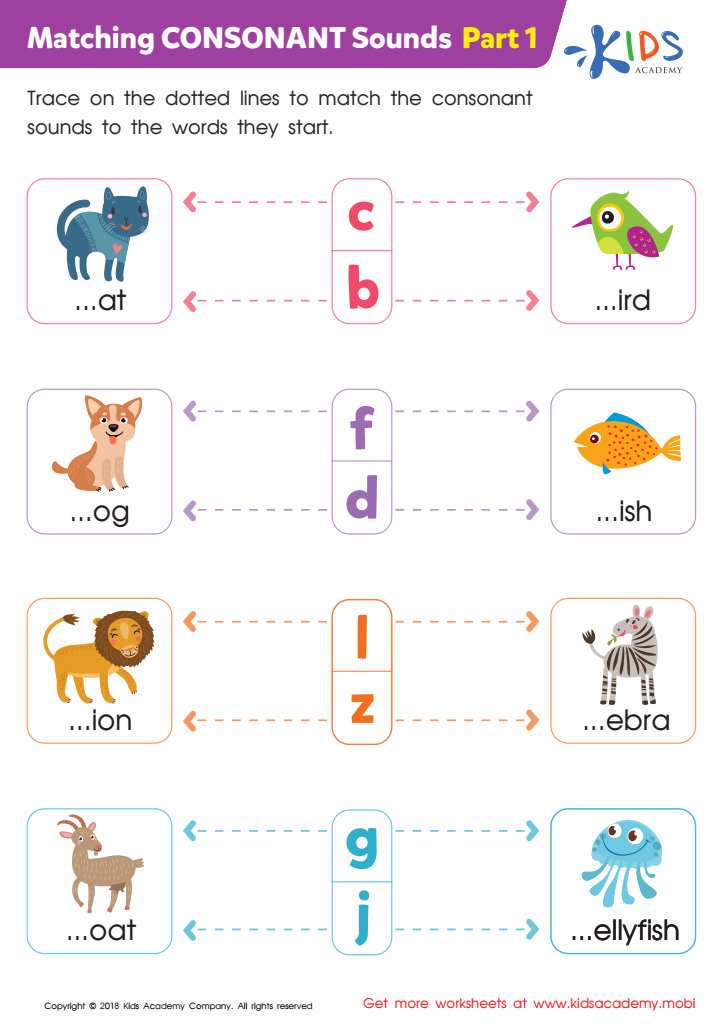
Matching Consonant Sounds: Part 1 Worksheet
Decide which letter matches each word and picture in this fun phonics worksheet. Slide your finger over each word, trying out each letter to check for matches. Once each pair is solved, trace the dotted lines with pencil to complete the printable. Who knew learning could be so enjoyable?
Matching Consonant Sounds: Part 1 Worksheet
Worksheet
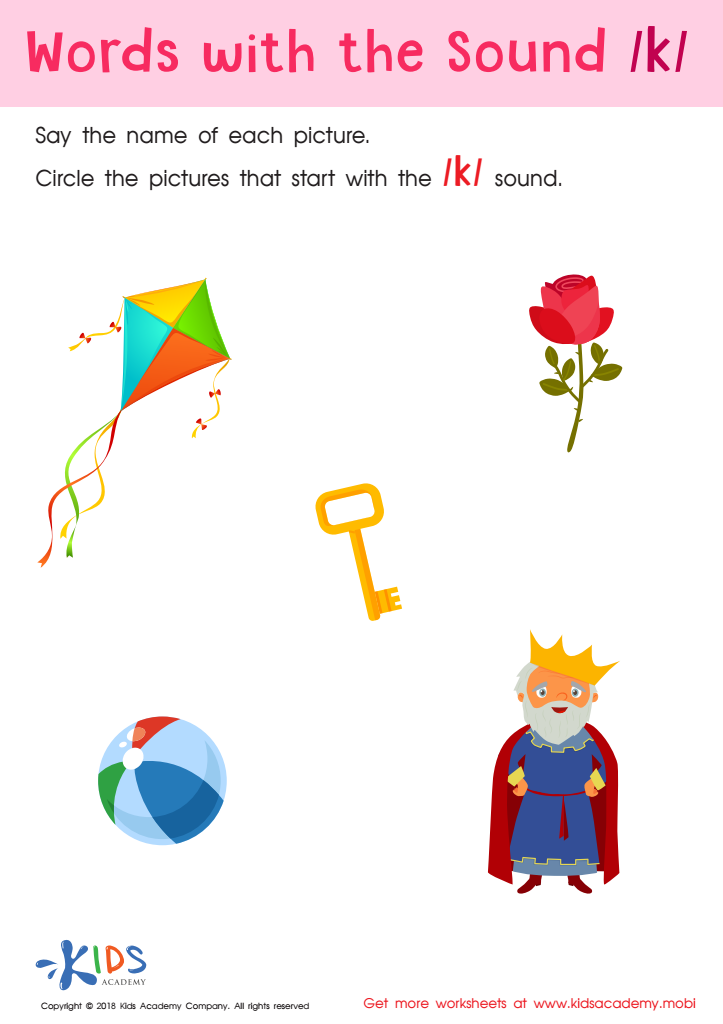
Words with sound k Reading Worksheet
Help your preschooler master the hard "k" sound with this fun worksheet from Kids Academy! Ask your child to say each picture aloud and circle only the pictures that start with "k". This early reading exercise will boost phonics skills and is sure to be loved by your little learner!
Words with sound k Reading Worksheet
Worksheet
Join Kids Academy for Free
Who is primarily going to use this learning content?


Phonics skills are crucial in early childhood education, particularly when it comes to understanding consonants in Kindergarten. Mastery of phonics enables children to comprehend the relationship between spoken sounds and written letters, forming the foundational building blocks for reading and writing. In Kindergarten, consonants constitute a significant portion of this learning, as they are more numerous and structured compared to vowels.
Parents and teachers should care about phonics skills because early proficiency in consonants can dramatically impact a child's future literacy skills. When children effectively learn consonant sounds, they can more easily decode words while reading, thereby enhancing their comprehension and fluency. This foundational knowledge fosters confidence and a positive attitude towards reading, essential traits for lifelong learning.
Furthermore, a strong grasp of consonants aids in spelling. As children begin to write, understanding phonics helps them form words correctly and communicate their thoughts clearly. This skill set also promotes cognitive development, boosting critical thinking and problem-solving abilities.
Therefore, investing time and resources into teaching phonics and consonants in Kindergarten establishes a firm educational base, resulting in well-rounded, literate, and confident learners. Both parents and teachers play a pivotal role in nurturing these skills, significantly shaping a child’s academic journey and future success.