Letter tracing skills Kindergarten Letter Recognition Worksheets
4 filtered results
-
From - To
Enhance your child's literacy journey with our engaging Letter Tracing Skills Worksheets. Designed specifically for kindergarteners, these interactive worksheets focus on letter recognition and tracing to foster early writing skills. Each worksheet features colorful illustrations and various fun activities, ensuring learning is enjoyable and effective. As students practice tracing letters, they'll improve their fine motor skills and develop a strong foundation for reading and writing. Perfect for both classroom and at-home learning, our resources support your child's growth and confidence in mastering the alphabet. Download our printable worksheets today and watch your little one thrive in their learning adventure!
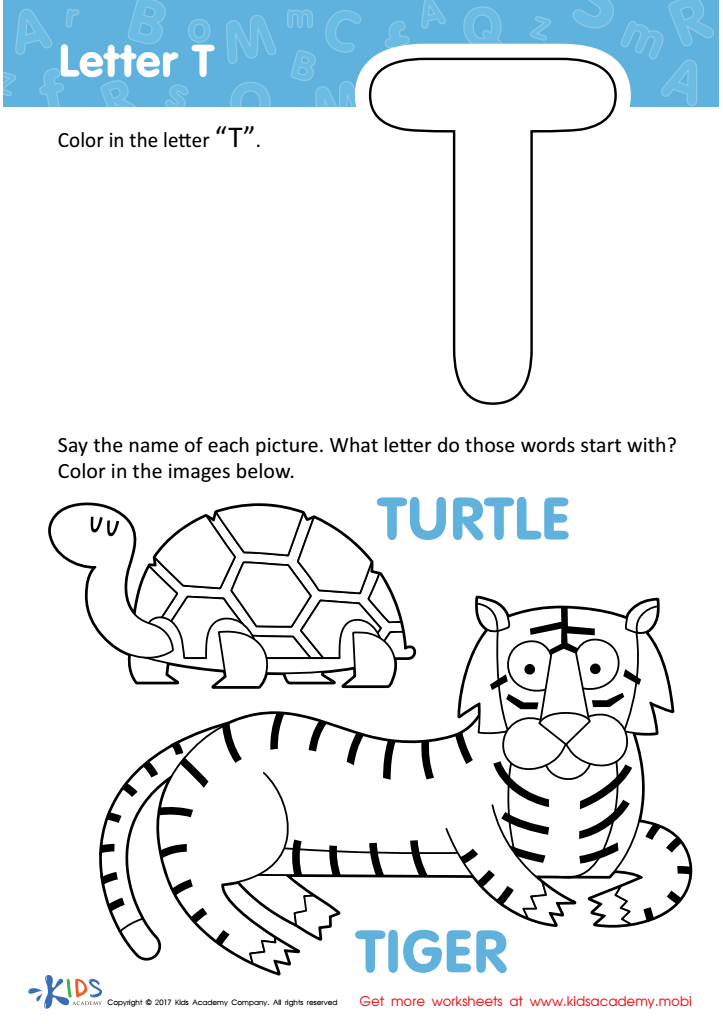
Letter T Coloring Sheet
 Assign to My Students

Letter C Tracing Page
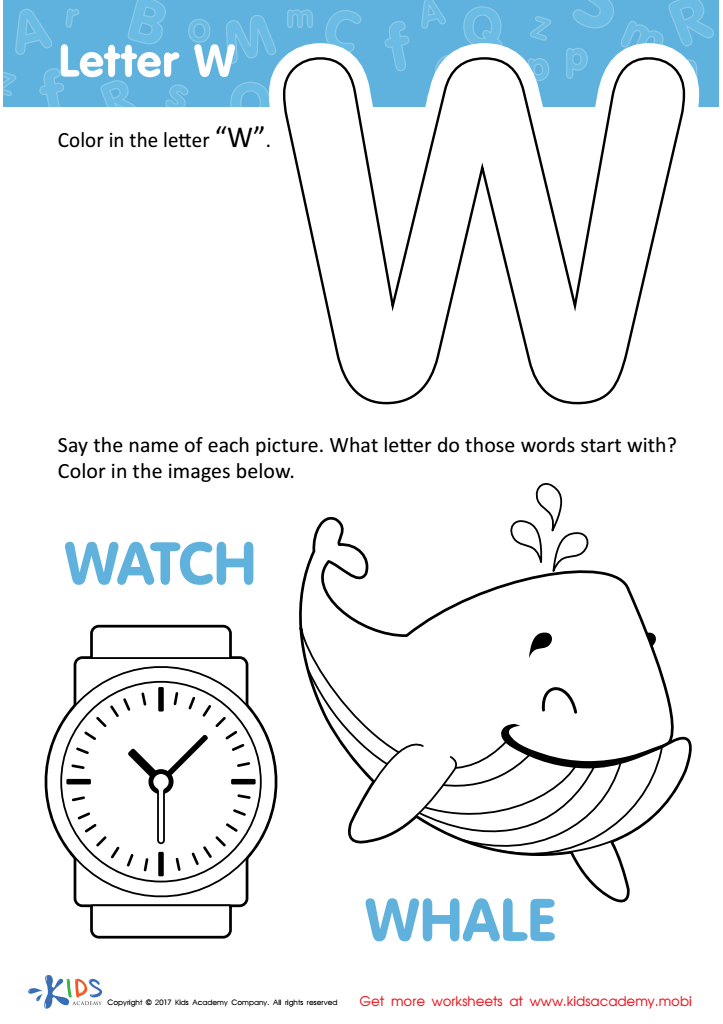
Letter W Coloring Sheet
Assign to My Students
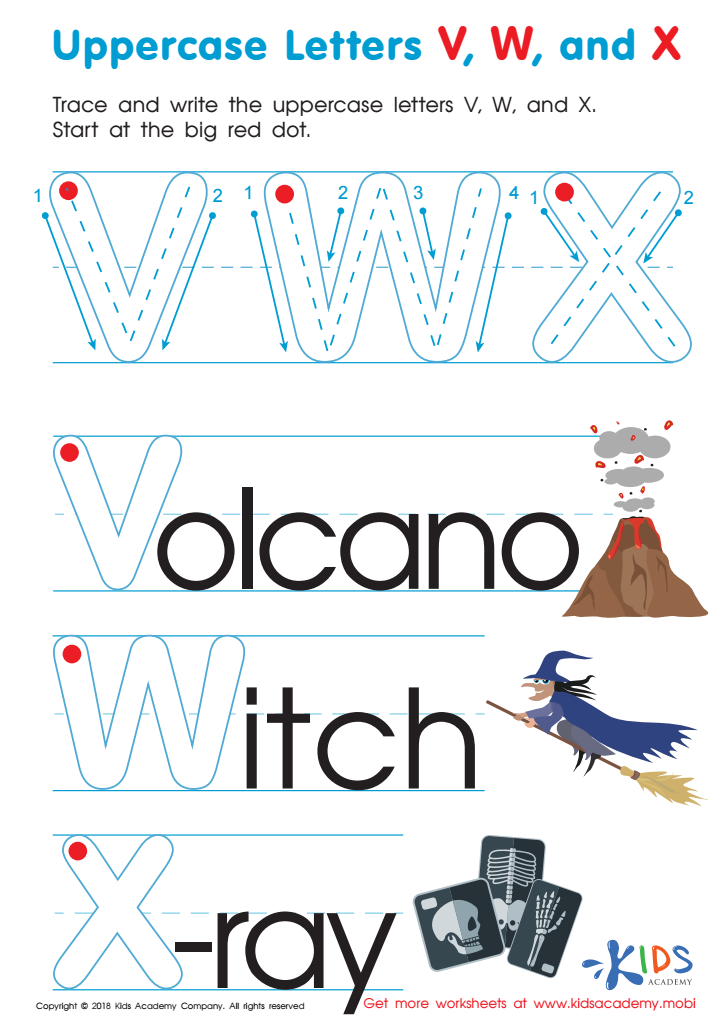
Uppercase Letters V, W, and X Worksheet






Letter tracing skills are fundamental for kindergarteners as they form the foundation of early literacy development. Teaching children to recognize and trace letters cultivates fine motor skills, which are crucial for future writing abilities. As kids engage in tracing activities, they develop hand-eye coordination and strengthen their finger muscles, making the transition to independent writing smoother and more effective.
Furthermore, letter recognition is essential for reading success. By identifying both uppercase and lowercase letters through tracing, children begin to associate letters with sounds, facilitating phonemic awareness. This bridge is vital as it prepares young learners for decoding words, ultimately impacting their reading fluency and comprehension.
Parents and teachers must also recognize that tracing helps reinforce letter shapes and encourages proper letter formation, reducing confusion when children begin to write.
Moreover, interactive tracing activities can make learning enjoyable, fostering a positive attitude towards education and boosting self-confidence in young learners. By prioritizing letter tracing skills, parents and educators invest in a child's overall linguistic prowess, paving the way for a successful academic journey. Thus, supporting these skills is crucial for early childhood development, aligning with educational standards and promoting lifelong learning.