Visual discrimination Kindergarten Letter Recognition Worksheets
5 filtered results
Difficulty Level
Grade
Age
-
From - To
Subject
Activity
Standards
Enhance your child’s letter recognition skills with our engaging Visual Discrimination Kindergarten Worksheets! These printable activities are designed to help young learners differentiate between letters by focusing on their visual features, promoting essential literacy development. Each worksheet is crafted to provide fun, interactive challenges that reinforce letter identification, while fostering critical thinking skills. Perfect for classroom or home use, our worksheets cater to various learning styles, ensuring every child can thrive. Watch as your little one becomes more confident in recognizing letters with these carefully curated resources while developing their attention to detail and visual acuity. Download now to inspire early learning!
Favorites
With answer key
Interactive

Find Lowercase Letters g h i Worksheet
Turn learning into a fun journey with your child! Use this free worksheet to find and circle the lowercase letters hidden amongst uppercase letters and numbers. Your child will understand what you're teaching them as they enjoy the search.
 Assign to My Students
Find Lowercase Letters g h i Worksheet
Worksheet
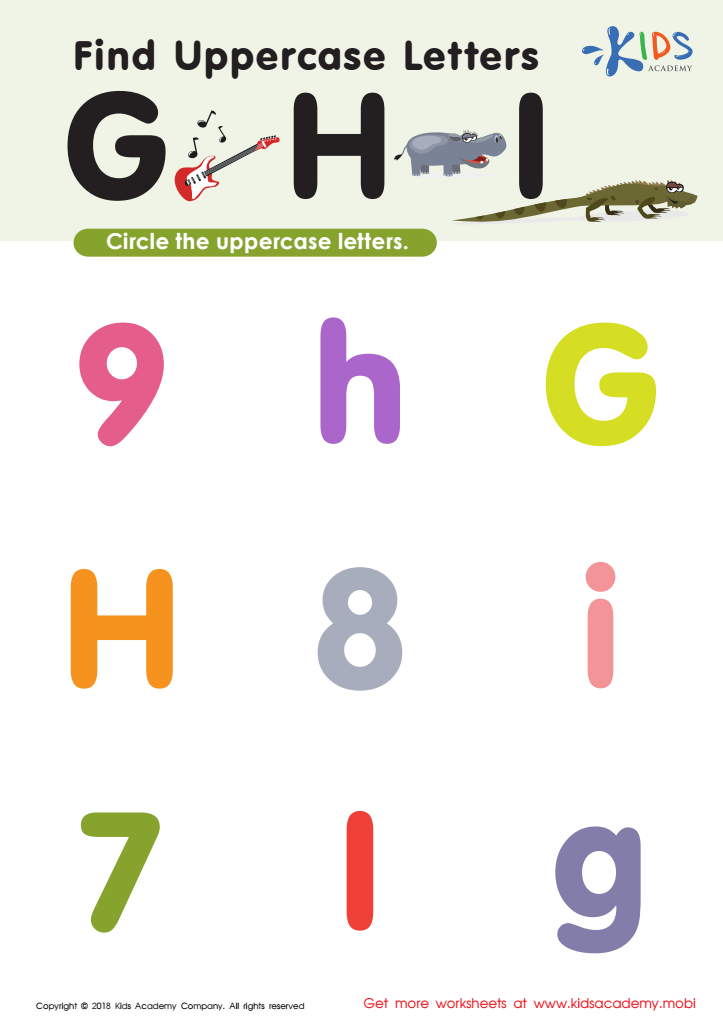
Find Uppercase Letters G, H, and I Worksheet
Find G, H, and I in uppercase with this downloadable worksheet! Numbers are included to challenge your kindergartener's letter recognition skills. Plus, practice G, H, and I sounds using the cute graphics. Perfect for learning letter case recognition!
Find Uppercase Letters G, H, and I Worksheet
Worksheet
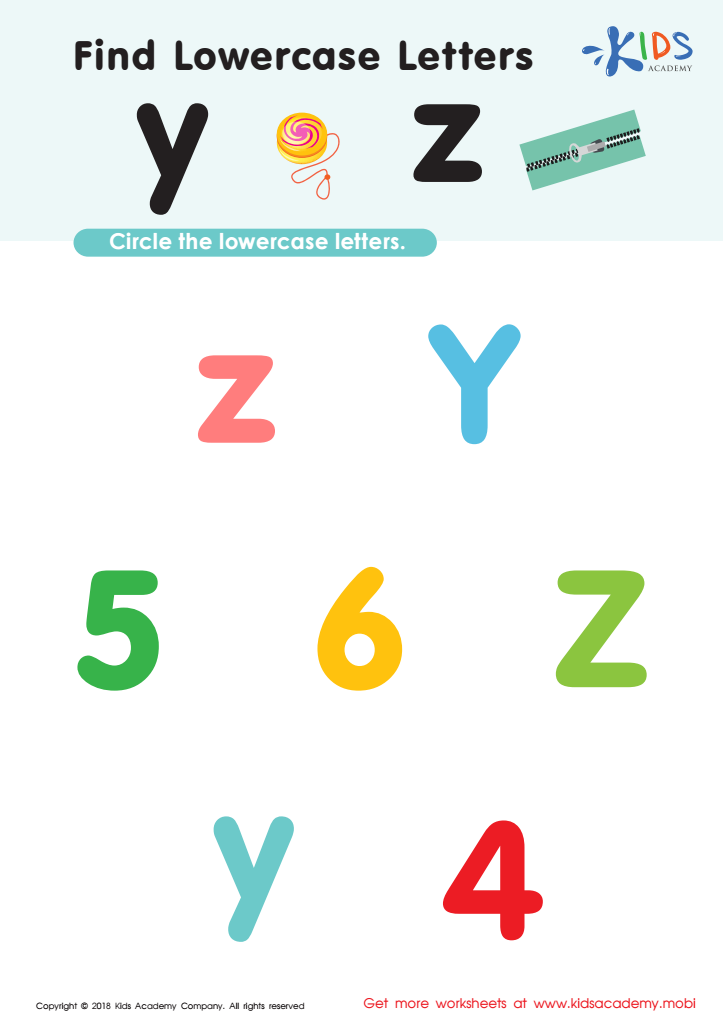
Find Lowercase Letters y z Worksheet
Help your kid learn the alphabet. Before they can move on to words and reading, they must first know the lower and uppercase letters. Show them how to find the letters y and z in this worksheet, which is filled with uppercase letters and numbers. Together, find and circle them.
Find Lowercase Letters y z Worksheet
Worksheet
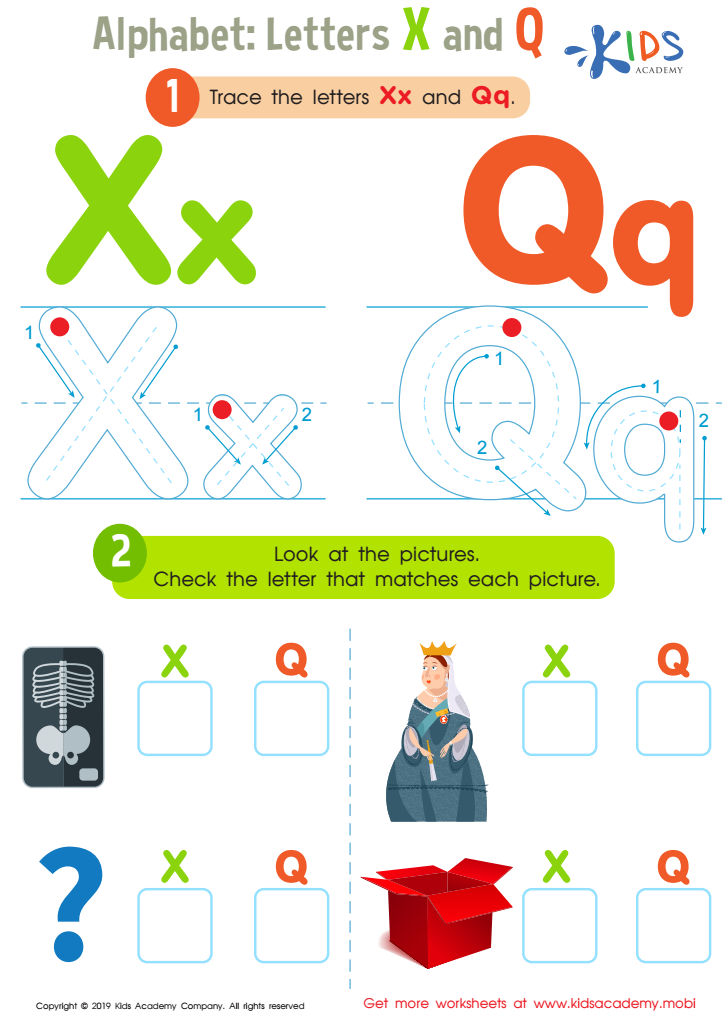
Letters X and Q Tracing Worksheet
Do you want your students to improve writing and letter recognition? This worksheet is a great place to start! Kids can trace the letters «X» and «Q» and identify pictures that match each letter. With a little encouragement, they'll do a great job!
Letters X and Q Tracing Worksheet
Worksheet
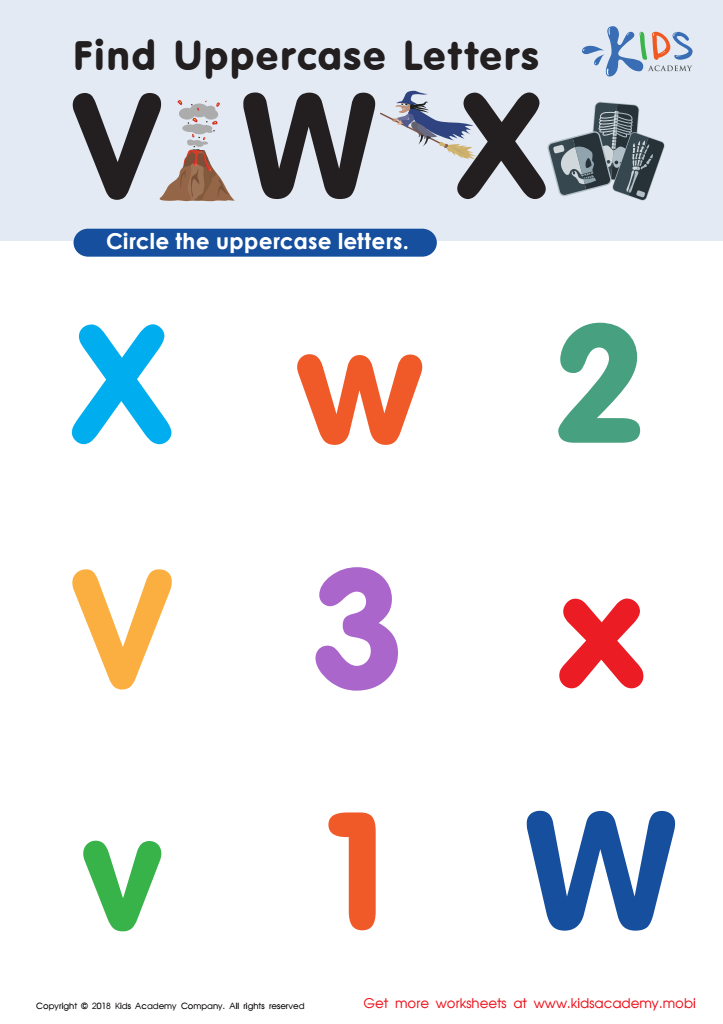
Find Uppercase Letters V, W, X Worksheet
Ask your kids if they can spot the uppercase letters V, W and X hidden in the lowercase letters and numbers, then have them circle them. After that, ask them to give you examples of words beginning with those letters. This worksheet will help them get started.
Find Uppercase Letters V, W, X Worksheet
Worksheet
Join Kids Academy for Free
Who is primarily going to use this learning content?






Visual discrimination is a crucial skill in early childhood education, particularly for kindergarten letter recognition. This skill allows children to identify differences and similarities among letters, shapes, and symbols, which forms the foundation for reading and writing. Parents and teachers should care about this competency because it directly influences a child’s ability to recognize letters quickly and accurately, setting the stage for successful literacy development.
When children master visual discrimination, they become adept at distinguishing between similar letters, such as 'b' and 'd', which can often lead to confusion. This proficiency not only aids in letter identification but also enhances overall reading fluency. Moreover, strong visual discrimination skills can support other areas of learning, including mathematics and problem-solving, as these often involve recognizing patterns and differences.
Encouraging visual discrimination through fun activities, like matching games and letter puzzles, promotes engagement and curiosity. For parents and teachers, fostering this skill is not just about letter recognition; it’s about laying the foundation for lifelong learning. Ultimately, investing time and resources in developing visual discrimination enhances children’s academic performance and boosts their confidence as they embark on their educational journey.