Reading comprehension Kindergarten Rhyming Worksheets
7 filtered results
-
From - To
Boost your child's reading skills with our Kindergarten Rhyming Worksheets! Designed to enhance reading comprehension through playful activities, these engaging worksheets help young learners recognize rhyming words, fostering phonemic awareness. Each worksheet incorporates fun exercises, from matching rhyming words to completing rhyming pairs, making learning enjoyable and effective. Ideal for classroom use or at-home practice, our rhyming worksheets support early literacy development and provide a solid foundation for future reading success. Enhance your kindergartner’s love for learning and reading with these vibrant, educational tools. Discover the excitement of rhymes at Kids Academy today!
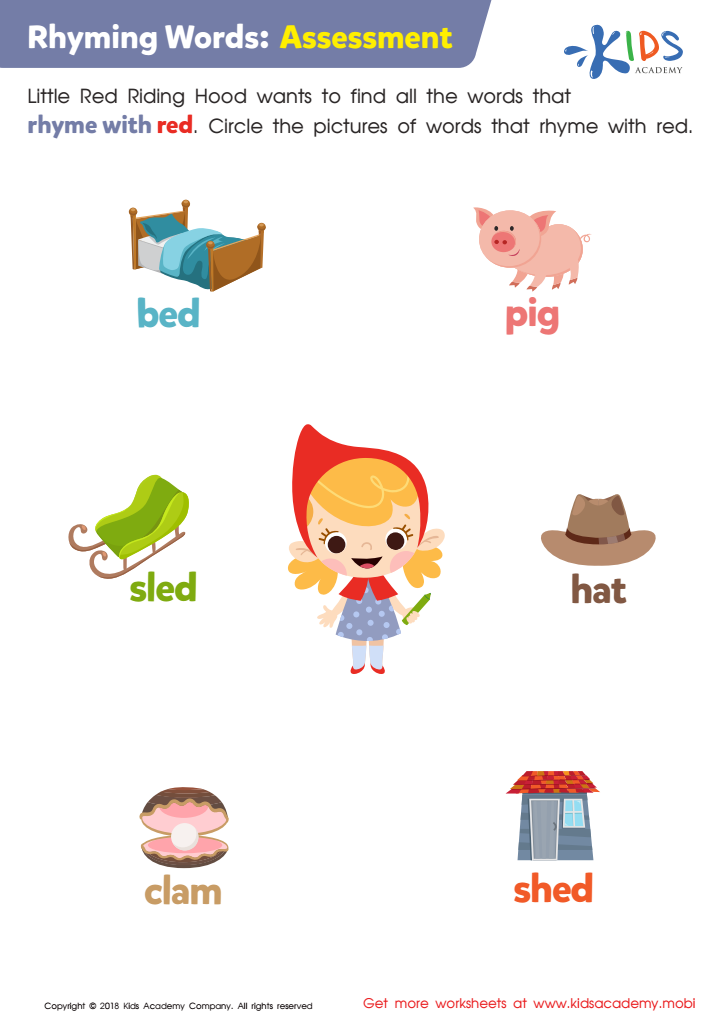
Rhyming Words: Assessment Worksheet
 Assign to My Students
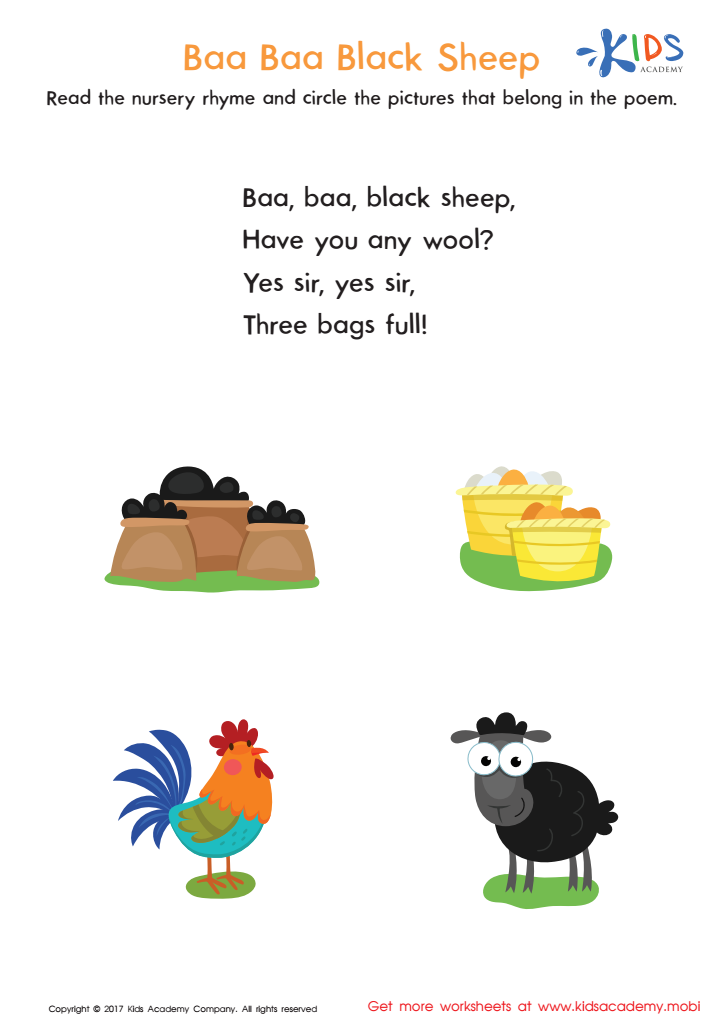
Baa Baa Black Sheep Printable
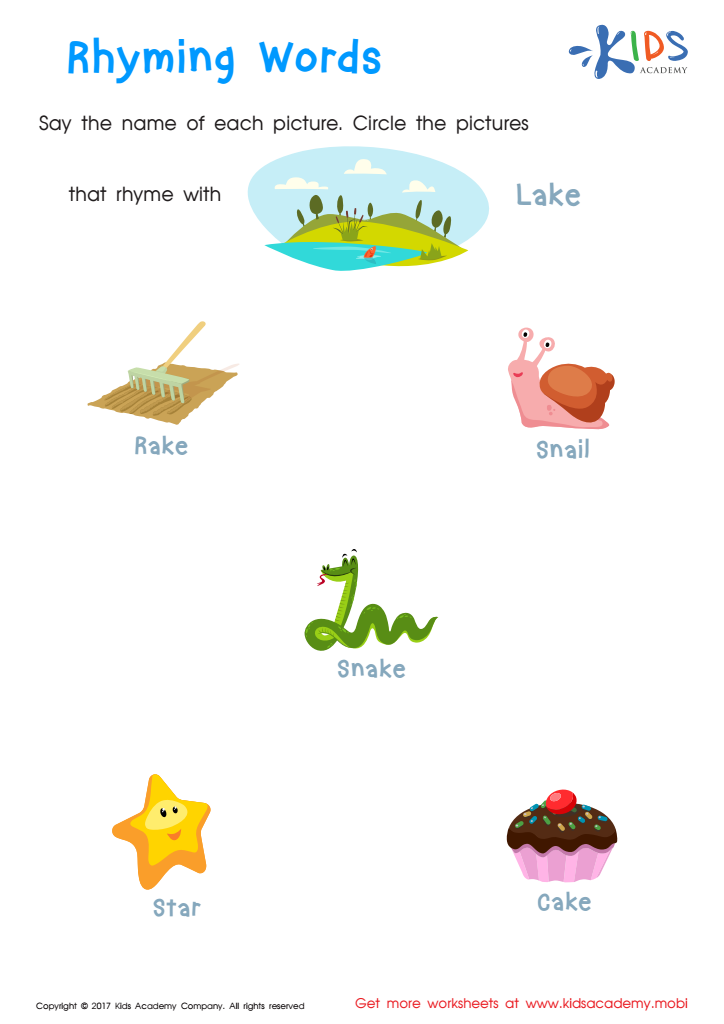
Rhyming Words Rhyming Worksheet
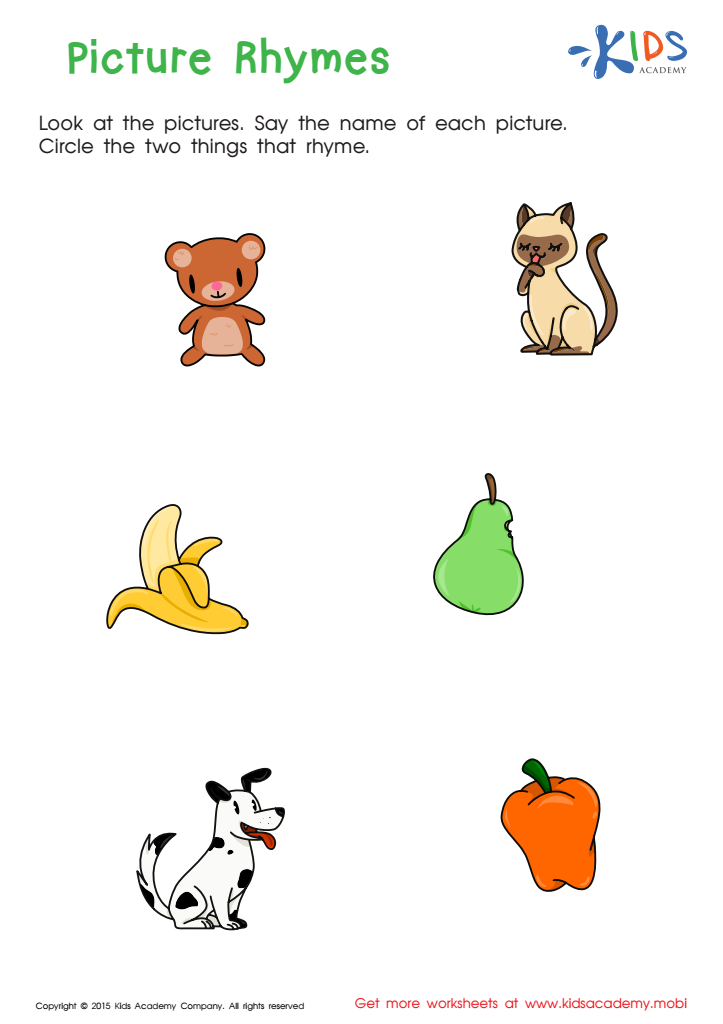
First Words: Picture Rhymes Worksheet
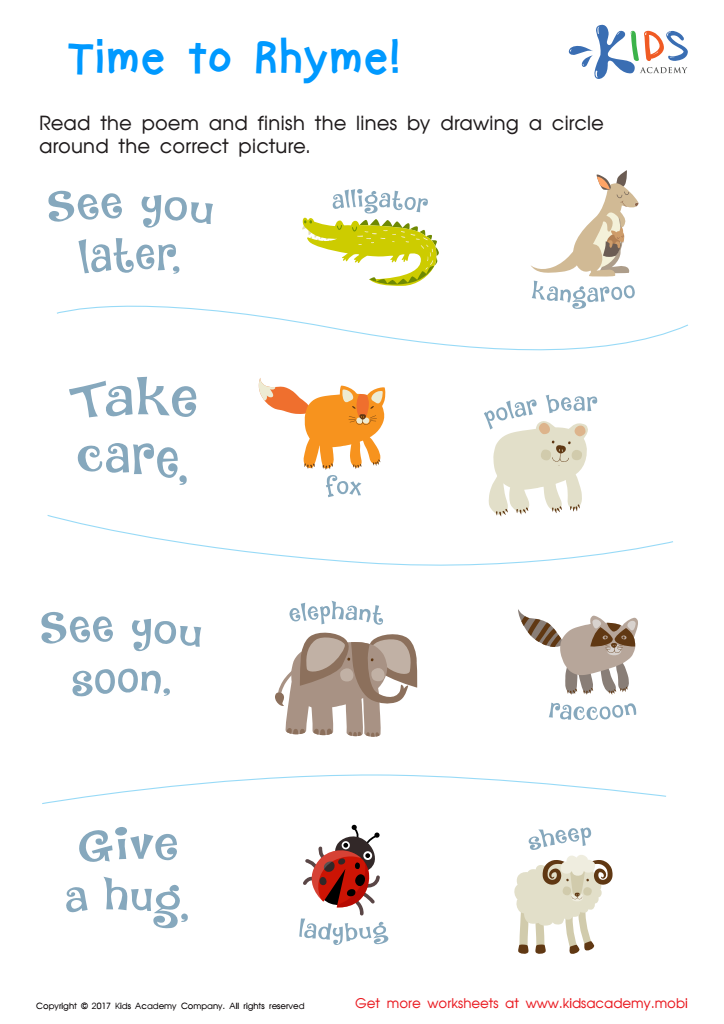
Time to Rhyme Rhyming Worksheet
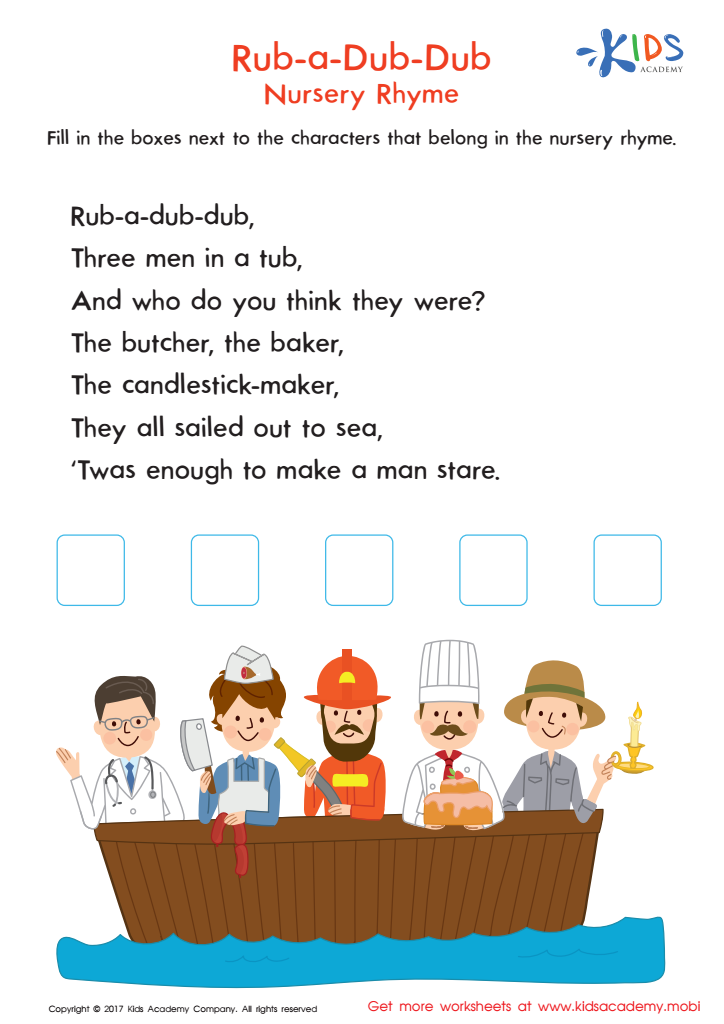
Rub a Dub Dub Printable
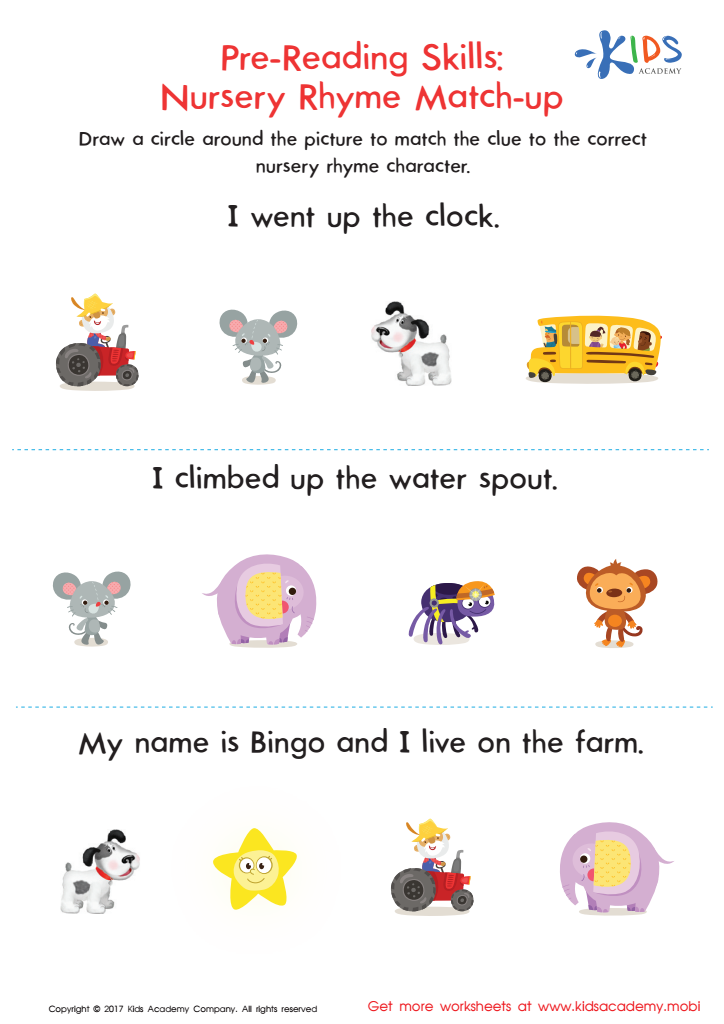
Nursery Rhyme Match–Up Worksheet




Reading comprehension and rhyming are cornerstone skills in a child's early education, particularly in kindergarten. Parents and teachers have compelling reasons to prioritize these areas.
Firstly, reading comprehension is a foundational skill that enhances a child's ability to understand and enjoy books. It is critical for future academic success, influencing subjects across the curriculum, from science to social studies. Early mastery promotes a love of reading, fosters imagination, and develops crucial language skills, including vocabulary and syntax.
Rhyming, on the other hand, might seem simple, but it plays a pivotal role in linguistic and cognitive development. Recognizing and generating rhymes helps children tune into the phonological aspects of language, which is essential for phonemic awareness—a critical precursor to reading and spelling. Through rhyming activities, children learn to discern patterns, memorize words more effectively, and develop their phonetic knowledge.
Moreover, rhyming fosters a sense of fun and creativity in learning, making educational activities more engaging. These playful interactions could establish a positive association with reading from a young age.
Lastly, investing in early reading comprehension and rhyming skills helps to close achievement gaps. By lending focused attention to these areas, parents and teachers can give children the strong, balanced foundation they need for continued educational growth.