Fine motor skills development Kindergarten Tracing Letters Worksheets
3 filtered results
-
From - To
Elevate your child's fine motor skills with our Kindergarten Tracing Letters Worksheets! These expertly crafted worksheets are designed to help young learners develop their hand-eye coordination, pencil control, and pre-writing skills. Through engaging and fun activities, children will practice tracing uppercase and lowercase letters, paving the way for confident writing. Perfect for preschoolers and kindergarteners, our worksheets provide a solid foundation for academic success while keeping learning enjoyable. Enhance your child's motor skills and prepare them for future writing tasks—explore our vibrant and educational tracing letters collection now!
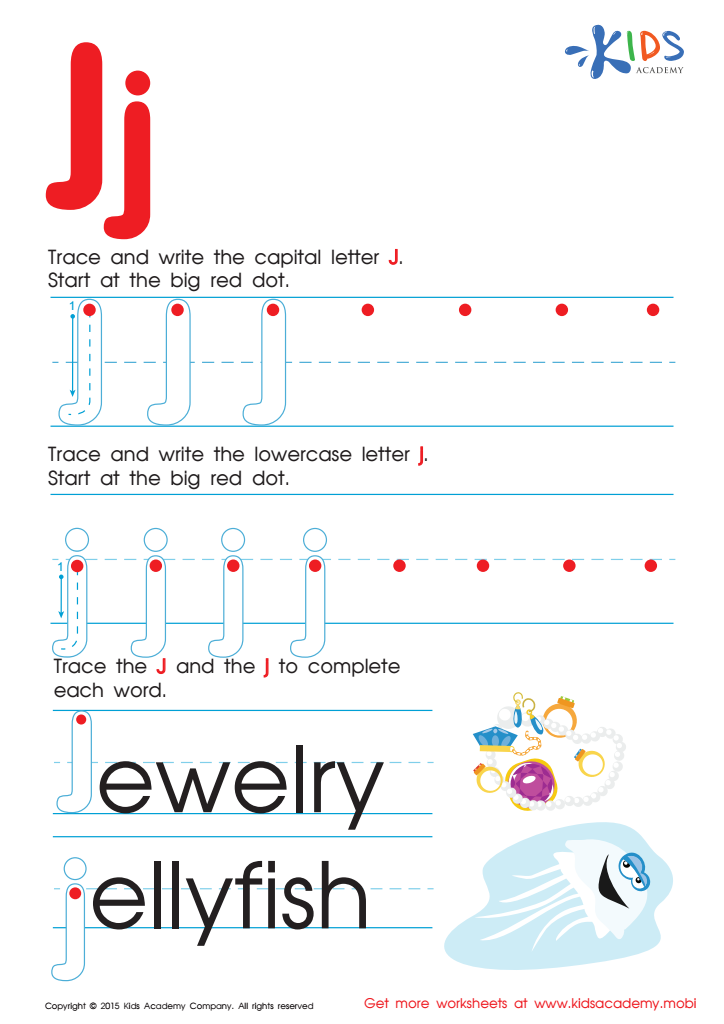
Letter J Tracing Page
 Assign to My Students
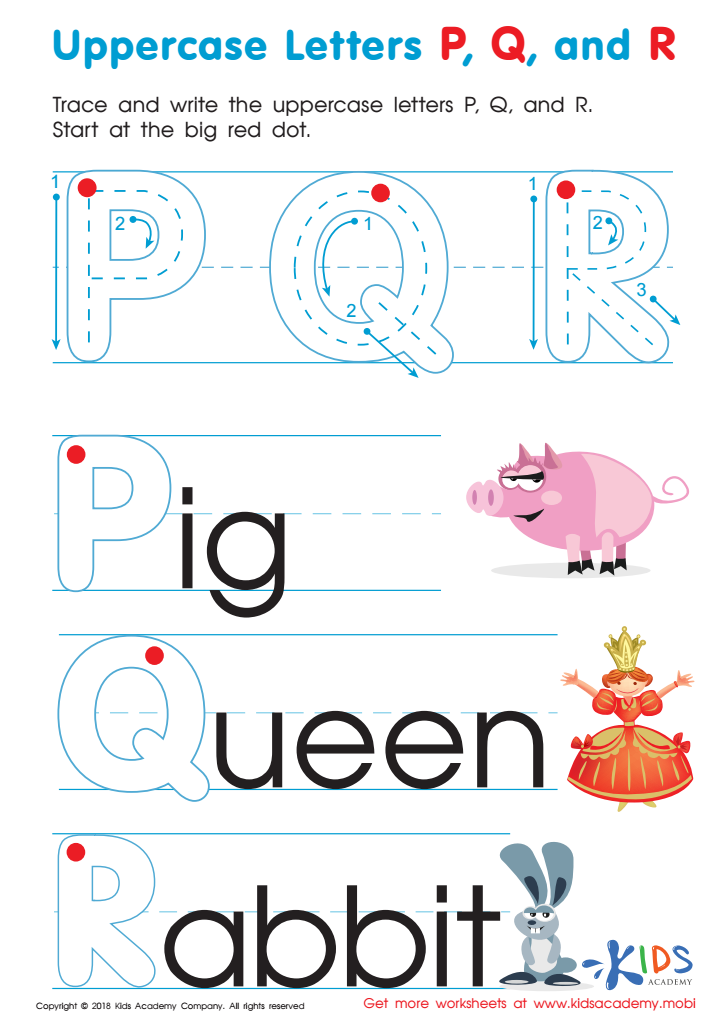
Uppercase Letters P, Q, and R Worksheet
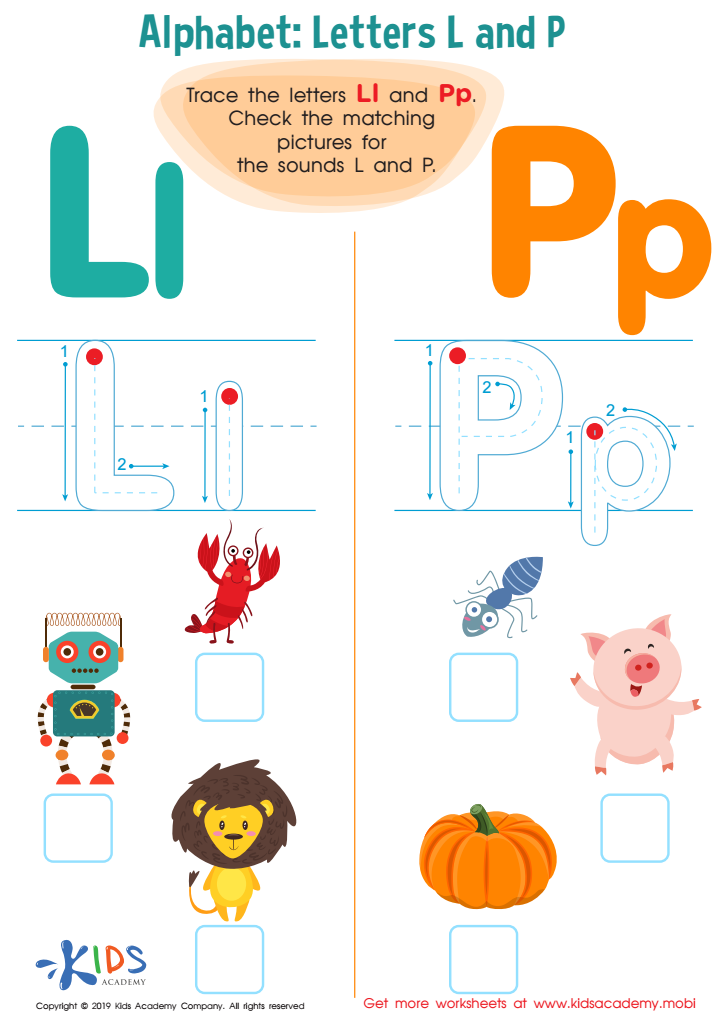
Letter L and P Tracing Worksheet





Fine motor skills development is crucial in the early years because these skills form the foundation for a child's ability to write, cut, button clothes, and perform other everyday tasks independently. Focusing on kindergarten tasks, like tracing letters, offers a structured way to refine these skills.
Tracing letters in kindergarten promotes hand-eye coordination, finger strength, concentration, and control, which are all necessary for writing. When children practice such activities, they're also preparing their brains to understand the shapes and structures of letters, an essential step in literacy.
The implications extend beyond writing. Developing fine motor skills through tracing aids in cognitive development by improving focus and attention to detail. It supports overall educational growth, as mastering these skills can lead to less frustration and greater confidence in other academic areas.
Parents play a vital role by reinforcing these activities at home. Engagement in fine motor skills development shows caregivers' investment in their child's progression, benefiting social and emotional aspects by providing kids with tools for effective communication and autonomy.
Teachers find value in incorporating fine motor skill exercises like tracing letters as they prepare children for educational success, following standardized milestones crucial for school readiness. Overall, investing time and resources into fine motor skill development sets a strong foundation for future learning and everyday functional skills.