Letter recognition Kindergarten Tracing Letters Worksheets - Page 2
26 filtered results
-
From - To
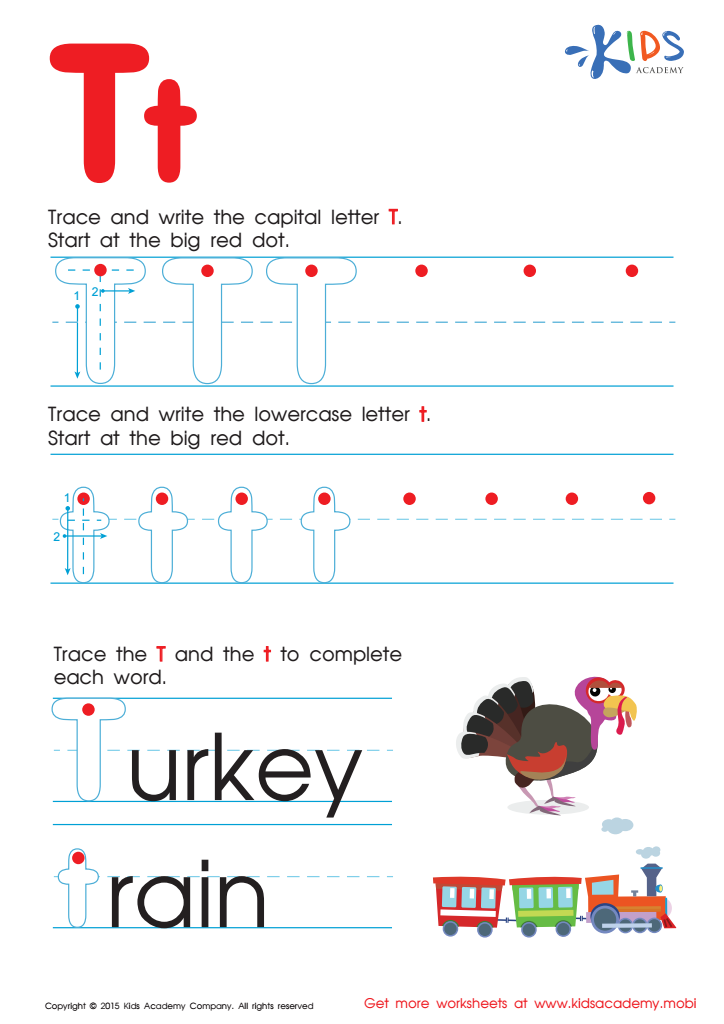
Letter T Tracing Page
 Assign to My Students

Letter D Tracing Page





Letter recognition and tracing activities in kindergarten are foundational for early literacy development. For parents and teachers, fostering these skills is essential because they lay the groundwork for future reading and writing success.
When children engage in letter recognition, they learn to identify individual letters and associate them with their corresponding sounds, a critical step in phonemic awareness. This capability is not only fundamental for word formation but also boosts a child's ability to decode unfamiliar words, promoting reading fluency and comprehension.
Moreover, tracing letters helps children develop fine motor skills and hand-eye coordination, both of which are necessary for writing. The act of tracing also reinforces letter shapes and spatial awareness, making it easier for children to remember and reproduce letters independently.
These activities provide a structured yet playful approach to learning, keeping children engaged and motivated. Early success in reading and writing builds confidence, leading to a more enthusiastic approach to learning across subjects.
For parents and teachers, witnessing progression in these areas can signal readiness for more complex literacy tasks, creating a robust academic foundation. By prioritizing letter recognition and tracing, caregivers ensure that children acquire essential skills, setting them on a path toward educational achievement and lifelong literacy.