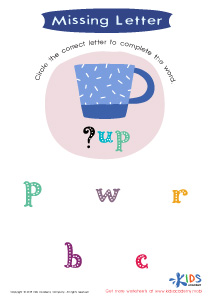
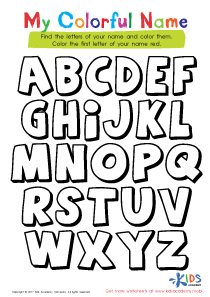
Lowercase letter writing Kindergarten Upper & Lowercase Letters Worksheets
3 filtered results
-
From - To
Introduce your kindergartener to the world of writing with our Lowercase Letter Writing Worksheets! Specifically designed to enhance fine motor skills and hand-eye coordination, these engaging worksheets feature fun exercises for tracing and writing lowercase letters. Each activity helps young learners build confidence and familiarity with the alphabet, setting a solid foundation for reading and writing. With playful illustrations and simple instructions, our worksheets cater to various learning styles. Perfect for both classroom and home use, these resources make learning to write an enjoyable and rewarding experience for every child. Start exploring today!
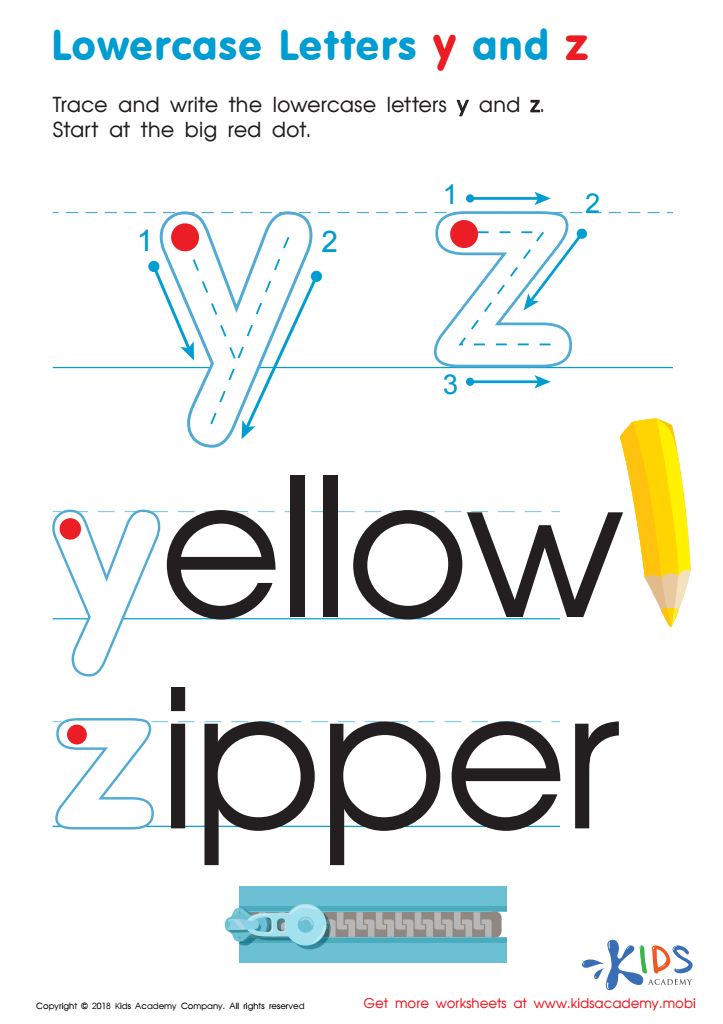
Lowercase Letters y z Worksheet
 Assign to My Students
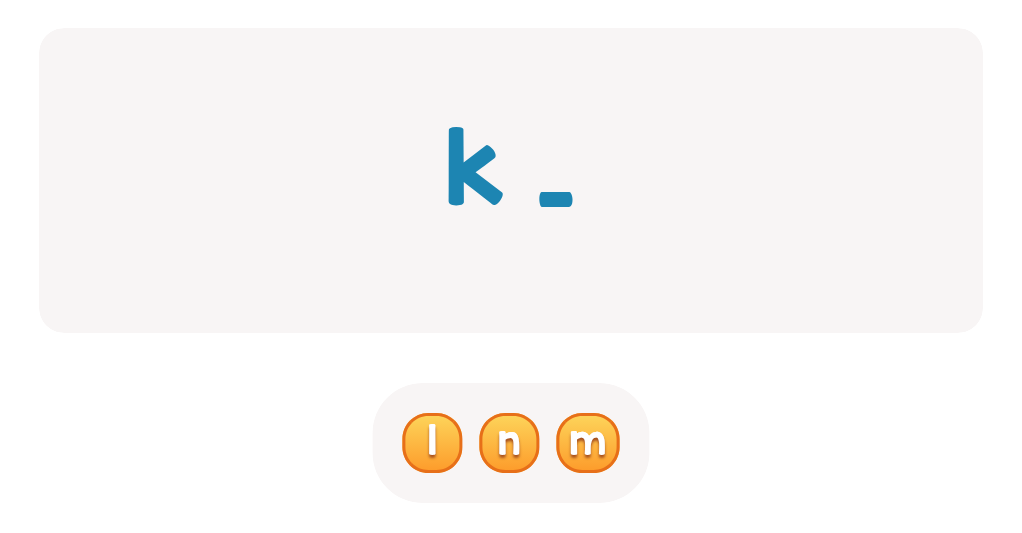







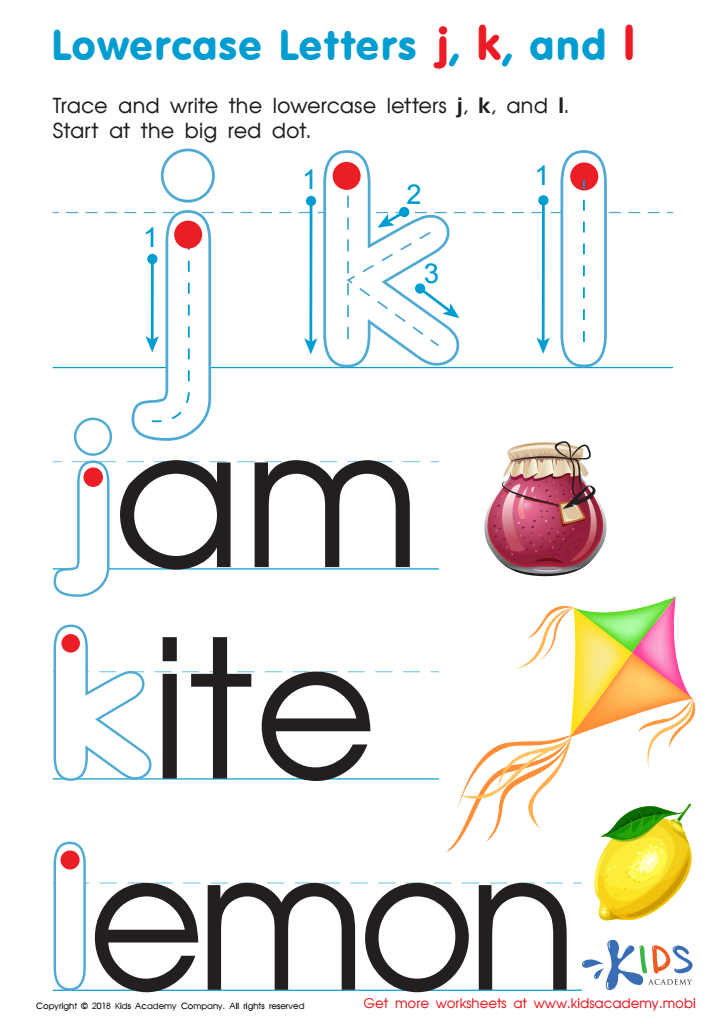
Lowercase Letters j k l Worksheet
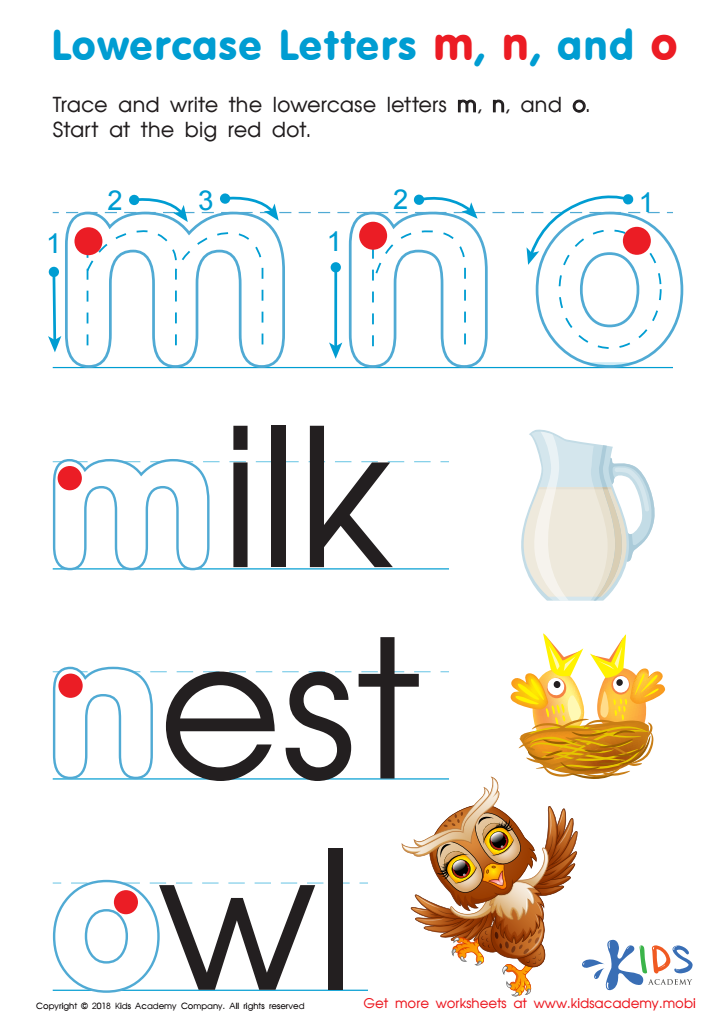
Lowercase Letters m n o Worksheet





Mastering both lowercase and uppercase letter writing in kindergarten forms an essential foundation for a child's literacy development. Early proficiency in these skills fosters better reading fluency and writing capabilities as children progress through their educational journey. Lowercase letters are the most commonly used in reading and writing; hence, early familiarity facilitates quicker recognition and comprehension of text. This ease translates into more confident readers who can build vocabulary and understanding efficiently.
For parents and teachers, fostering this competency is equally about nurturing fine motor skills. The process of learning letter formation helps strengthen a child's hand muscles, crucial for activities both inside and outside the classroom. Writing also enhances hand-eye coordination which is fundamental for numerous tasks.
Additionally, early mastery of both letter cases bolsters children's confidence and independence in learning. It sets a positive attitude toward school by validating their skills and encouraging further achievements.
By attending to lowercase and uppercase letter learning, educators and parents ensure that children don’t face unnecessary hurdles later in their educational path. Consequently, this early focus helps cultivate a lifelong love for learning and eases assimilation into a structured educational environment. Thus, investing effort and attention at this crucial stage benefits children's overall cognitive and academic growth.