Basic Math Skills Kindergarten Comparison Worksheets
3 filtered results
-
From - To
Boost your child's foundational math abilities with our Basic Math Skills Kindergarten Comparison Worksheets! Designed for young learners, these fun and engaging worksheets help kids grasp important concepts like greater than, less than, and equal to by comparing numbers, objects, and quantities. With colorful illustrations and simple activities, children develop critical thinking and problem-solving skills in an enjoyable manner. Our printables are ideal for both classroom and home use, providing thorough practice for essential math concepts. Spark your child’s love for learning and build a strong mathematical foundation with these indispensable, easy-to-use resources.
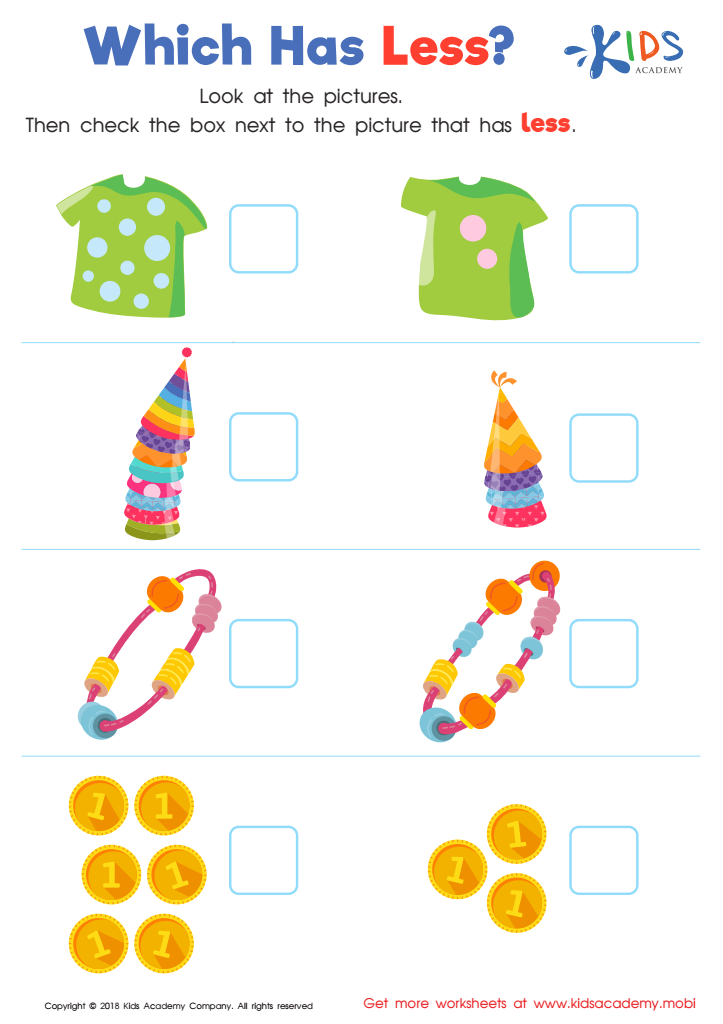
Which Has Less? Worksheet
 Assign to My Students
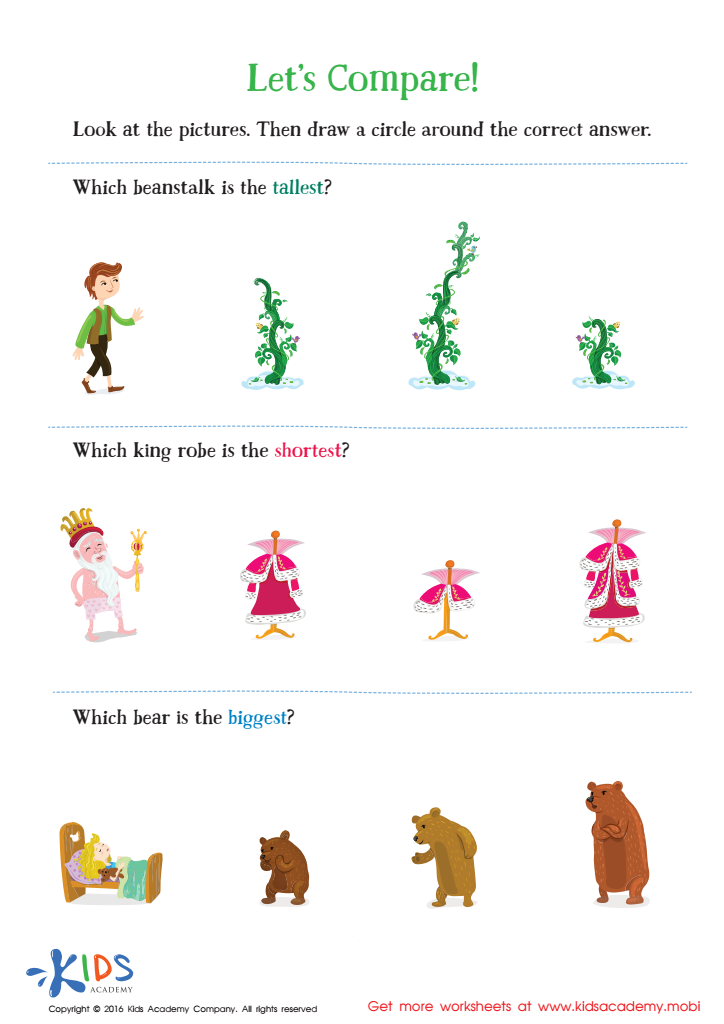
Fairy Tale Worksheet: Let's Compare
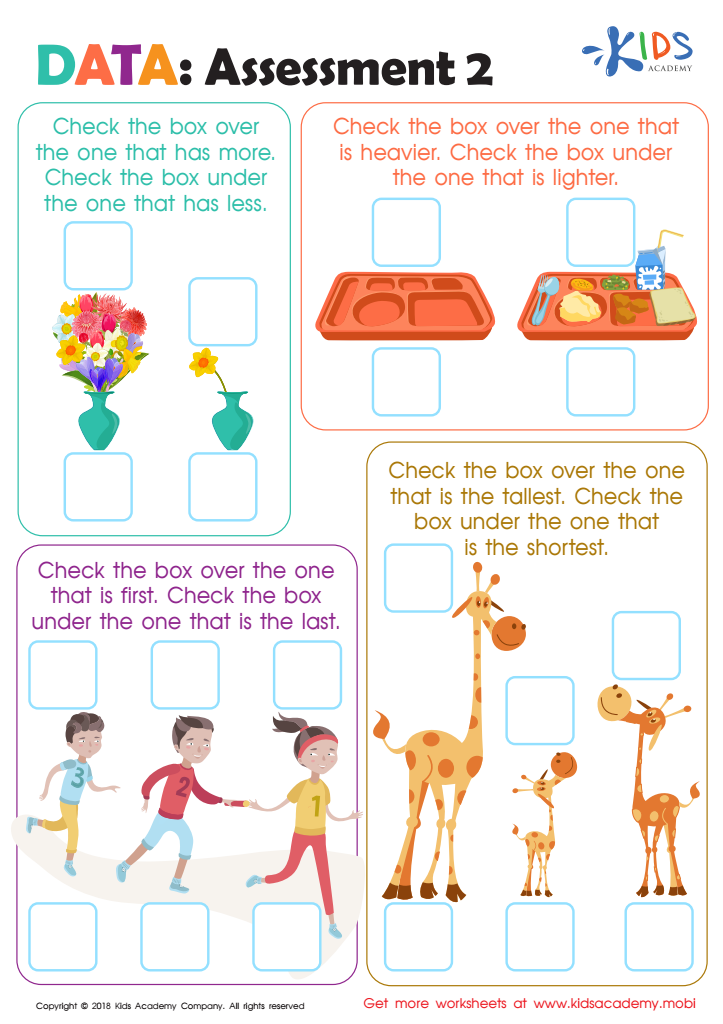
Data: Assessment 2 Worksheet




Parents and teachers should care about basic math skills in kindergarten because foundational math abilities set the stage for future academic success and daily life competence. Kindergarteners are at a pivotal stage where they absorb and make sense of the world around them, and introducing basic math concepts during this period harnesses their natural curiosity. Skills such as counting, recognizing numbers, and understanding simple addition and subtraction form the building blocks for more complex mathematical concepts encountered in later grades.
Research has shown that early math skills are strong predictors of later academic achievement, even outshining early reading skills. Moreover, a solid grasp of math enhances problem-solving abilities, logical thinking, and reasoning, which are essential not just for math-related subjects but across the curriculum.
For parents, supporting their children in developing these skills can lead to increased confidence and enthusiasm for learning. For teachers, monitoring and comparing kindergarteners' math skills can help identify those who might need additional support or enrichment, ensuring that every child has the opportunity to flourish.
Overall, prioritizing basic math skills in kindergarten fosters a positive attitude towards math, creating a strong foundation for lifelong learning and practical everyday applications.








