Addition skills Kindergarten Money Worksheets
3 filtered results
-
From - To
Introduce your kindergartner to the basics of addition with our engaging Kindergarten Money Addition Worksheets. Designed to make learning fun and effective, these worksheets help children practice adding different coin values. Utilizing playful visuals and interactive money-related problems, these resources are perfect for building a strong foundation in math. Kids will learn to differentiate between coins, understand their values, and sum them up, all while developing critical thinking and problem-solving skills. Ideal for parents and educators, these worksheets ensure your little learners build confidence in their math abilities while having fun!
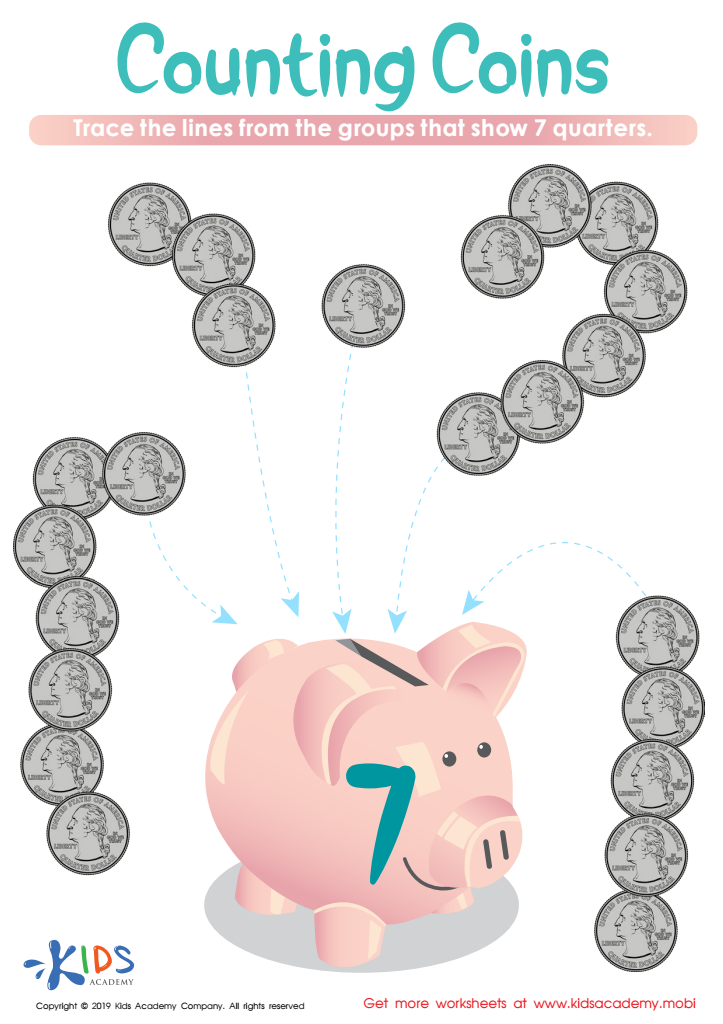
Counting Coins Worksheet
 Assign to My Students
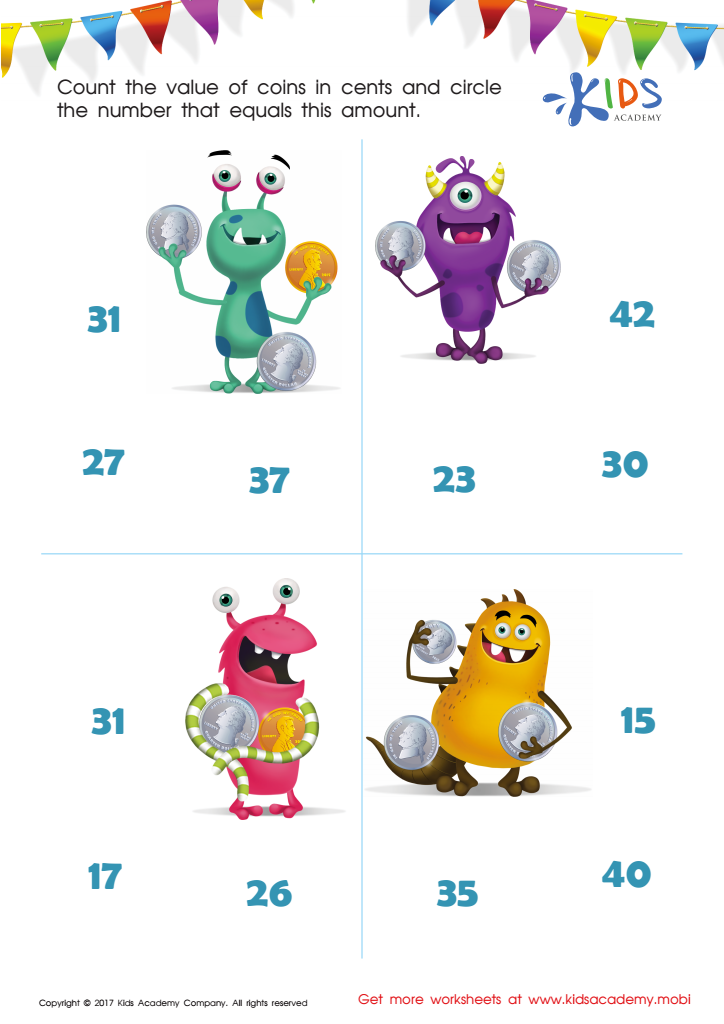
How Many Coins Money Worksheet
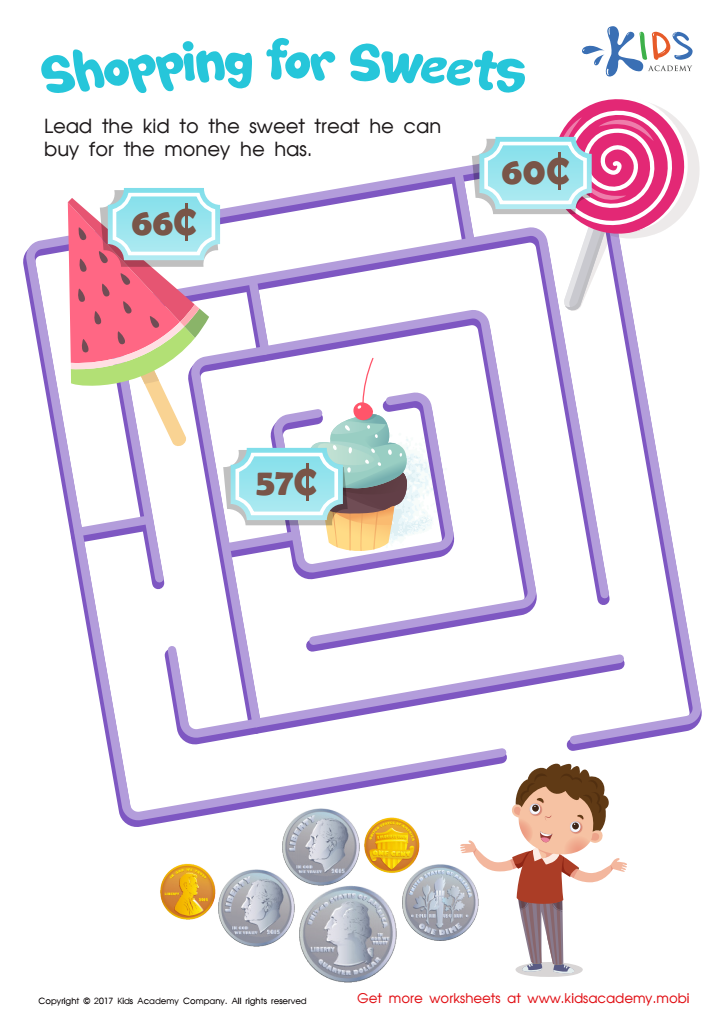
Shopping for Sweets Worksheet








Parents and teachers should prioritize teaching addition skills and money concepts to kindergarteners because these foundational skills are crucial for their overall academic and life success. Addition forms the basis of more complex mathematical concepts that children will encounter in later years. By mastering basic addition, children develop numeracy skills that are essential for problem-solving and critical thinking. These skills enhance their ability to understand and manipulate numbers in various contexts, fostering a positive attitude towards mathematics.
Introducing money concepts in kindergarten serves multiple purposes. It helps children understand the value of different coins and bills, boosting their financial literacy from an early age. Learning about money also provides practical applications for addition skills, as children will often need to calculate totals or make change. This practical exposure reinforces their ability to perform addition in real-world scenarios, making learning both relevant and engaging.
Being proficient in these fundamental skills also fosters independence and confidence in young learners. When children possess strong addition and money-handling skills, they can independently manage small transactions, such as buying snacks or school supplies. This autonomy promotes a sense of responsibility and accomplishment.
In summary, focusing on addition skills and money concepts in kindergarten establishes essential academic and practical life skills, fostering future success and independence for young learners.








