Comparing quantities Kindergarten Math Worksheets
4 filtered results
-
From - To
Discover our engaging Kindergarten Math Worksheets focused on comparing quantities! Perfect for early learners, these worksheets are designed to help children develop essential math skills while having fun. Your little ones will explore key concepts such as greater than, less than, and equal to through colorful illustrations and interactive activities. Each worksheet encourages hands-on practice, allowing students to visualize and understand differences in amounts effectively. Ideal for classroom use or at-home learning, our worksheets promote critical thinking and foster a love for math. Start building a strong foundation in comparing quantities today to boost your child's confidence in math skills!
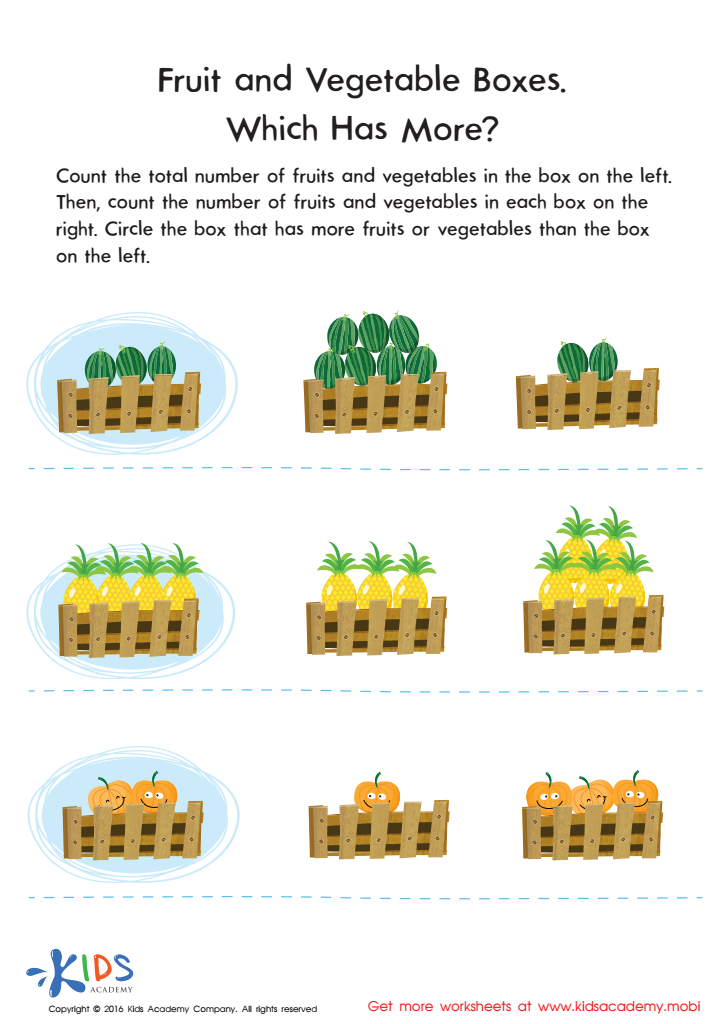
Which Has More? Size Worksheet
 Assign to My Students
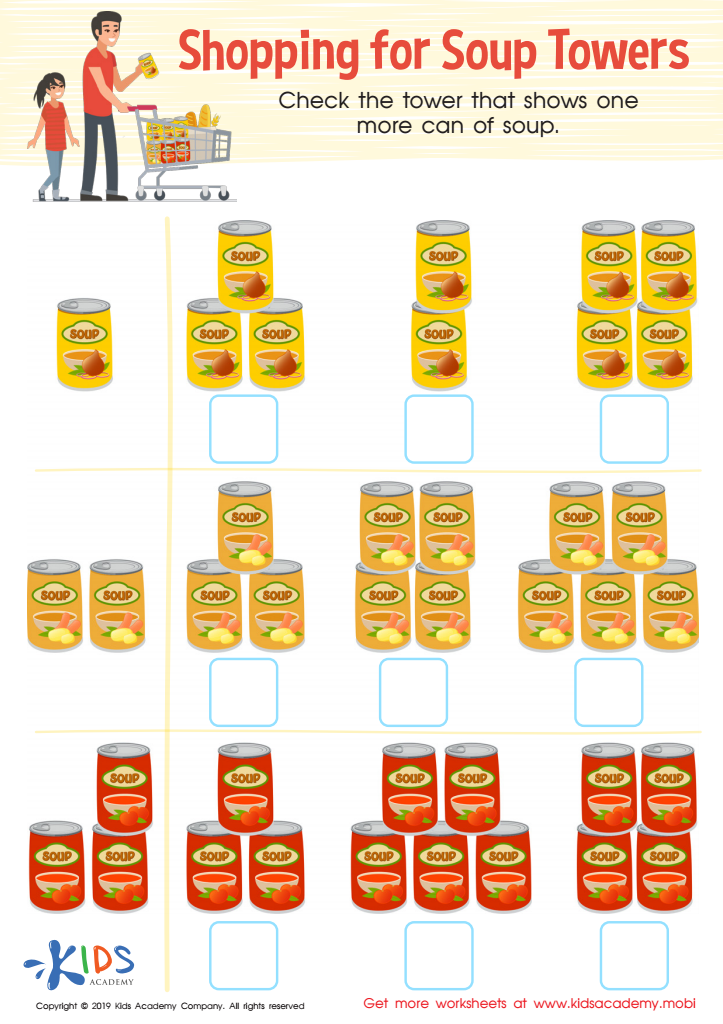
Soup Towers Worksheet
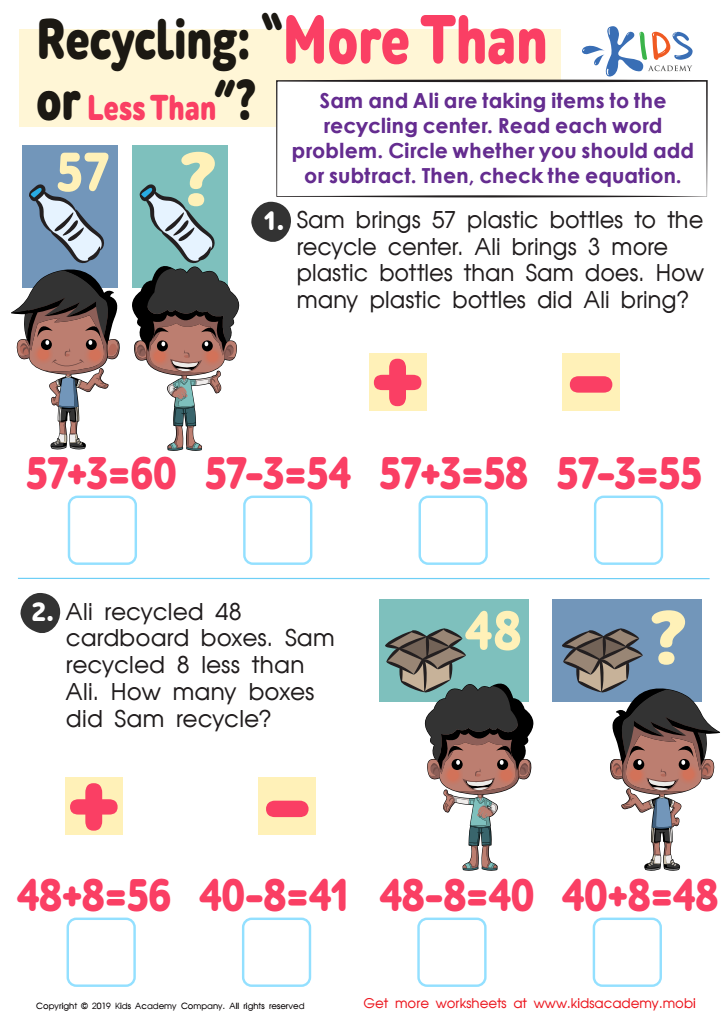
Recycling - More or Less Worksheet
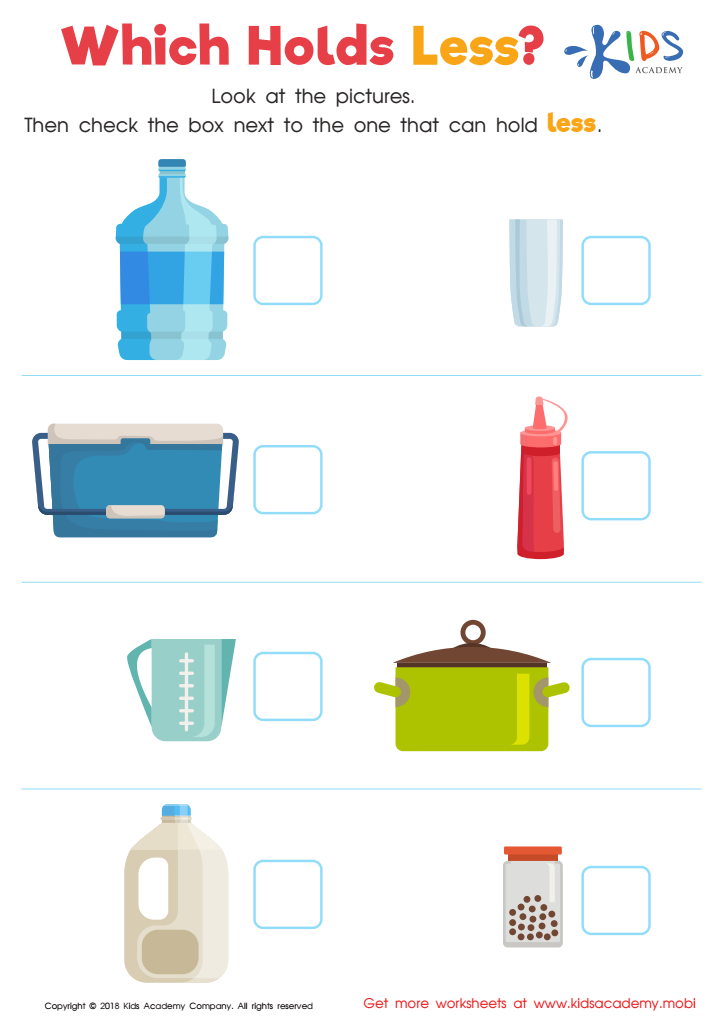
Which Holds Less? Worksheet






Comparing quantities is a fundamental skill in early childhood mathematics that holds significant importance for kindergarteners. Understanding how to compare quantities helps young learners develop essential numerical concepts such as more versus less, equal vs. unequal, and counting skills involved in addition and subtraction. By engaging in activities that promote these comparisons, children enhance their critical thinking and problem-solving abilities.
Parents and teachers should care about this skill because it lays the groundwork for future mathematical understanding and overall cognitive development. Early mastery of comparison sets the stage for more complex operations later in life, including the ability to understand fractions, measure, and comprehend data. Furthermore, comparing quantities can foster a child’s confidence in math, making them more likely to approach math-related tasks with enthusiasm rather than apprehension.
Additionally, incorporating everyday comparisons, such as counting fruits or comparing toy collections at home or in the classroom, makes learning engaging and relevant. By nurturing these skills, parents and teachers equip children with the tools needed not only for academic success but also for making sense of the world around them. Ultimately, understanding how to compare quantities can seamlessly integrate into various life skills, enhancing children's learning experiences both in and out of school.








