Environmental awareness Kindergarten Math Worksheets
3 filtered results
-
From - To
Discover our engaging Environmental Awareness Kindergarten Math Worksheets designed to foster young minds' appreciation for nature while developing essential math skills. These worksheets combine fun activities with learning objectives, helping children understand concepts like counting, patterns, and measurement in the context of the environment. Each worksheet encourages creativity and critical thinking, allowing kids to explore topics such as recycling, wildlife, and sustainable practices. Perfect for teachers and parents, our resources promote environmental stewardship along with foundational math skills. Make learning meaningful and fun by introducing your child to the world of math while nurturing their awareness of the environment!
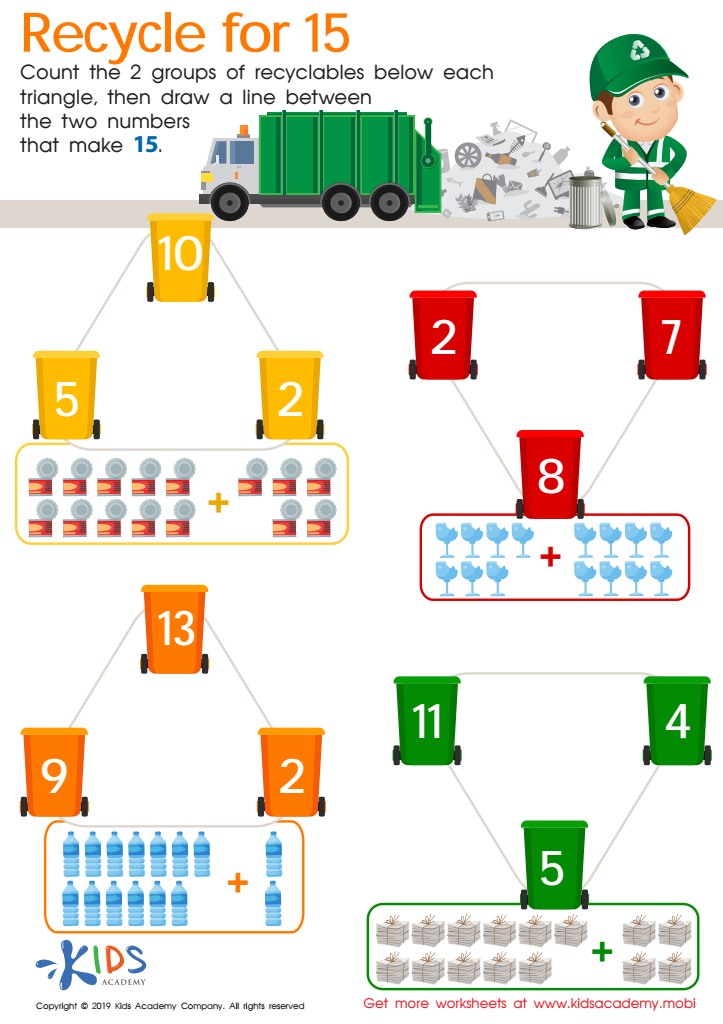
Recycle for 15 Worksheet
 Assign to My Students
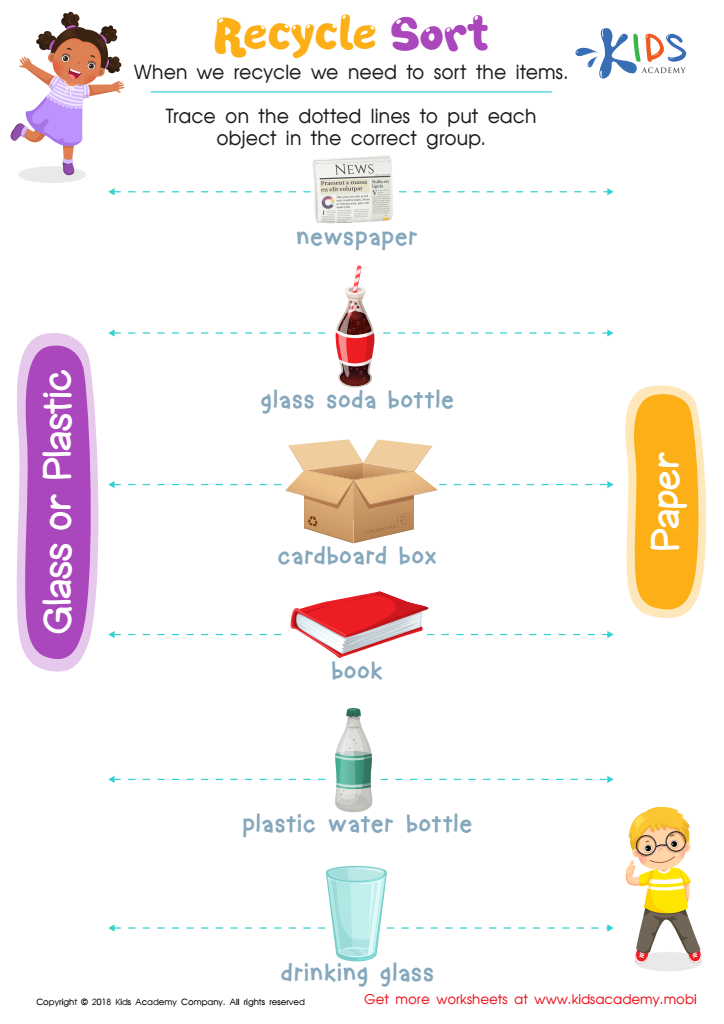
Recycle Sort Worksheet
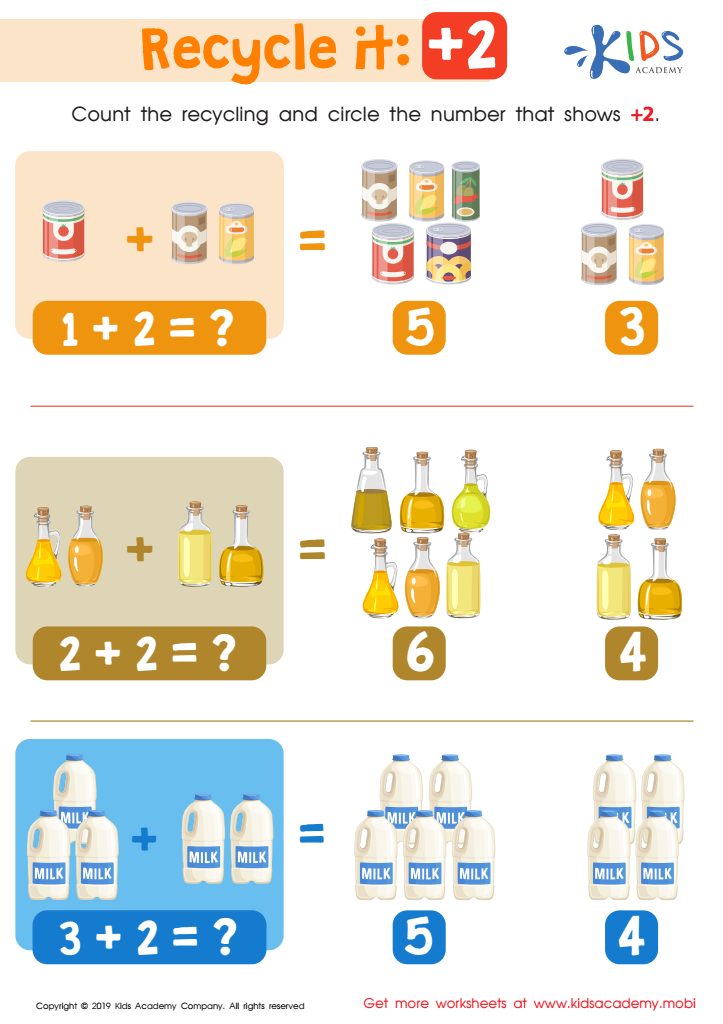
Recycle It: +2 Worksheet



.jpg)


Parents and teachers should prioritize environmental awareness in kindergarten math for several compelling reasons. First, early exposure to environmental concepts fosters a sense of responsibility toward the planet. By integrating environmental themes into math lessons, young children learn to appreciate the value of natural resources and understand the impact of their actions. For instance, counting plastic bottles or estimating the number of trees in a park can illustrate the importance of recycling and conservation.
Moreover, incorporating environmental awareness into math helps children develop critical thinking skills. As they engage with real-world problems, like measuring the distance between recycling bins or calculating the number of species in a garden, they practice applying math to situations that affect their surroundings. This relevancy enhances their learning experience and nurtures an inquisitive mindset.
Additionally, teaching environmental stewardship through math promotes collaborative learning. Children can work together on projects that require measurement, data collection, and analysis, fostering teamwork and communication skills.
Ultimately, integrating environmental awareness into kindergarten math not only enriches students' academic experience but also empowers them to become informed, caring citizens who are equipped to tackle the environmental challenges of the future.








