Sorting skills Kindergarten Numbers 0–10 Worksheets
3 filtered results
-
From - To
Enhance your child’s early math skills with our engaging "Sorting Skills Kindergarten Numbers 0–10 Worksheets." Specifically designed for young learners, these worksheets promote number recognition and sorting abilities in a fun and interactive way. Through a variety of exercises, children (ages 5-6) will match, group, and categorize numbers, fostering critical thinking and foundational math skills. Each worksheet features vibrant illustrations that make learning enjoyable, helping your child grasp concepts of quantity, sequence, and numerical relationships. Perfect for classroom or at-home learning, these resources will spark your child's interest in math while building essential sorting skills. Download now for endless educational fun!
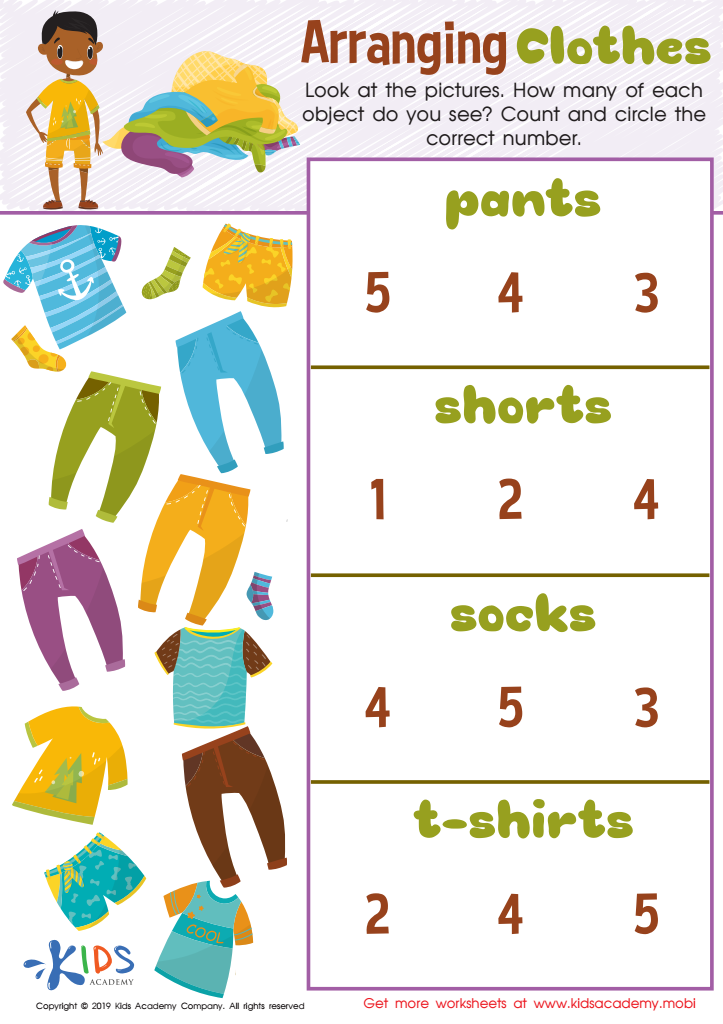
Arranging Clothes Worksheet
 Assign to My Students
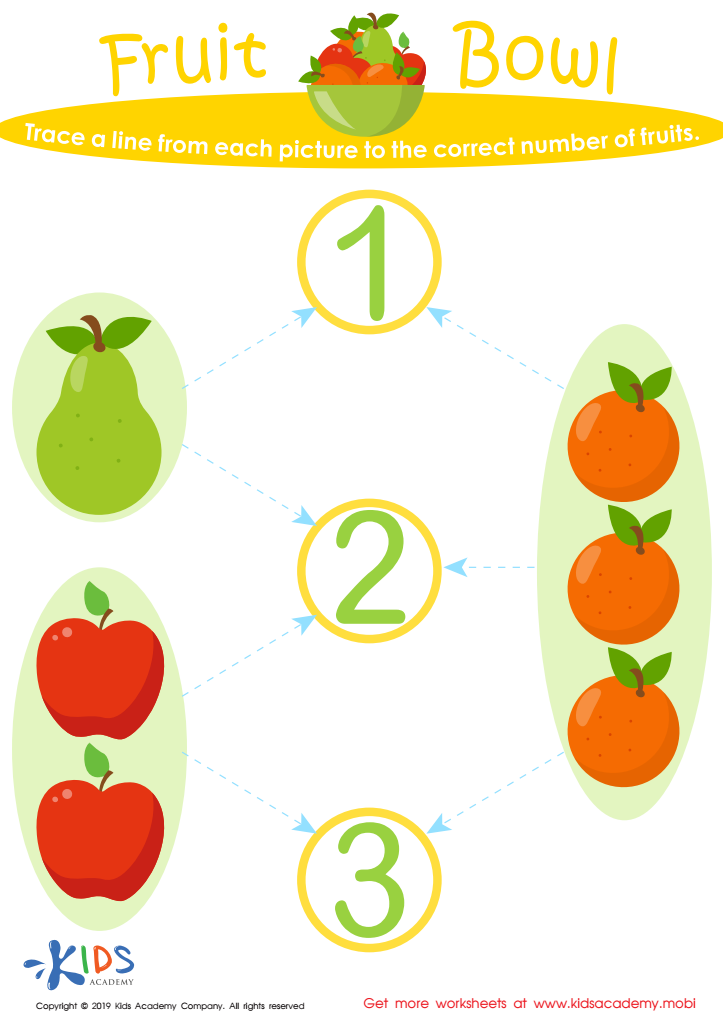
Fruit Bowl Worksheet
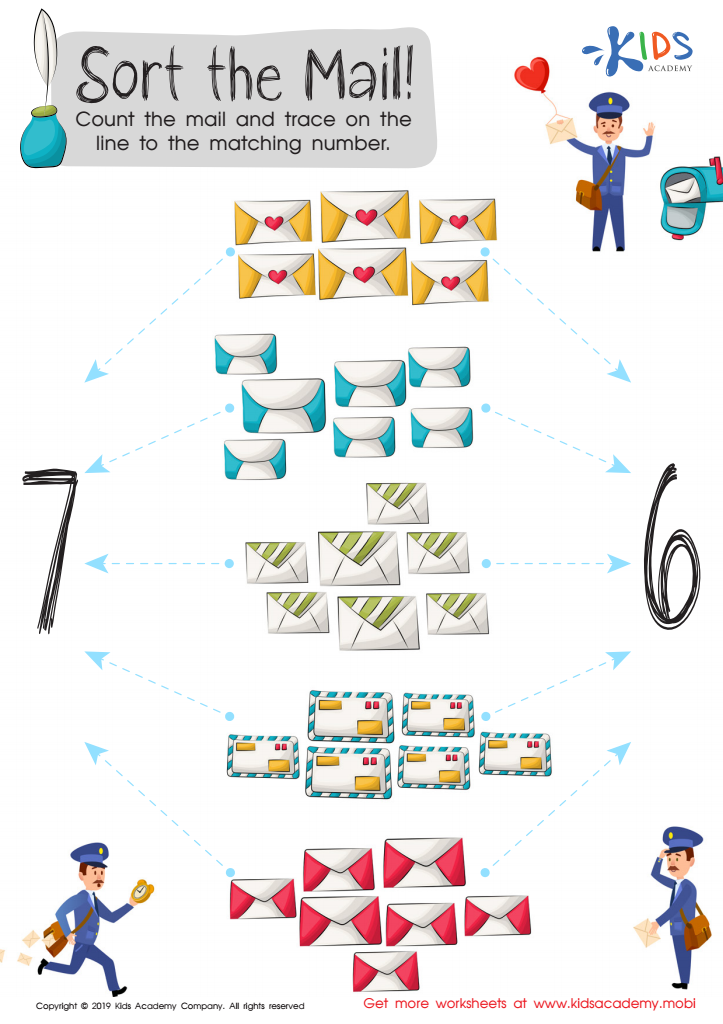
Sort the Mail Worksheet




Sorting skills are crucial for young learners in kindergarten, particularly when working with numbers 0–10. Understanding how to sort objects or numbers lays the foundation for essential mathematical concepts that students will encounter as they progress in their education. Parents and teachers should prioritize sorting skills for several reasons.
Firstly, sorting helps children develop critical thinking and categorization abilities. By sorting numbers or objects based on attributes like size, color, or quantity, students learn to identify similarities and differences, which enhances their analytical skills. This cognitive development is vital not only for mathematics, but for problem-solving across various subjects.
Secondly, sorting skills serve as a precursor to more complex mathematical operations such as addition and subtraction. Recognizing patterns and grouping numbers strengthens a child’s understanding of numerical relationships, giving them a head start in arithmetic.
Moreover, sorting activities can be engaging and interactive, providing opportunities for collaborative learning, social skill development, and effective communication among peers. By cultivating these skills early on, we empower children with a solid foundation for future academic success, ensuring they are equipped to handle more advanced mathematical concepts with confidence. Ultimately, supporting sorting skills in kindergarten translates to lasting benefits throughout a child's educational journey.