
Alphabet understanding Normal Letter Recognition Worksheets for Ages 3-5
5 filtered results
Difficulty Level
Grade
Age
-
From - To
Subject
Activity
Standards
Help your child thrive in literacy with our Alphabet Understanding Normal Letter Recognition Worksheets, designed specifically for ages 3-5. These engaging worksheets foster foundational reading skills by focusing on letter recognition, essential for early learners. Children will explore uppercase and lowercase letters through fun activities, enhancing their ability to distinguish between different letters. Our printable resources are perfect for parents and educators looking to create a rich learning environment. Encourage creativity, develop fine motor skills, and build confidence in letter recognition with these expertly crafted worksheets. Make learning the alphabet an enjoyable adventure for your young ones today!
Favorites
With answer key
Interactive
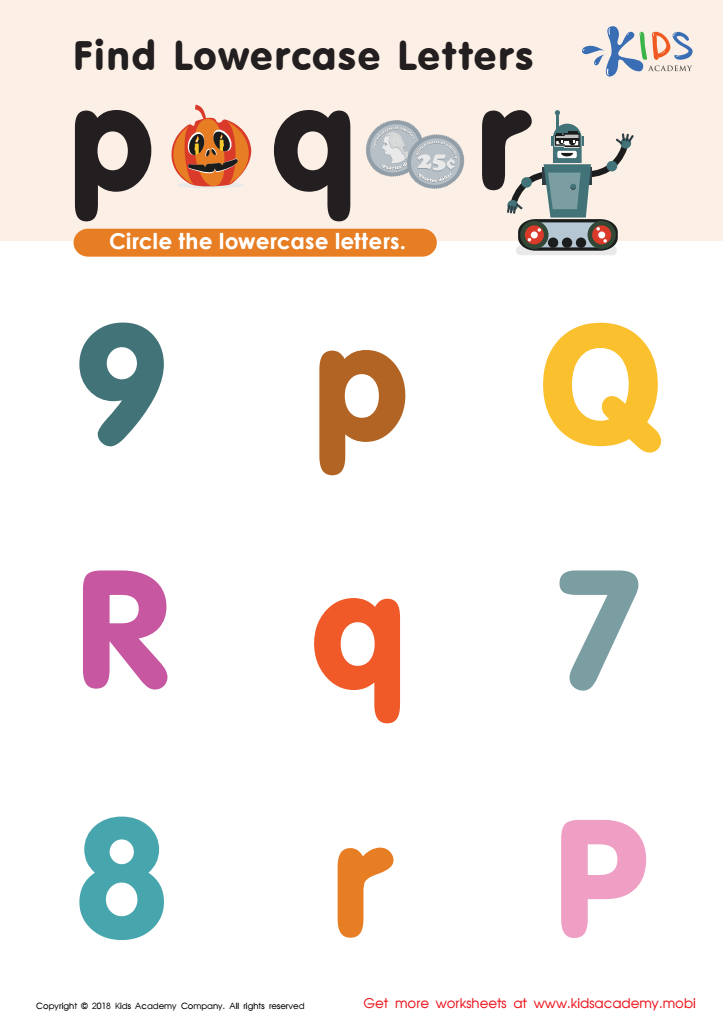
Find lowercase Letters p q r Worksheet
Help your child spot the lowercase letters among the numbers and uppercase letters in this worksheet. It's a great way to teach them to identify and write the lowercase and uppercase letters. Assist them in completing the exercise to give them a better understanding of the alphabets.
 Assign to My Students
Find lowercase Letters p q r Worksheet
Worksheet
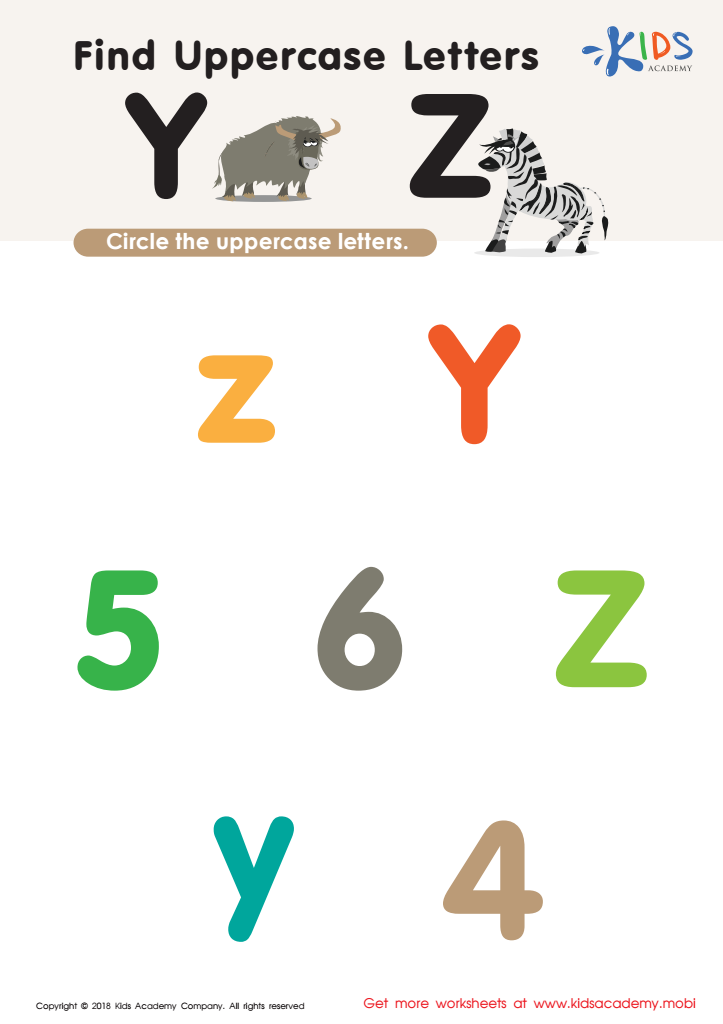
Find Uppercase Letters Y Z Worksheet
Download the worksheet! Help your youngster to learn the alphabet and distinguish uppercase from lowercase letters by having them circle the uppercase ones. It's an important first step towards reading and writing success!
Find Uppercase Letters Y Z Worksheet
Worksheet
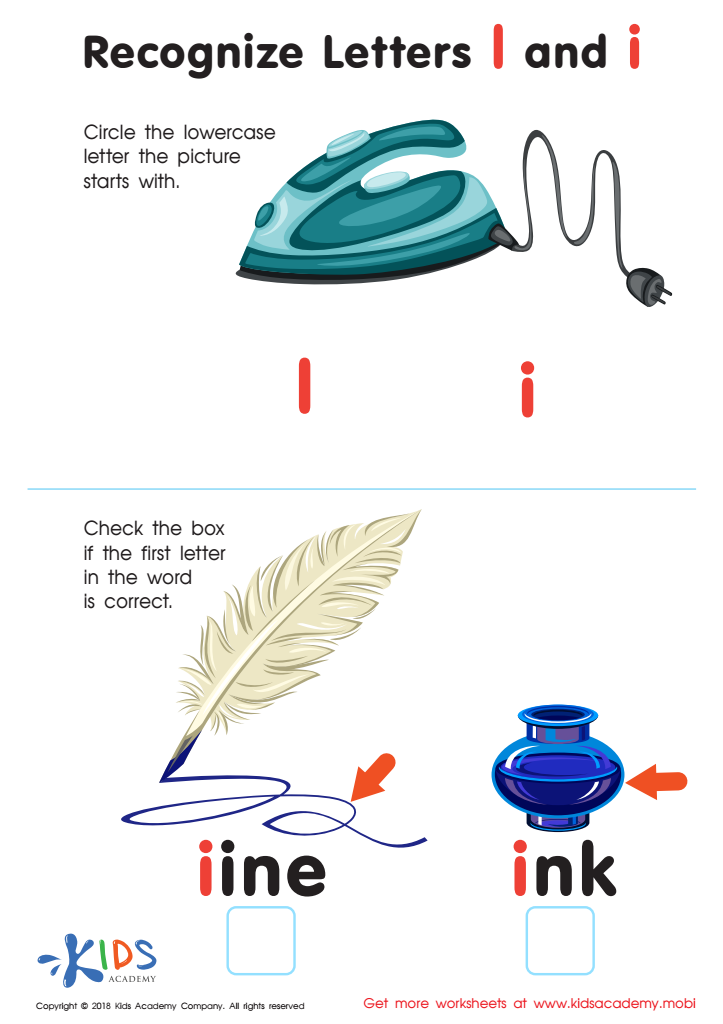
Recognize Letters l and i Worksheet
Help your child become familiar with uppercase and lowercase letters. Have them look at the pictures in the worksheet and circle the lowercase letter the picture starts with. For example: which one is the lowercase "i", the capital "I" or the small "i"?
Recognize Letters l and i Worksheet
Worksheet

Find lowercase letters a b c Worksheet
Help your child identify lowercase letters with this worksheet. Carefully look at each letter and have your child circle the lowercase ones. This exercise is vital in helping them understand the alphabet and the difference between lower and uppercase letters.
Find lowercase letters a b c Worksheet
Worksheet
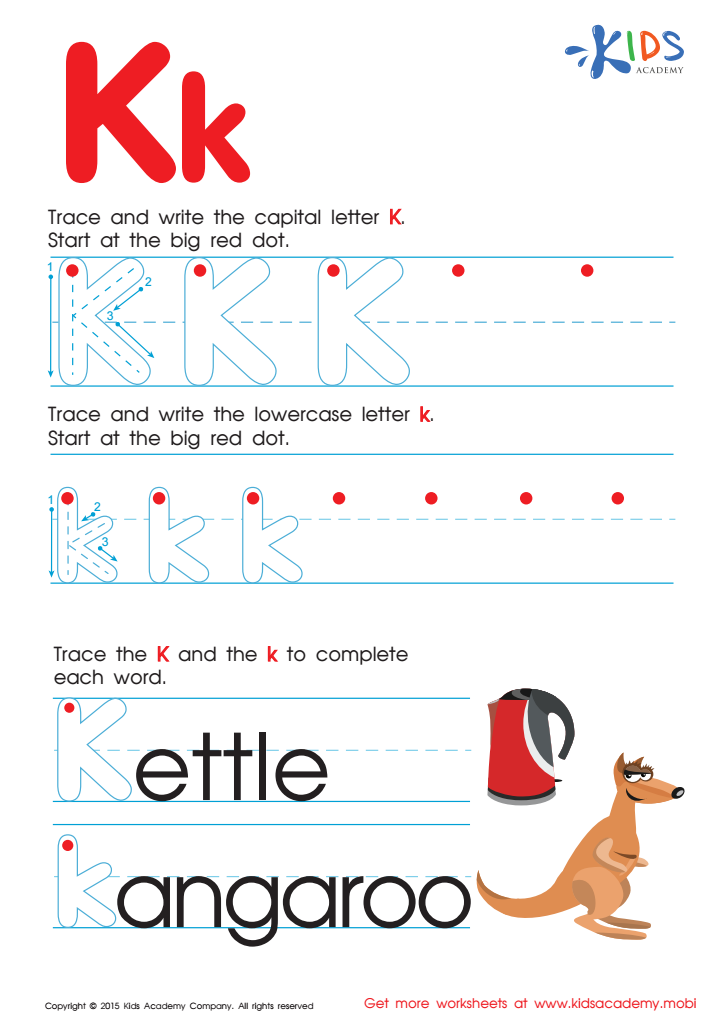
Letter K Tracing Page
Trace and write the letter K; start at the big red dot. Use it to complete words like "Kettle" and "Kangaroo". Visit Kids Academy for more free alphabet worksheets for kindergarten.
Letter K Tracing Page
Worksheet
Join Kids Academy for Free
Who is primarily going to use this learning content?








Understanding the alphabet and normal letter recognition is crucial for children aged 3-5 as it lays the foundation for their future literacy skills. At this early age, children are highly receptive to learning, and mastering letter recognition helps develop phonemic awareness, a vital skill for reading. When children can identify letters, they begin to understand that letters represent sounds, forming the basis for decoding words – a key step in literacy.
Parents and teachers should care about this development because it directly influences a child's confidence and engagement with reading and writing. The ability to recognize letters enhances vocabulary acquisition and fosters a love for books, promoting lifelong learning habits. Furthermore, children with strong letter recognition skills often show better academic performance in later grades.
Additionally, engaging with alphabet learning activities cultivates vital communication skills, encouraging children to express themselves verbally and in writing. In a world increasingly driven by literacy and communication, ensuring young children grasp the fundamentals of the alphabet will empower them throughout their educational journey and beyond. In summary, prioritizing alphabet understanding is essential for enabling young learners to thrive, both academically and personally.








