Fine motor skills development Normal Letter Recognition Worksheets for Ages 3-5
3 filtered results
-
From - To
Enhance your child's fine motor skills with our "Normal Letter Recognition Worksheets for Ages 3-5." Specially designed for preschoolers, these engaging activities help young learners build essential handwriting abilities while recognizing letters of the alphabet. Our fun and interactive worksheets focus on improving pencil grip, hand-eye coordination, and meticulous tracing skills. With colorful illustrations and easy-to-follow instructions, kids will enjoy learning as they prepare for more advanced writing tasks. Free to print, these worksheets are perfect for home or classroom use, making early literacy development enjoyable and effective. Explore now and watch your child's confidence flourish!
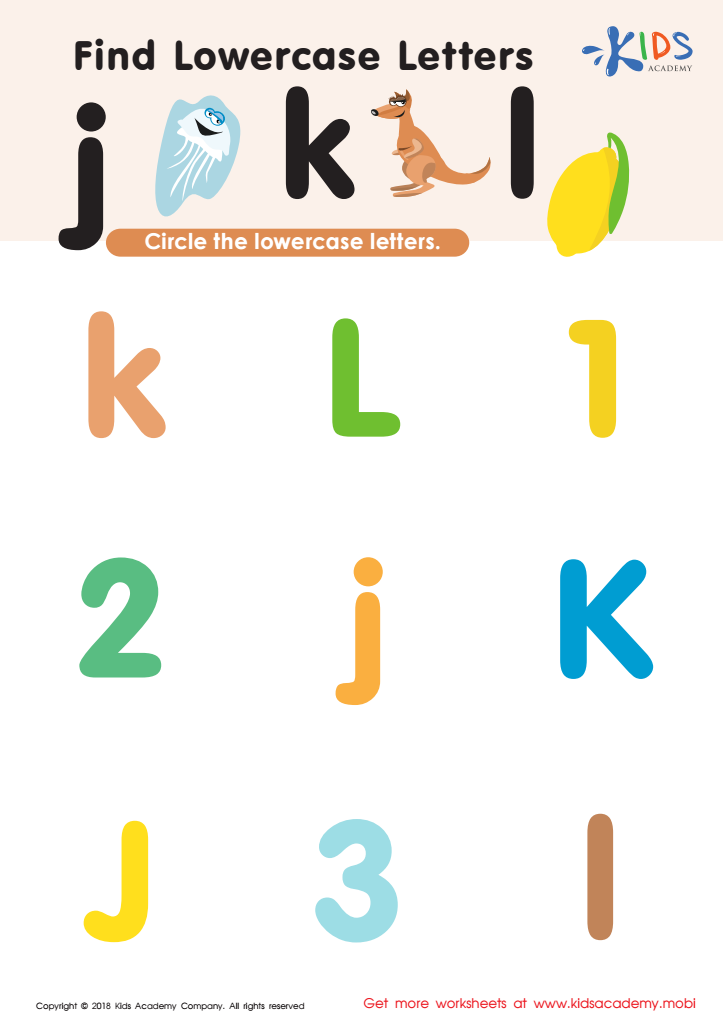
Find Lowercase Letters j k l Worksheet
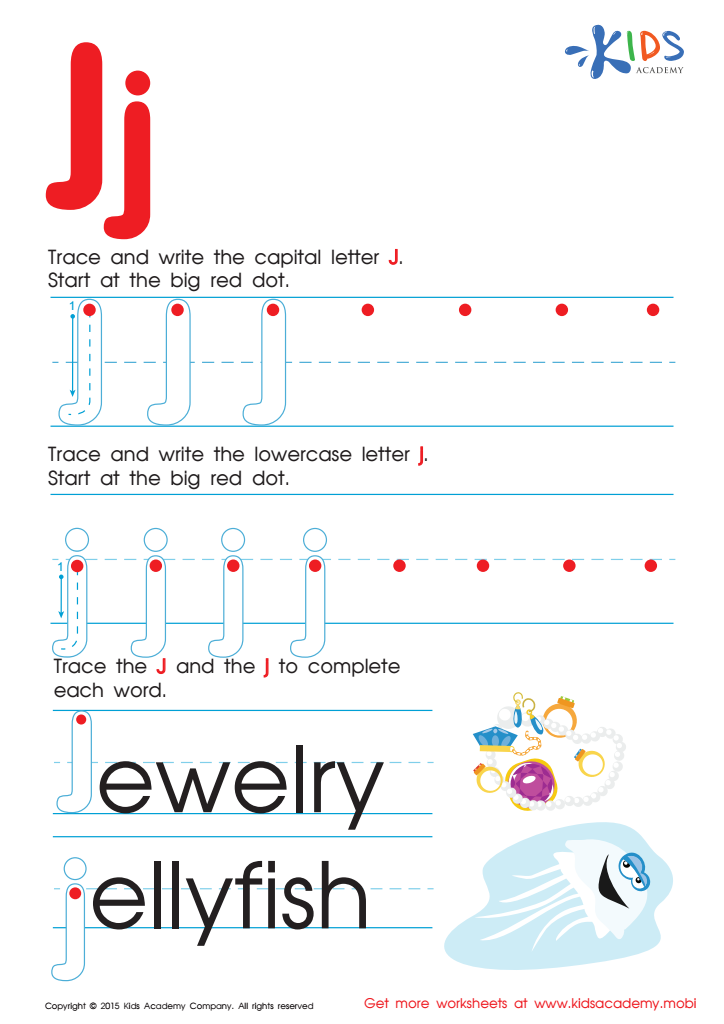
Letter J Tracing Page
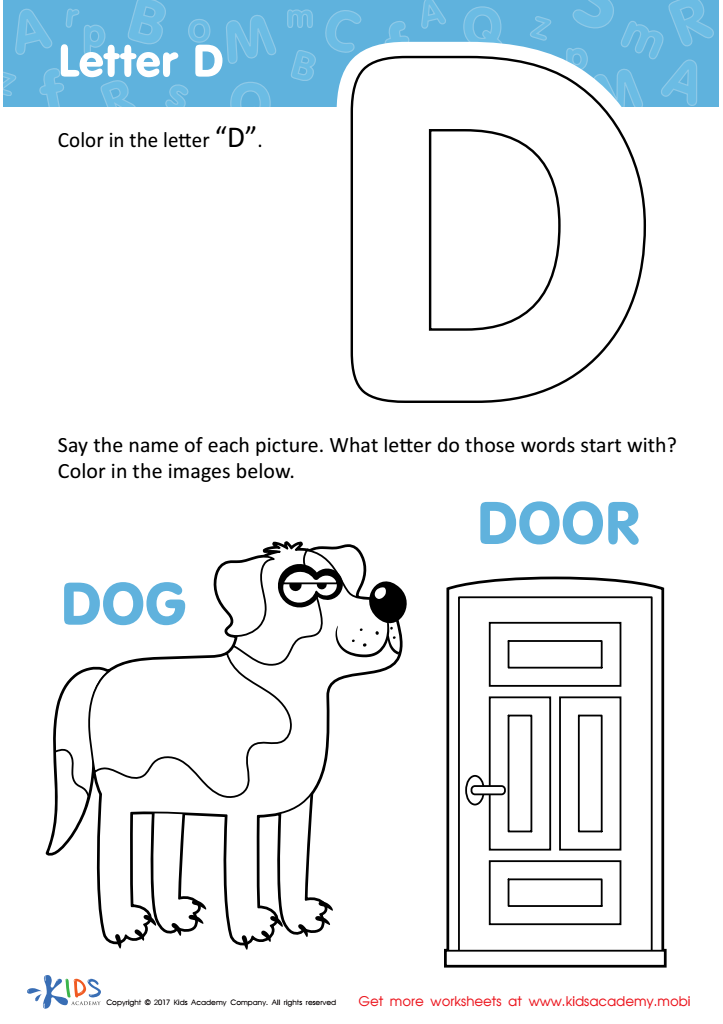
Letter D Coloring Sheet
 Assign to My Students








Fine motor skills development and normal letter recognition are crucial for children aged 3-5 as they form the foundational skills for academic success and daily activities. Fine motor skills involve the precise movements of the small muscles in the hands and fingers. These skills enable children to perform essential tasks like writing, drawing, buttoning clothes, and using utensils. Developing fine motor skills at an early age directly enhances hand-eye coordination, improves dexterity, and promotes independence in managing personal care tasks.
Normal letter recognition, the ability to identify and name letters of the alphabet, is equally important. It is a key precursor to literacy and strongly correlates with future reading abilities. During ages 3-5, children are in the pre-reading stage where recognizing letters by sight paves the way for phonemic awareness and word decoding. Early letter recognition fosters familiarity with the alphabet's shape and sound, facilitating smoother transitions into study practices that support writing and reading fluency.
Therefore, parents and teachers should encourage activities that develop fine motor skills and letter recognition to ensure that children acquire these fundamental building blocks. Engaging children in playful yet educational activities such as tracing letters, finger painting, and using play dough can greatly support their growth and academic readiness. Investing time and resources in these developmental areas helps set the stage for long-term academic achievements and daily life skills.








