
Handwriting improvement Normal Letter Recognition Worksheets for Ages 3-5
3 filtered results
Difficulty Level
Grade
Age
-
From - To
Subject
Activity
Standards
Boost your child's writing skills with our Handwriting Improvement Normal Letter Recognition Worksheets, designed specifically for ages 3-5. These engaging printable sheets feature fun, developmental activities that enhance letter recognition, fine motor skills, and hand-eye coordination. Perfectly tailored for young learners, our worksheets blend education with engaging exercises to solidify foundational handwriting skills. These resources pave the way for academic success by encouraging daily practice in a playful and positive manner. Explore our vast collection to help your preschoolers develop strong handwriting competencies and enjoy the early stages of learning to write with confidence.
Favorites
With answer key
Interactive
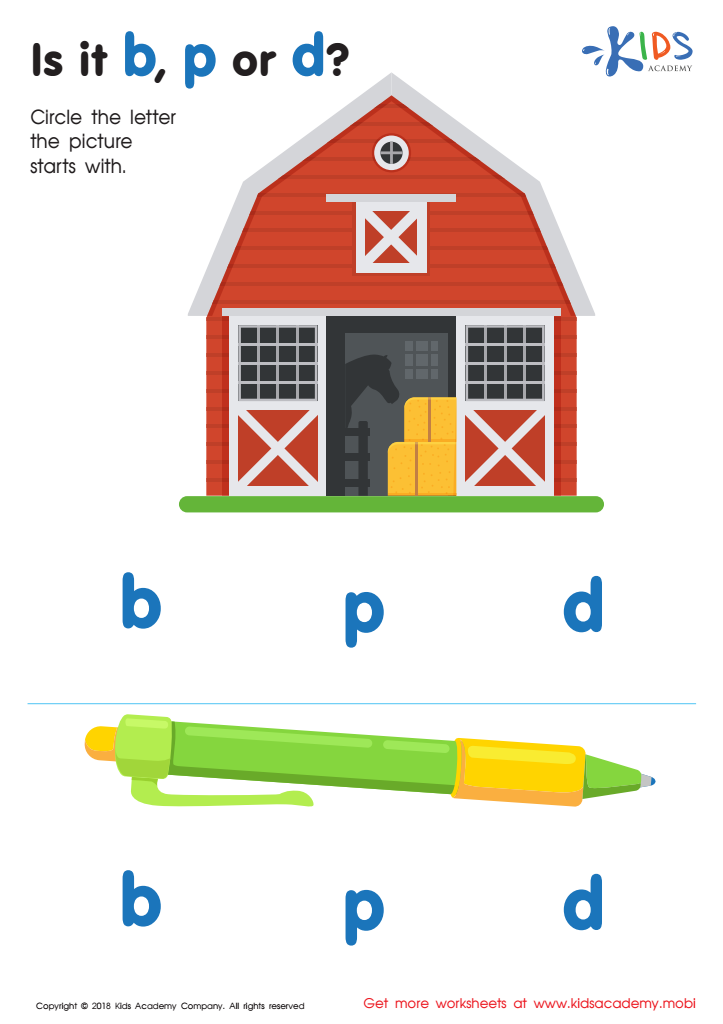
Is it b, p or d? Worksheet
Test your child's identification skills with this worksheet. They must identify the image and then circle the letter it begins with: 'b', 'p', or 'd' (e.g. an image of the sun would mean they circle 's').
 Assign to My Students
Is it b, p or d? Worksheet
Worksheet
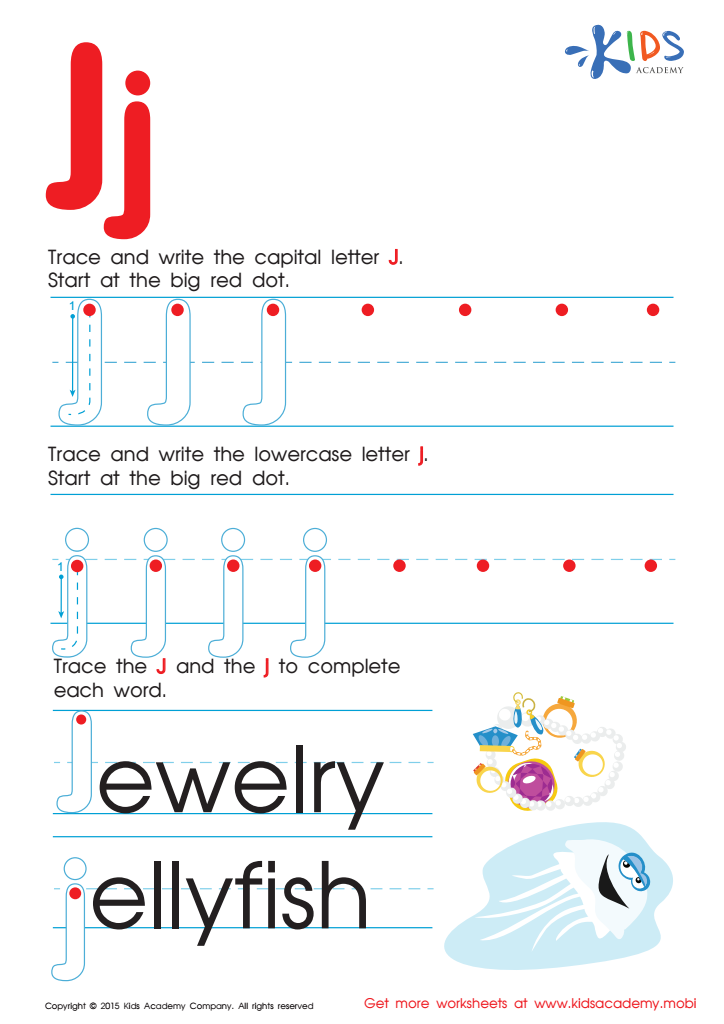
Letter J Tracing Page
Trace and write the letter "J" with our ABC worksheet - start at the big red dot! Have fun completing words like jewelry, jellyfish and more. Check out our kindergarten activities for more alphabet practice.
Letter J Tracing Page
Worksheet
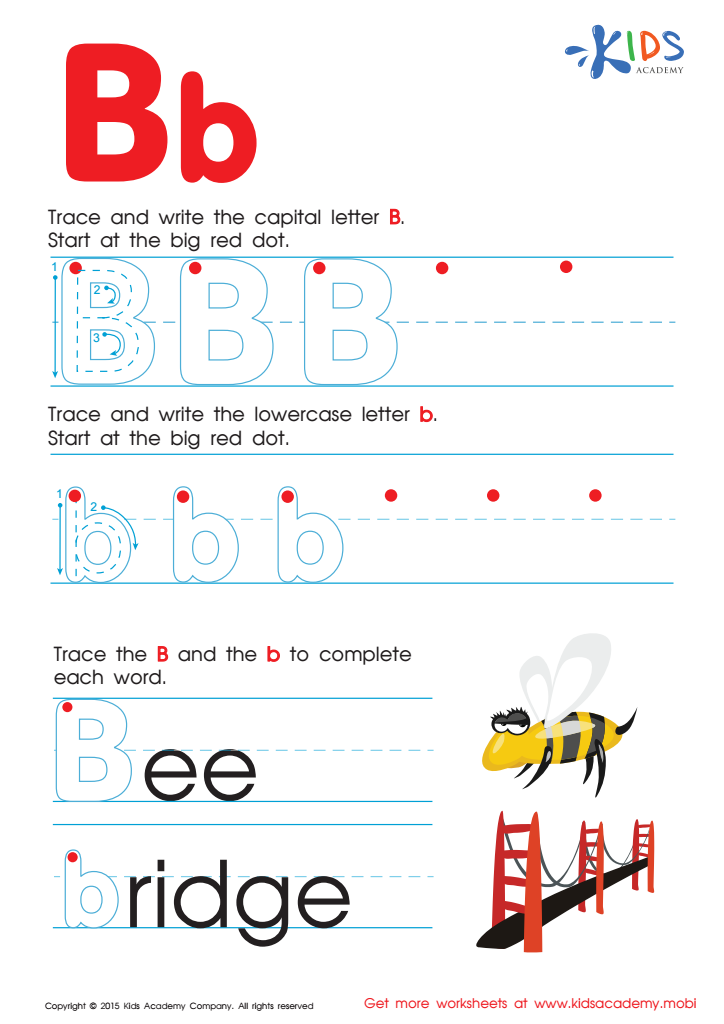
Letter B Tracing Page
Ready to learn the Alphabet? Put your pencil on the red dot and trace & write both capital & lowercase "B". Then have a look at the pictures. Catch the bee, cross the bridge & write the letters to complete the words. More ABC worksheets for kindergarten available!
Letter B Tracing Page
Worksheet
Join Kids Academy for Free
Who is primarily going to use this learning content?








Parents and teachers caring about handwriting improvement and normal letter recognition for children ages 3-5 is crucial for several fundamental reasons. At this early stage, fine motor skills are rapidly developing, and learning to write letters helps children gain the muscle strength and dexterity needed for other tasks. Proper handwriting practice also aids in cognitive development; as children recognize and form letters properly, they make essential neural connections that facilitate reading skills later on. This early literacy foundation is critical; children who can recognize and write letters are better prepared for the learning challenges they will face in kindergarten and beyond.
Additionally, practicing handwriting fosters attention to detail and discipline. It teaches children to focus, follow directions, and complete tasks—a sequence of behaviors that translate well into other academic and life skills. Improved handwriting allows children to express themselves more clearly and boosts their confidence as they see their progress. Furthermore, poorly formed letters may lead to misunderstandings and frustrations, impeding both social and educational interactions.
Given these profound benefits, it's evident why parents and teachers should prioritize handwriting improvement and letter recognition. Early intervention lays the groundwork for strong literacy skills, fine motor development, and a positive attitude towards learning, thereby supporting the child's overall educational trajectory.








