Letter-sound association Normal Letter Recognition Worksheets for Ages 3-5
4 filtered results
-
From - To
Discover our engaging Letter-Sound Association worksheets specifically designed for children aged 3-5! These normal letter recognition activities help young learners enhance their phonemic awareness by pairing letters with their corresponding sounds. Each worksheet is thoughtfully crafted to provide a fun and interactive learning experience, promoting early literacy skills essential for reading success. With colorful illustrations and age-appropriate exercises, children will develop their recognition of both uppercase and lowercase letters while exploring their sounds. Ideal for home or classroom use, these worksheets are perfect for encouraging a strong foundation in language development. Start your child's reading journey today!
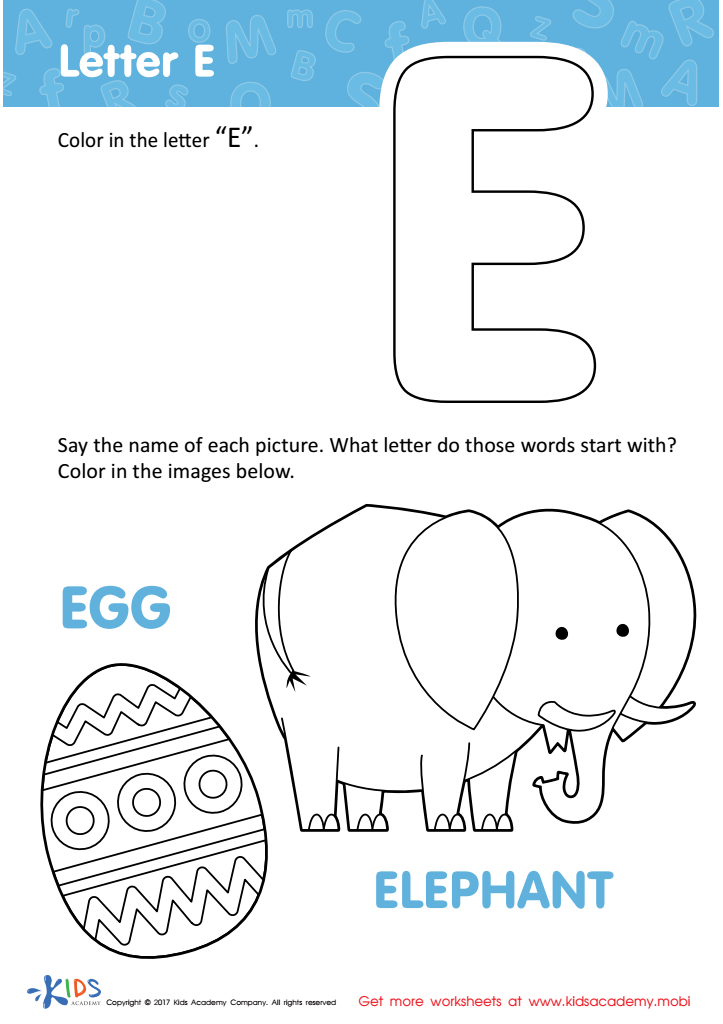
Letter E Coloring Sheet
 Assign to My Students
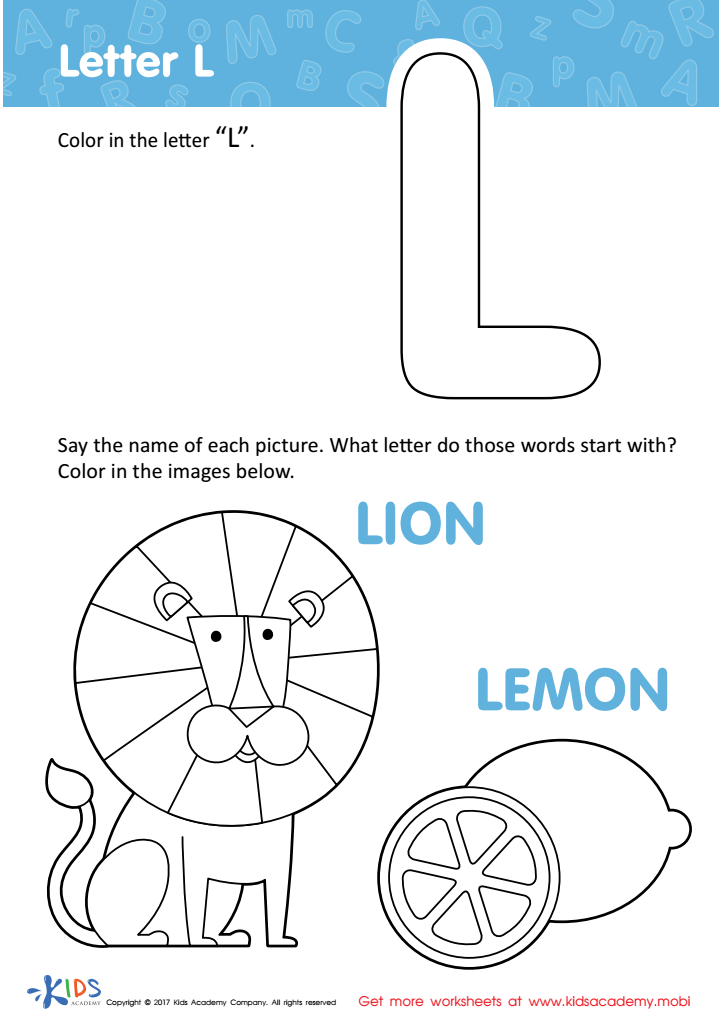
Letter L Coloring Sheet
Assign to My Students
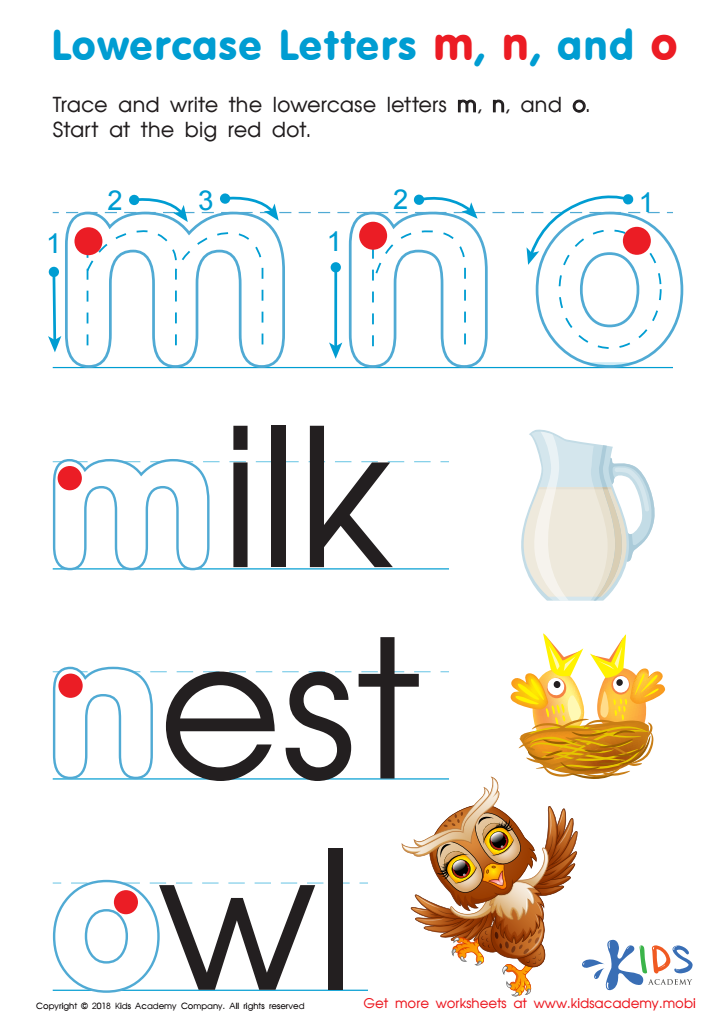
Lowercase Letters m n o Worksheet
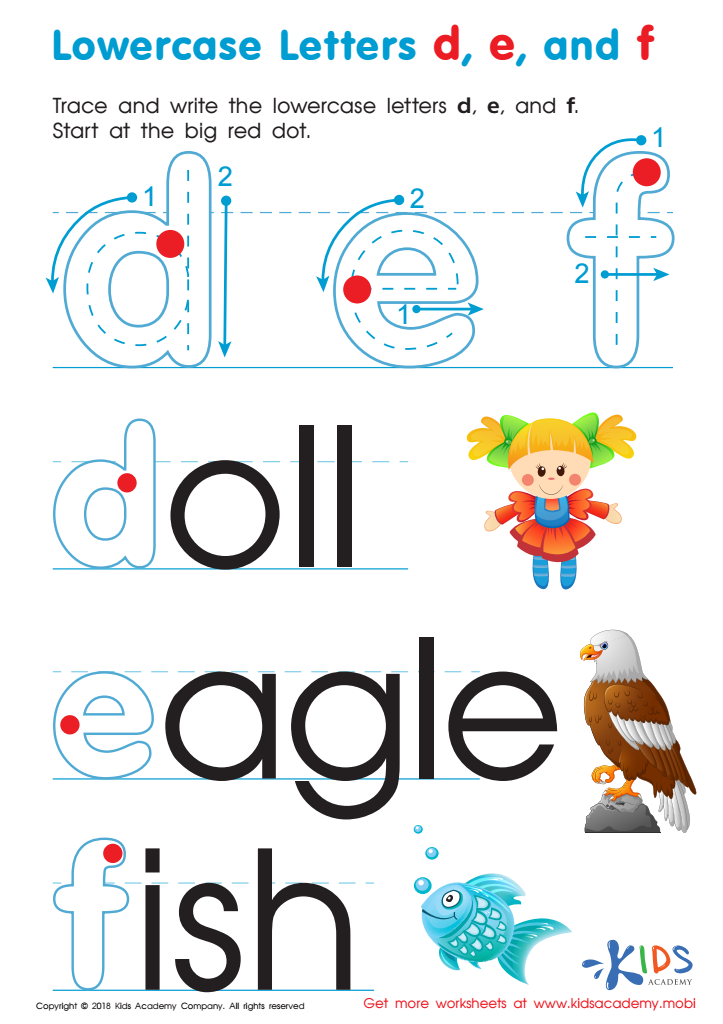
Lowercase Letters d e f Worksheet








Letter-sound association and normal letter recognition are foundational skills critical for early literacy development in children aged 3-5. These skills serve as the building blocks for reading and writing. Parents and teachers should prioritize these areas to ensure children are equipped with the necessary tools to communicate effectively.
Understanding letter-sound relationships helps children decode words, a crucial skill when they start to read. When children learn that the letter "b" corresponds with the /b/ sound, they can begin to blend sounds together to form words. Recognizing letters is equally important; knowing the alphabet and correctly identifying letters allows children to develop confidence in their reading journey.
Early mastery of these concepts can influence a child’s academic trajectory, as strong literacy skills correlate with overall academic success. Furthermore, fostering a love of letters and sounds can lead to enhanced vocabulary, better comprehension, and effective written communication.
Moreover, engaging in letter recognition activities can also be fun and interactive, providing opportunities for positive parent-child or teacher-student bonding. By prioritizing letter-sound associations and recognition in early education, we empower children to become proficient readers and enthusiastic learners. This early investment secures their future learning success and lifelong literacy skills.








