
Letter Tracing Normal Letter Recognition Worksheets for Ages 3-5
4 filtered results
Difficulty Level
Grade
Age
-
From - To
Subject
Activity
Standards
Discover our engaging "Letter Tracing and Normal Letter Recognition Worksheets" designed specifically for children ages 3 to 5! These worksheets provide a fun and interactive way for young learners to familiarize themselves with the alphabet while enhancing fine motor skills through tracing activities. Each worksheet features vibrant illustrations and familiar words, encouraging kids to connect letters with sounds and develop early literacy skills. Perfect for preschool and kindergarten settings, our resources promote independent learning and allow parents and educators to support their child's educational journey. Explore our collection today and make learning letters an exciting adventure!
Favorites
With answer key
Interactive
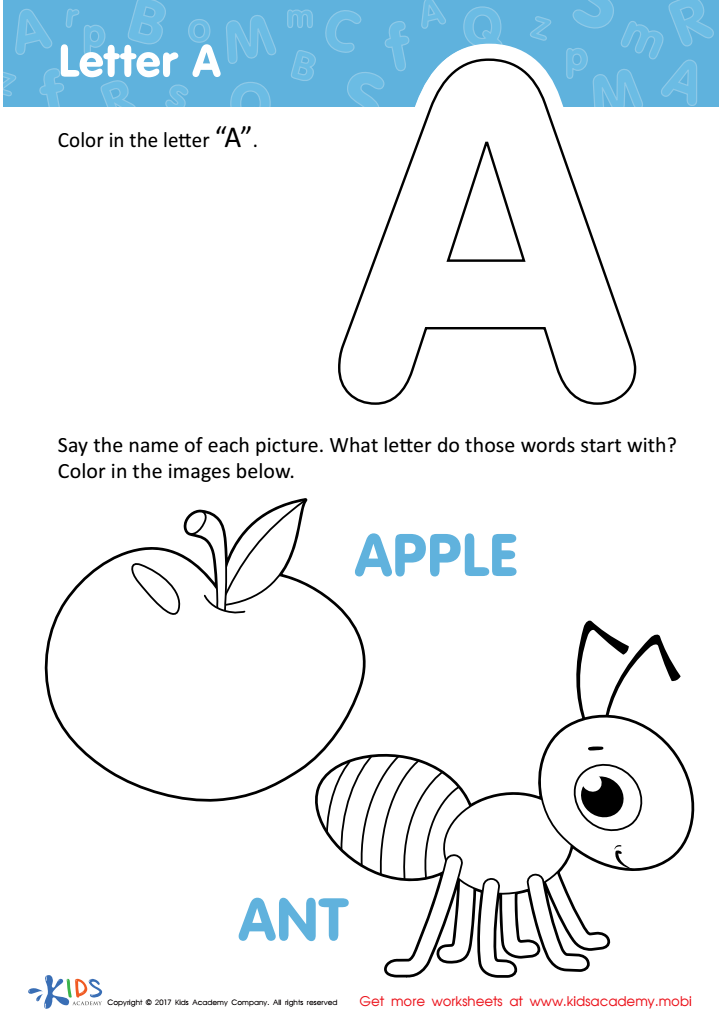
Letter A Coloring Sheet
This letter "A" coloring page is great for introducing kids to the alphabet! Let them exercise their creativity while they learn to recognize letters and sounds - it's a fun and easy way to help them get started.
Download (PDF)
 Assign to My Students
Assign to My Students
Letter A Coloring Sheet
Worksheet
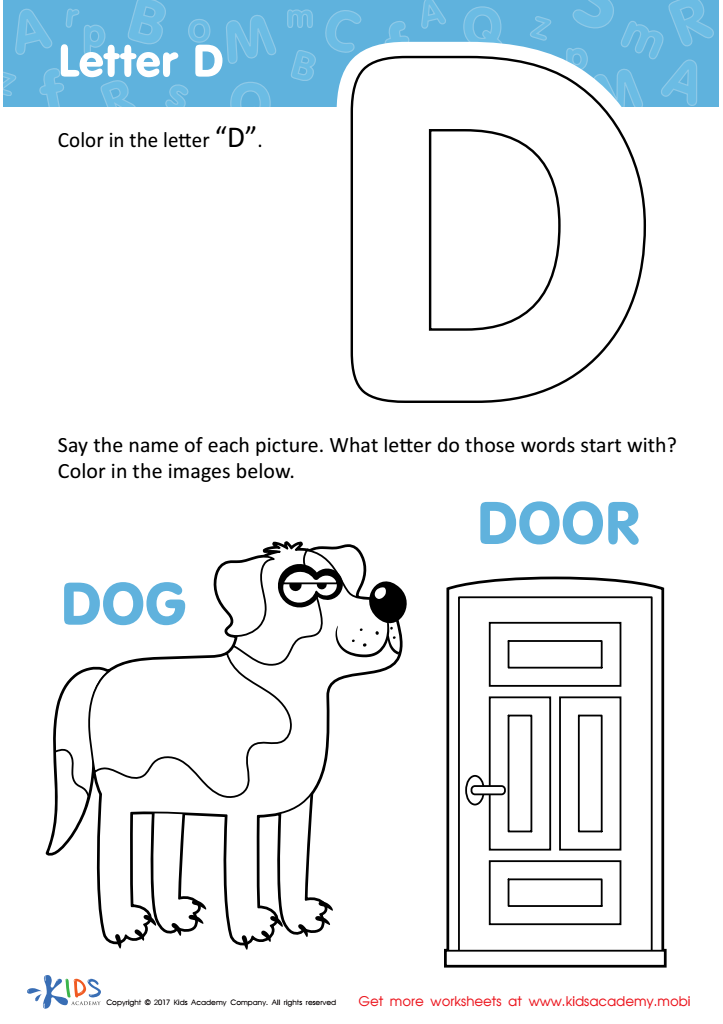
Letter D Coloring Sheet
Coloring with this letter "D" page is a great way to encourage your child's creativity while they learn the letter "D" and its sound. It's a fun activity to stimulate their imagination!
Download (PDF)
Assign to My Students
Assign to My Students
Letter D Coloring Sheet
Worksheet
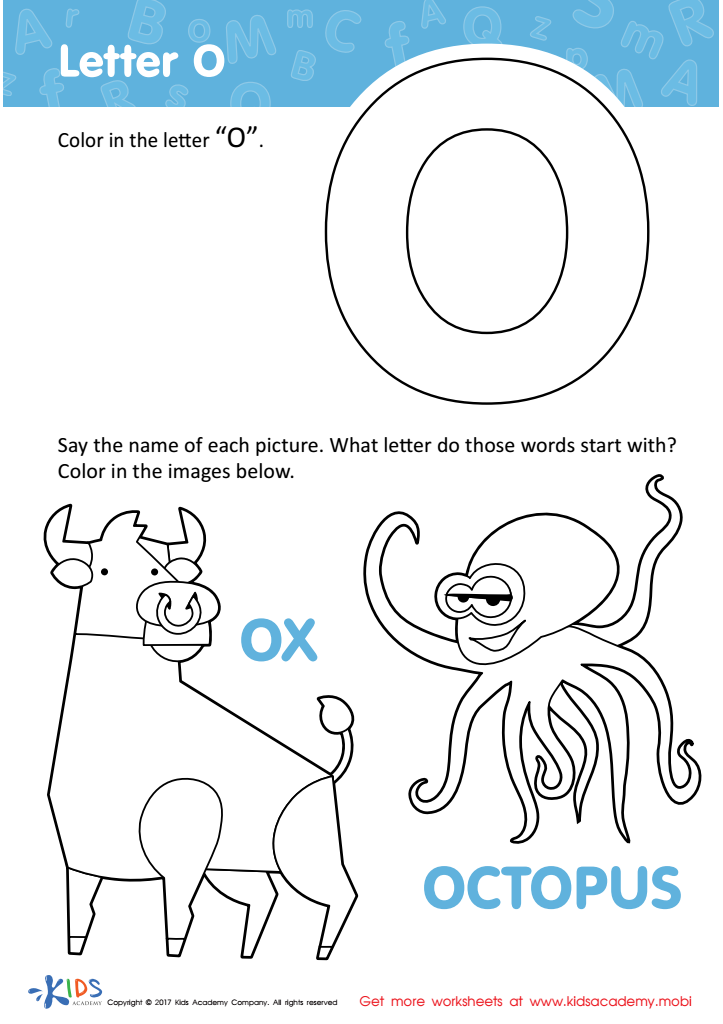
Letter O Coloring Sheet
Oh my! The letter "O" is so much fun. Coloring in the octopus and ox on this delightful letter "O" coloring page can help your child have fun while strengthening their recognition of the letter and sound.
Download (PDF)
Assign to My Students
Assign to My Students
Letter O Coloring Sheet
Worksheet
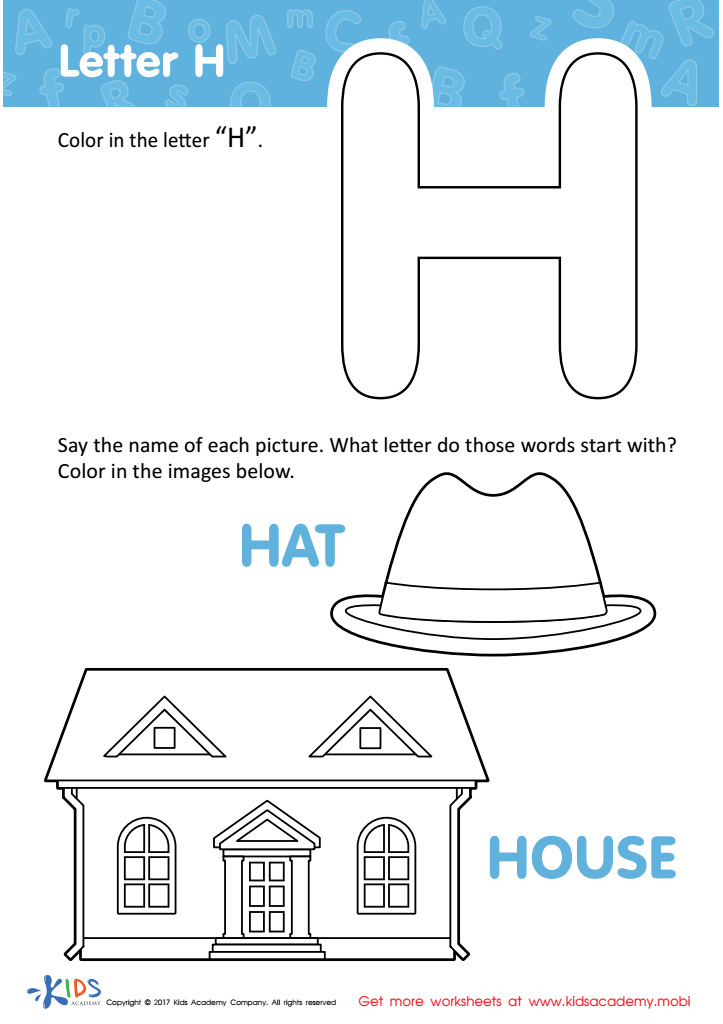
Letter H Coloring Sheet
This fun "H" coloring page will help your child recognize the letter and sound of "H"! With a hat and house to color, your little learner will have a blast picking colors and creating designs, all while learning about the letter "H"!
Download (PDF)
Assign to My Students
Assign to My Students
Letter H Coloring Sheet
Worksheet
Join Kids Academy for Free
Who is primarily going to use this learning content?








Letter tracing and normal letter recognition are essential skills for children ages 3-5 as they lay the foundation for literacy development. During this formative stage, children are beginning to understand the connections between written letters and the sounds they represent. Tracing letters helps young learners develop fine motor skills, improving their hand-eye coordination and preparing them for writing tasks later on. Engaging in this practice also reinforces memory, allowing children to recognize letters more readily.
Parents and teachers play a pivotal role in cultivating a child's interest and proficiency in these skills. By incorporating letter tracing activities into their routines, they create a supportive environment that encourages learning through play. Such activities can make learning fun, turning it into a positive experience that promotes self-confidence.
Moreover, early letter recognition contributes significantly to reading readiness. Children who recognize and can trace letters often find it easier to decode words, promoting reading advancement later in life. Ultimately, fostering these skills enhances a child's overall language development and academic success. By prioritizing letter tracing and recognition, caregivers and educators equip children with essential tools necessary for their educational journey, ensuring they are better prepared for future learning challenges.








