
Letter tracing skills Normal Letter Recognition Worksheets for Ages 3-5
3 filtered results
Difficulty Level
Grade
Age
-
From - To
Subject
Activity
Standards
Introduce your little ones to the world of literacy with our Letter Tracing Skills: Normal Letter Recognition Worksheets, designed for ages 3-5. These engaging, printable worksheets from Kids Academy emphasize the fundamentals of alphabet recognition through fun and interactive tracing activities. Children can develop their fine motor skills, hand-eye coordination, and letter formation while enjoying alphabet adventures. Perfect for preschool and kindergarten readiness, our worksheets provide a solid foundation for early reading and writing skills. Give your child a head start on their educational journey with these expertly crafted resources that make learning letters exciting and memorable!
Favorites
With answer key
Interactive
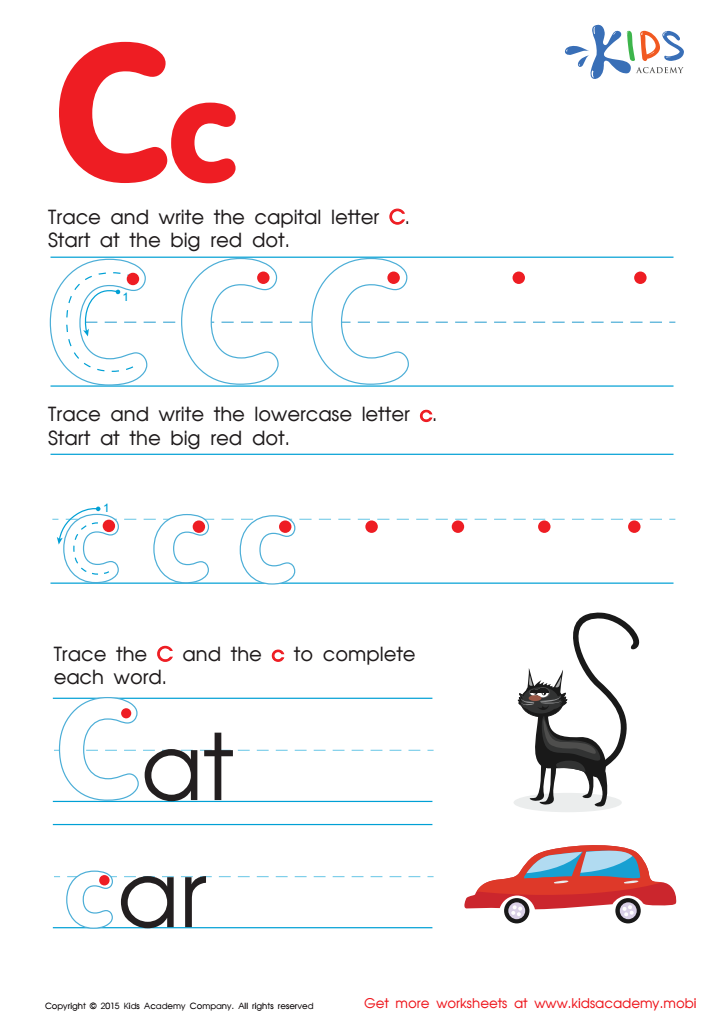
Letter C Tracing Page
Trace and write the letter 'C'! Put the pencil at the red dot then follow the lines – the capital letter first then the lowercase one. Cats love it and so will you! Get more free printables to practice tracing and writing.
Letter C Tracing Page
Worksheet
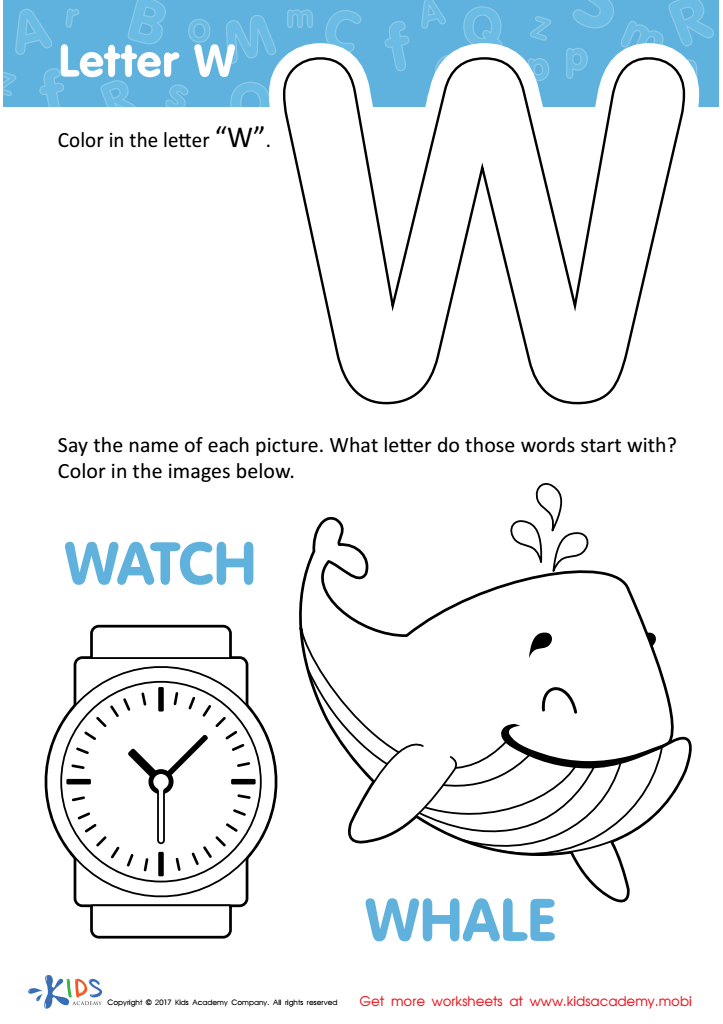
Letter W Coloring Sheet
Let your child have fun with this letter "W" coloring page! They can use their imagination to color the whale and discover the letter and its sound. Give them a helping hand to make it a whale of a time!
Download (PDF)
 Assign to My Students
Assign to My Students
Letter W Coloring Sheet
Worksheet

Uppercase Letters V, W, and X Worksheet
This worksheet is perfect for kids struggling to write uppercase letters V, W, and X. Warm up their brains first by having them name words starting with these letters. Then, help them trace and write each letter from the big red dot. With your assistance, they will quickly sharpen their writing skills.
Uppercase Letters V, W, and X Worksheet
Worksheet
Join Kids Academy for Free
Who is primarily going to use this learning content?








Letter tracing skills and normal letter recognition are foundational elements crucial to early childhood development for ages 3-5. At this stage, children are exceptionally receptive to learning new skills, and engaging in letter tracing activities significantly benefits their cognitive and motor development. Tracing letters aids in the refinement of fine motor skills as children learn to control their hand movements precisely, which is essential for tasks like writing and drawing.
Moreover, familiarizing children with the shapes and forms of letters through tracing enhances their visual memory and recognition capacity. This improved recognition ability is critical for reading readiness, as children who can easily identify letters are more likely to progress smoothly into phonetics and word formation. Consequently, early proficiency in letter recognition plays a significant role in literacy development.
Parents and teachers play a substantial role in fostering these skills, creating a supportive and enriching environment that stimulates a child's curiosity and love for learning. By investing time in letter tracing activities, caregivers equip children with the tools they need to succeed in future academic endeavors. Moreover, early engagement in educational tasks nurtures self-esteem and a positive attitude towards learning, setting a strong foundation for lifelong educational achievement.








