Lowercase letter writing Normal Letter Recognition Worksheets for Ages 3-5
3 filtered results
-
From - To
Perfect for preschool and kindergarten, our "Lowercase Letter Writing Normal Letter Recognition Worksheets for Ages 3-5" provide engaging practice to master handwriting foundational skills. Each worksheet focuses on individual lowercase letters, encouraging young learners to trace and write them accurately. Fun and interactive activities keep children engaged while enhancing their letter recognition abilities. Consistent practice helps solidify their understanding of the alphabet, setting a strong base for reading and writing. Ideal for home or classroom use, these worksheets are a valuable resource for parents and teachers aiming to foster confident and proficient young writers. Download now at Kids Academy!
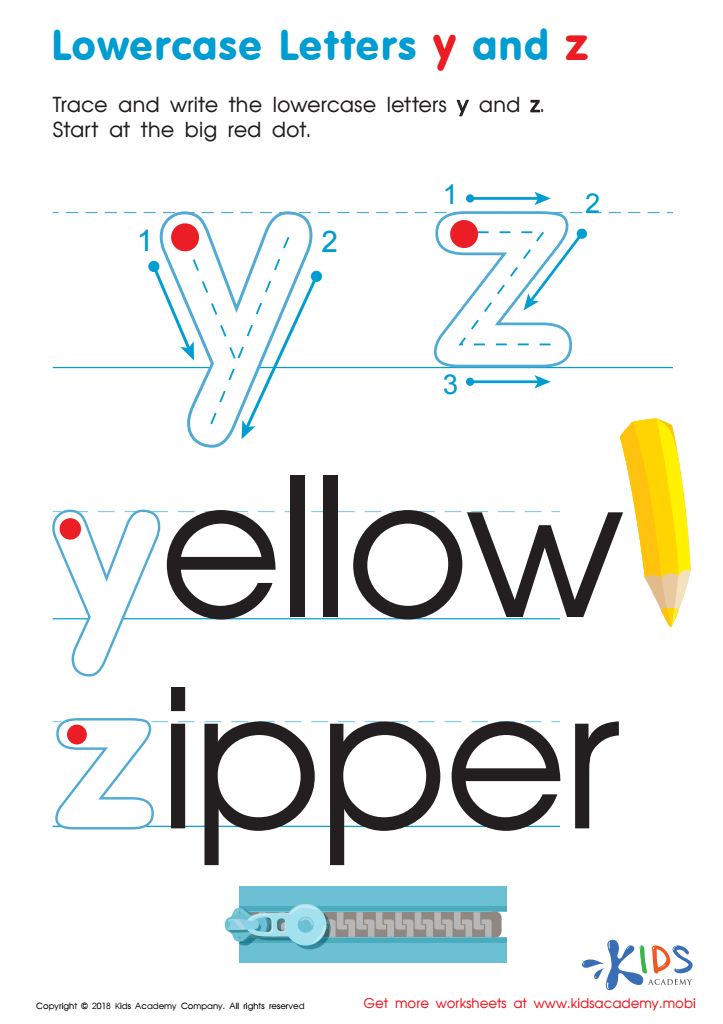
Lowercase Letters y z Worksheet
 Assign to My Students
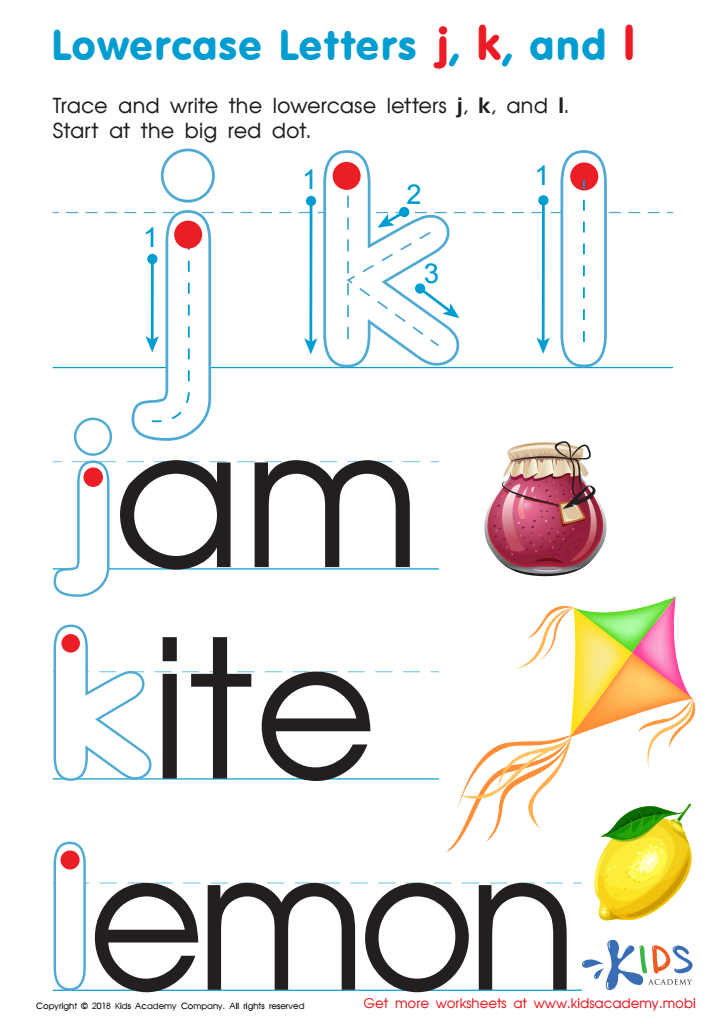
Lowercase Letters j k l Worksheet
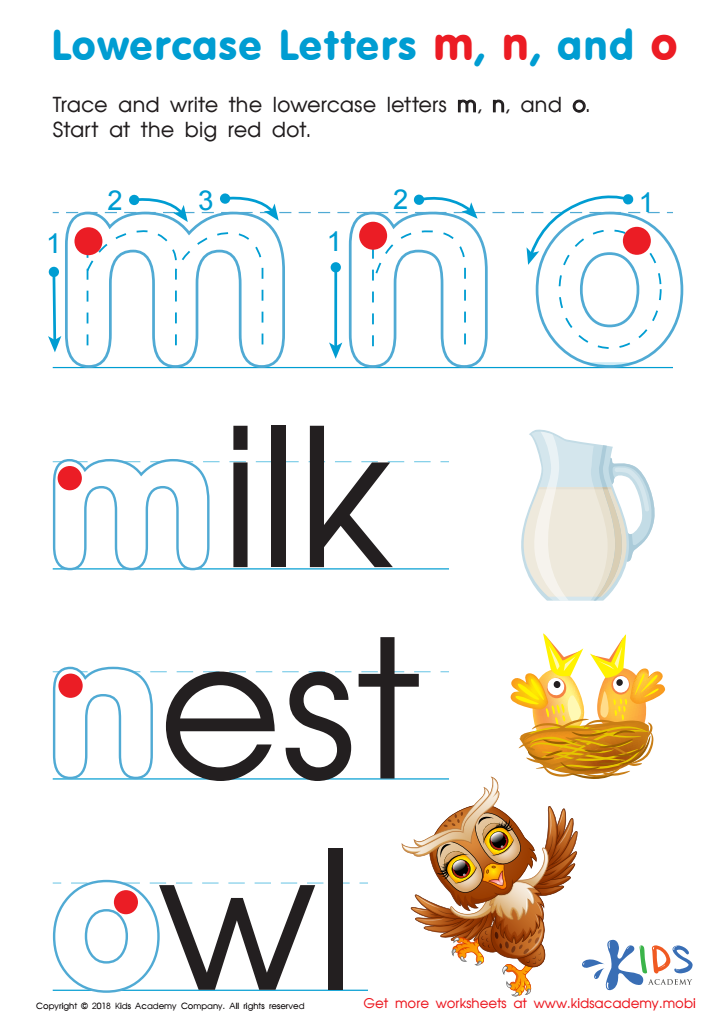
Lowercase Letters m n o Worksheet








Lowercase letter writing and normal letter recognition for children aged 3-5 are crucial foundational skills that parents and teachers should prioritize. At this developmental stage, children are highly receptive to learning new concepts, and early exposure to written language can have a lasting impact on their literacy skills.
Firstly, recognizing and writing lowercase letters sets the foundation for reading proficiency. Most printed texts use lowercase letters predominantly, so familiarity with these forms boosts children’s confidence and ease when they start reading books or other materials. Early letter recognition is strongly correlated with later reading success, as it helps children decode words and begin to understand sentence structures.
Secondly, learning these skills enhances fine motor abilities. When children practice writing lowercase letters, they improve their hand-eye coordination and dexterity. Developing these motor skills is not only essential for writing but also beneficial in other areas like crafts, sports, and everyday tasks like tying shoelaces.
Lastly, early literacy activities like letter recognition and writing foster cognitive development. These activities stimulate the brain, enhancing memory, attention, and problem-solving skills. Moreover, a child's increased familiarity with letters can lead to greater self-esteem and enthusiasm for learning, creating a positive academic trajectory.
In summary, focusing on lowercase letter writing and recognition at ages 3-5 builds the critical groundwork for future academic success, fine motor development, and cognitive growth, making it an essential focus for parents and teachers.








