Visual discrimination Normal Letter Recognition Worksheets for Ages 3-5
4 filtered results
-
From - To
Help your child master the essential skill of letter recognition with these Visual Discrimination Normal Letter Recognition Worksheets for ages 3-5. Designed to build foundational literacy skills, these engaging worksheets focus on identifying and distinguishing between various letters of the alphabet. Perfect for preschoolers and kindergarteners, our colorful and fun activities aim to enhance visual discrimination while making learning enjoyable. These worksheets not only support early reading success but also promote cognitive development and fine motor skills. Set the stage for academic achievement by integrating these effective educational tools into your child's daily routine. Start your learning adventure today!
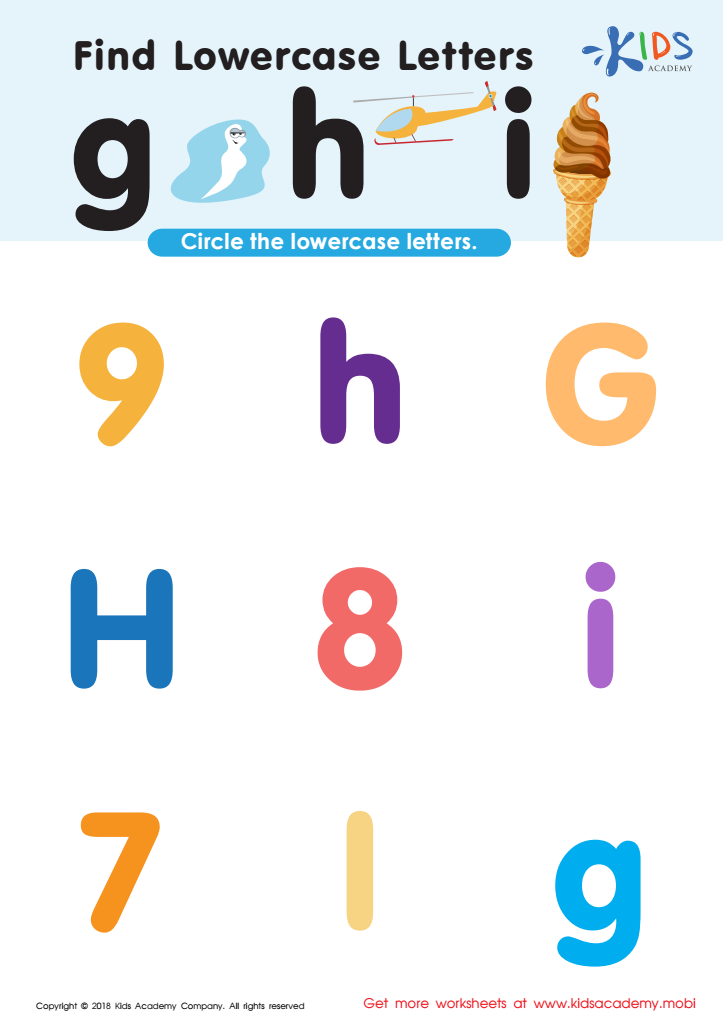
Find Lowercase Letters g h i Worksheet
 Assign to My Students
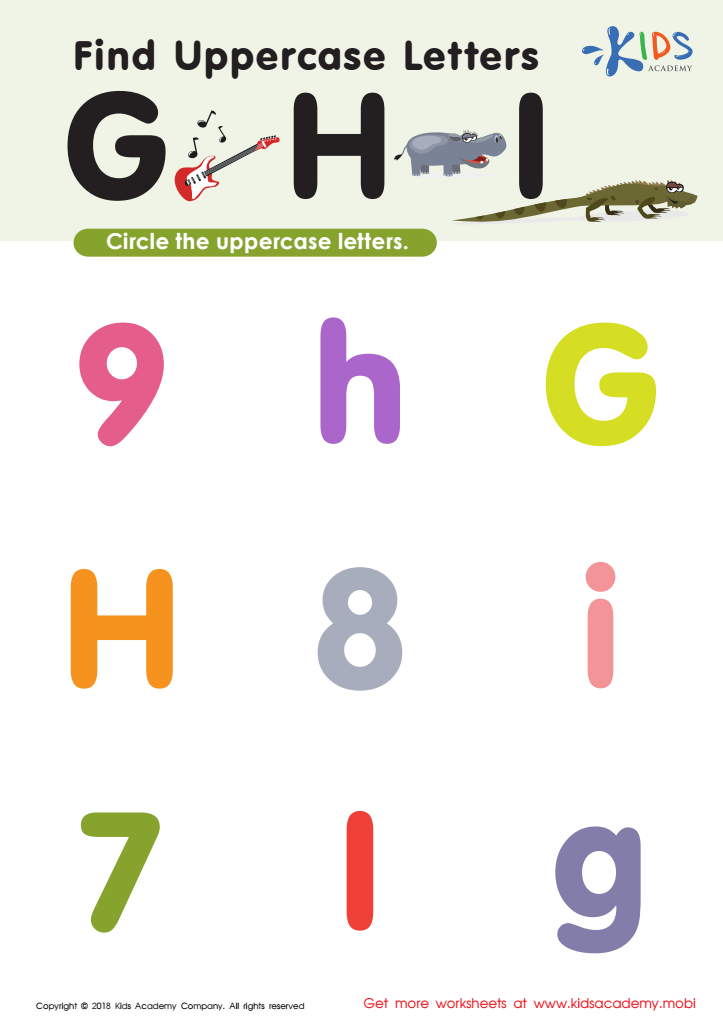
Find Uppercase Letters G, H, and I Worksheet
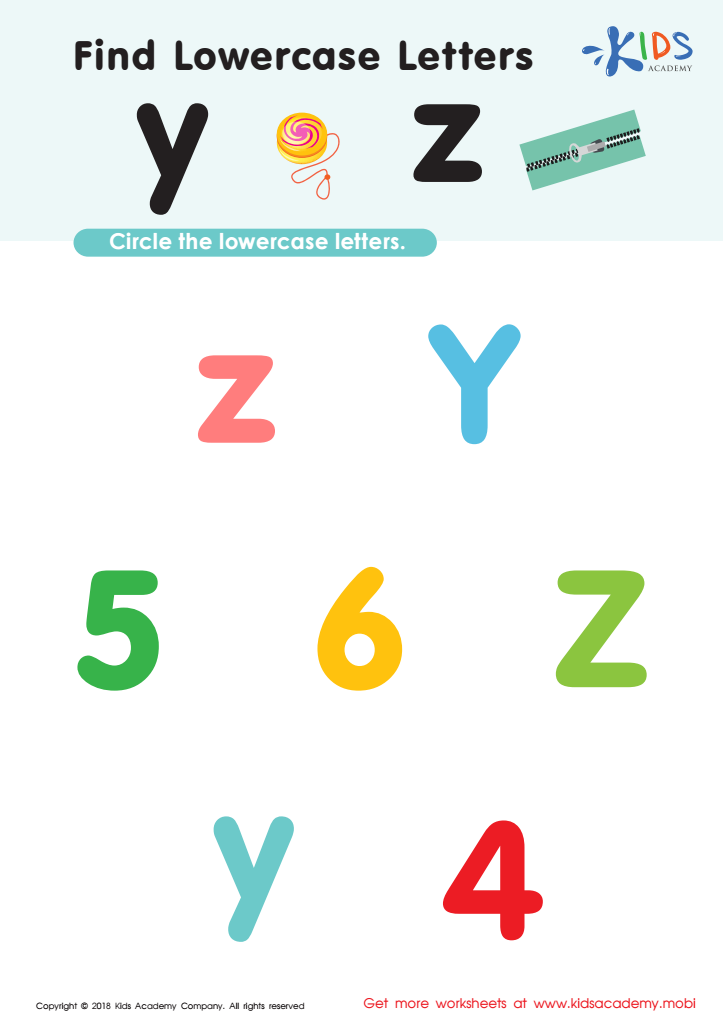
Find Lowercase Letters y z Worksheet
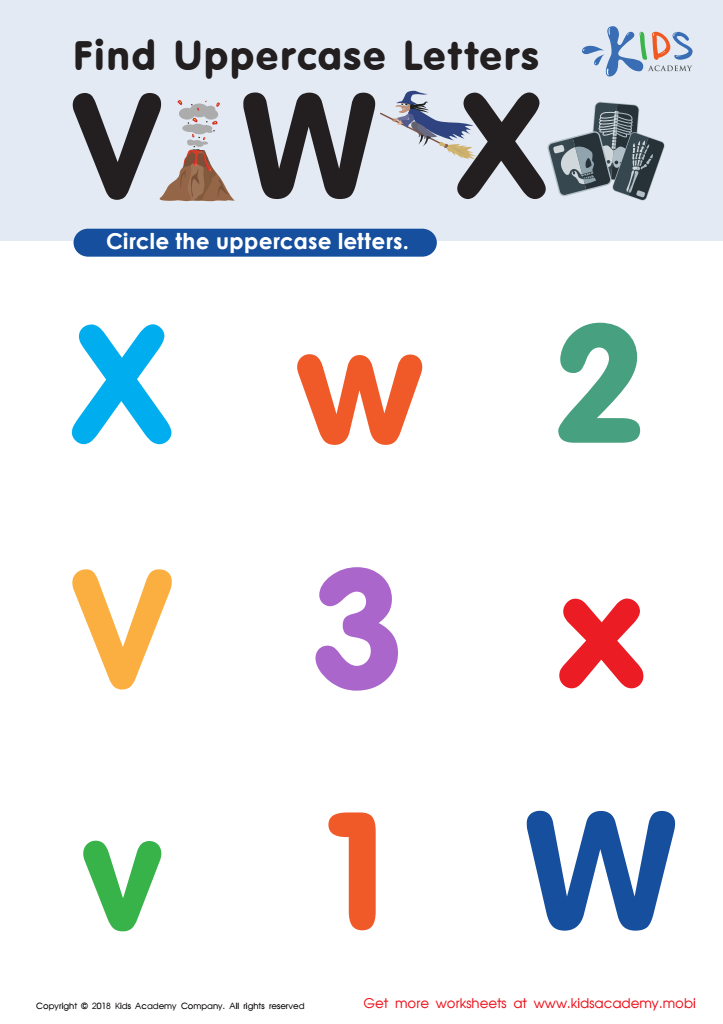
Find Uppercase Letters V, W, X Worksheet








Visual discrimination and normal letter recognition are essential developmental skills for young children, particularly between the ages of 3 to 5. Understanding these early literacy concepts is critical because they serve as the foundation for reading and writing abilities in later years.
Visual discrimination enables children to notice and differentiate between subtle similarities and differences in shapes, symbols, and letters. This ability is crucial when they begin learning to recognize letters of the alphabet, which can look quite similar, like 'b' and 'd' or 'p' and 'q'. Without strong visual discrimination skills, children may struggle to correctly identify and remember letters, leading to difficulties in reading fluency.
Moreover, early proficiency in letter recognition is a strong predictor of future reading success. When children are familiar with letters and their corresponding sounds, they can more easily decode words, which is a critical step in learning to read. This not only enhances their literacy skills but also boosts their confidence and motivation to read, creating a positive feedback loop that fosters continued learning and academic achievement.
For parents and teachers, supporting the development of these skills through playful, engaging activities can make a world of difference. Activities like letter matching games, puzzles, and writing exercises can help solidify these fundamental abilities, setting children on a path toward successful, lifelong literacy.








