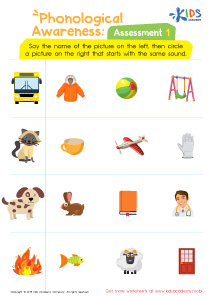
Reading comprehension Normal Rhyming Worksheets for Ages 3-5
4 filtered results
-
From - To
Boost your child's early reading skills with our Reading Comprehension Rhyming Worksheets, designed for ages 3-5. These engaging activities help young learners identify rhyming words, improve vocabulary, and develop essential phonemic awareness. By working through fun, colorful exercises, kids can better differentiate sounds and rhythms in words, enhancing their overall comprehension and spelling abilities. Our worksheets make learning interactive and enjoyable, setting a strong foundation for future reading success. Perfect for preschoolers and kindergartners, these resources support early literacy while providing hours of educational entertainment. Start your child's reading journey today!
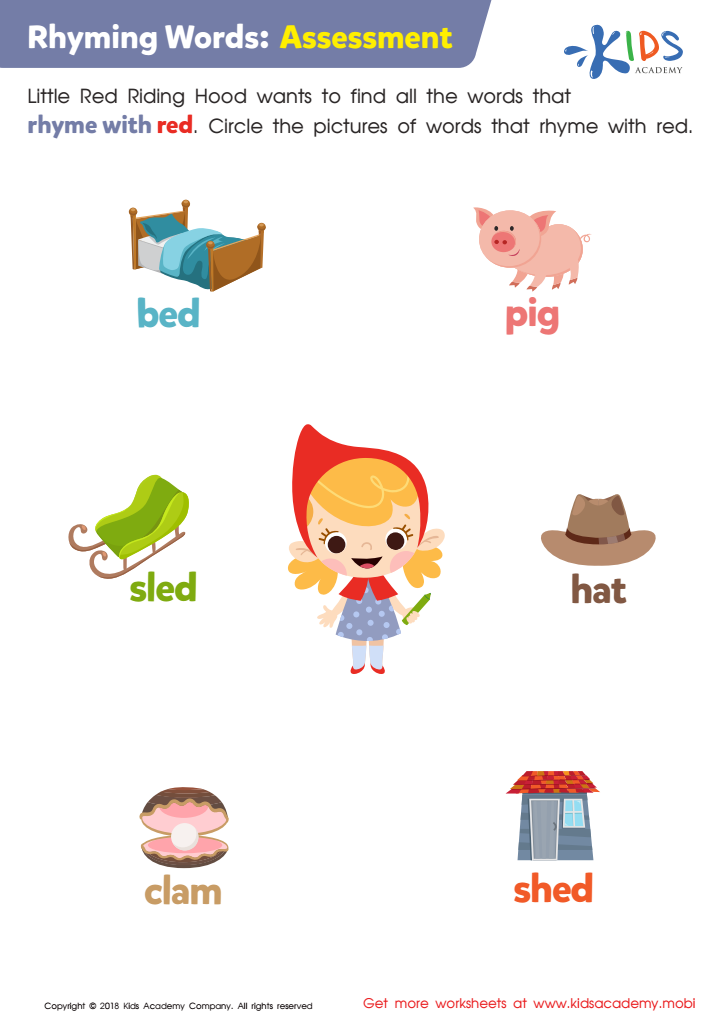
Rhyming Words: Assessment Worksheet
 Assign to My Students
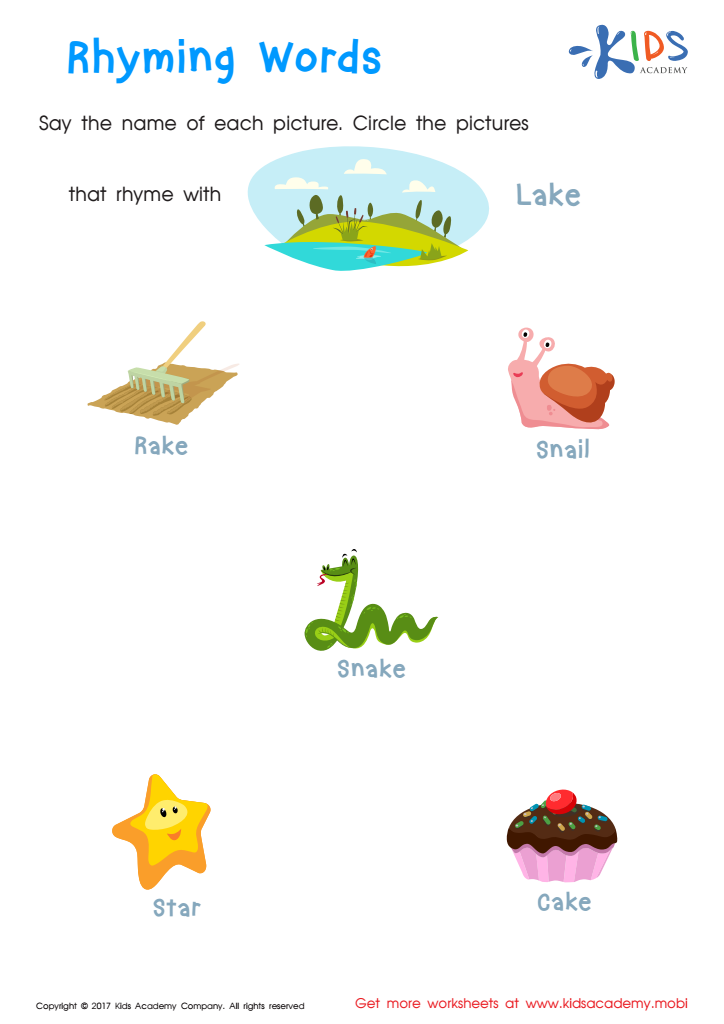
Rhyming Words Rhyming Worksheet
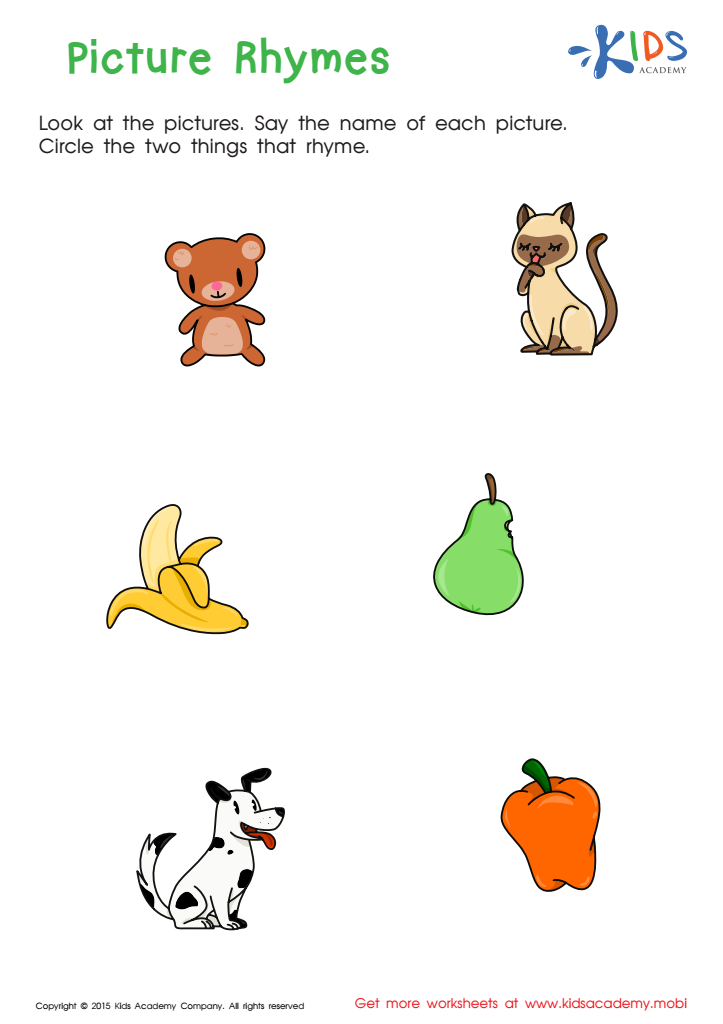
First Words: Picture Rhymes Worksheet
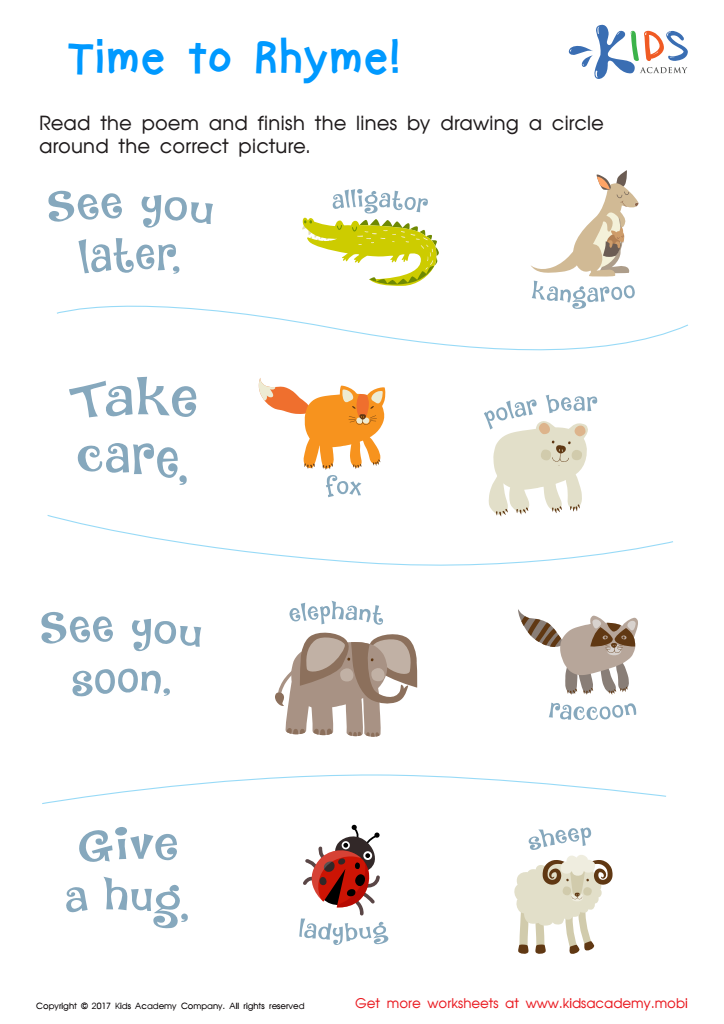
Time to Rhyme Rhyming Worksheet








Reading comprehension and normal rhyming are vital for children aged 3-5 as they form foundational skills that foster literacy and language development. At this young age, children are highly receptive to learning new concepts, and engaging them with rhymes enhances their phonemic awareness—the ability to recognize and manipulate sounds in words. This awareness is crucial for decoding words and later, fluent reading.
Rhymes are rhythmic and repetitive, making them enjoyable and easy for young minds to remember and repeat. This repetition helps kids recognize patterns in language, improve their vocabulary, and understand sentence structures. Rhymes also enhance auditory discrimination, helping children differentiate between different sounds and words, which is essential for recognizing words in written form later on.
Moreover, nurturing reading comprehension skills through rhymes at an early age promotes cognitive benefits, such as better memory, attention span, and analytical skills. Rhymes often tell simple stories or depict scenarios that encourage predictive thinking and understanding of sequences, which are important for comprehending more complex texts in the future.
For parents and teachers, focusing on reading comprehension and rhyming offers an engaging way to build a strong literacy foundation. This early investment can lead to greater academic success, as children who comprehend what they read are better equipped to tackle a wide range of subjects throughout their educational journey.