Fine Motor Skills Normal Tracing Lines and Curves Worksheets for Ages 3-5
3 filtered results
-
From - To
Enhance your child's fine motor skills with our tracing lines and curves worksheets designed for ages 3-5. Perfectly crafted to improve precision and coordination, these engaging activities help young learners develop essential skills for writing and drawing. Each worksheet features a variety of dotted lines and curves, guiding little hands to trace with confidence. As children practice, they'll build the muscle control necessary for forming letters and shapes, setting a strong foundation for future academic success. Make learning fun and effective with our expertly designed fine motor skill worksheets. Available for download now!
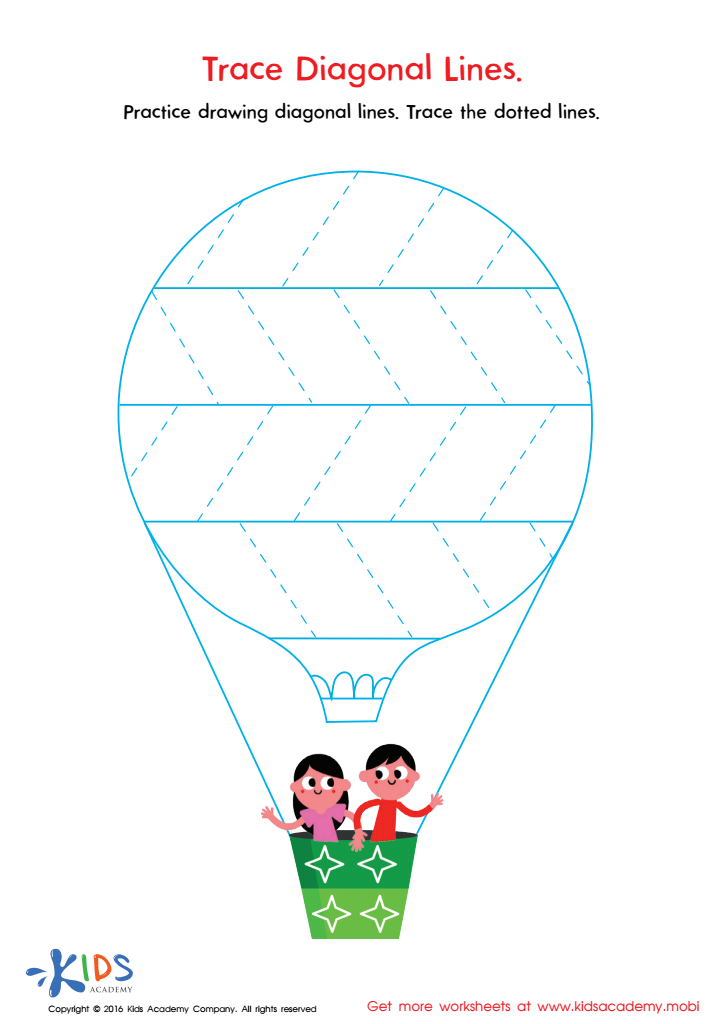
Trace Diagonal Lines Worksheet
 Assign to My Students
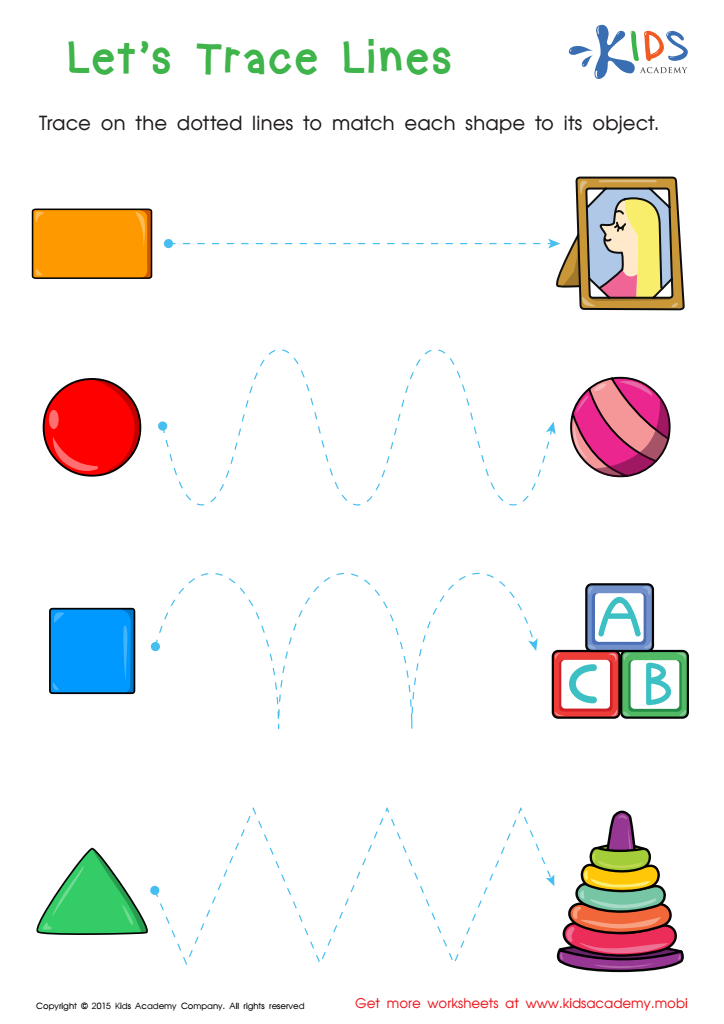
First Words: Let's Trace Lines Worksheet
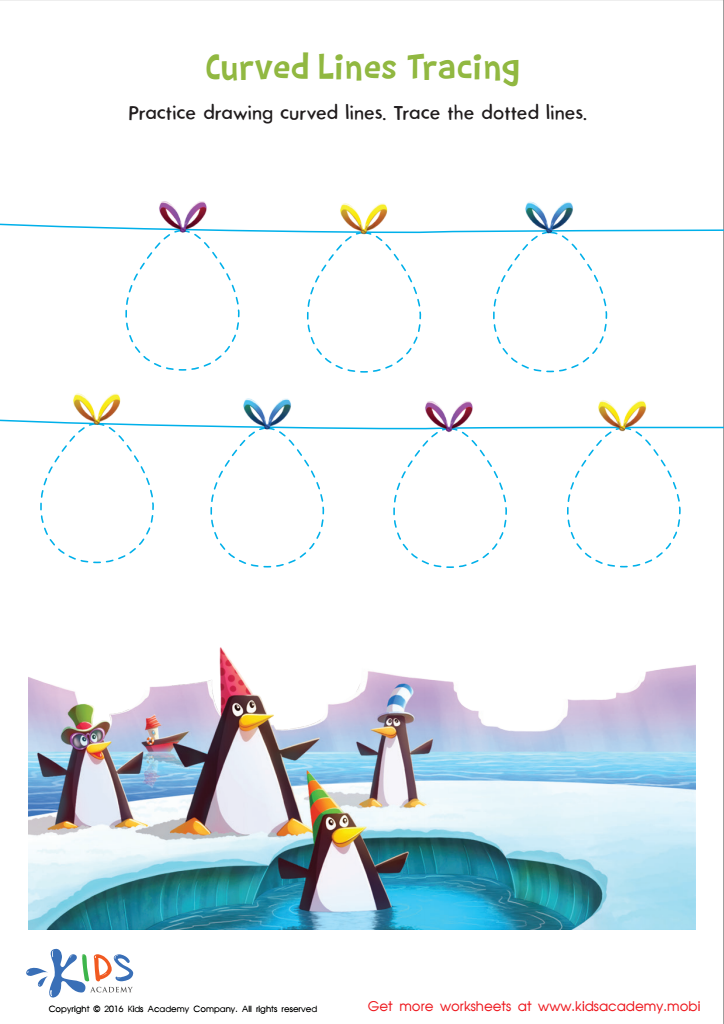
Curved Lines Tracing Worksheet




Fine motor skills are essential for young children aged 3-5, and parents and teachers should prioritize developing these skills, particularly through activities like tracing lines and curves. Fine motor skills involve the refined use of the small muscles controlling the hand, fingers, and thumb, which are crucial for performing everyday tasks such as writing, buttoning clothes, and using utensils.
Tracing lines and curves is an excellent way to enhance these skills because it encourages precision, control, and coordination. When children trace lines and curves, they practice gripping a writing instrument correctly, improving their dexterity and hand-eye coordination. This foundational ability is critical as it forms the basis for learning to write letters and numbers, a key component of early literacy and numeracy skills.
Moreover, engaging in such activities fosters cognitive development. It helps children develop spatial awareness and attention to detail, boosting their confidence and concentration. These exercises also provide an opportunity for children to express creativity and develop problem-solving skills as they navigate different angles and shapes.
Incorporating fine motor skill activities like tracing lines and curves into daily routines can significantly impact a child's developmental trajectory, leading to greater independence and academic success. Therefore, parents and teachers should actively support and encourage these activities to foster well-rounded growth and prepare children for future learning challenges.







