Alphabet understanding Normal Upper & Lowercase Letters Worksheets for Ages 3-5
3 filtered results
-
From - To
Discover our engaging Alphabet Understanding Worksheets designed for children aged 3-5, focusing on both uppercase and lowercase letters. These fun and interactive activities promote early literacy skills, helping young learners recognize, identify, and differentiate between letter forms. Tailored for preschoolers, each worksheet supports alphabet mastery through vibrant illustrations and captivating exercises that inspire a love for learning. Perfect for home or classroom use, our worksheets encourage kids to practice their writing and enhance their vocabulary in a playful manner. Let your little ones embark on an exciting journey into the world of letters with our carefully crafted resources today!
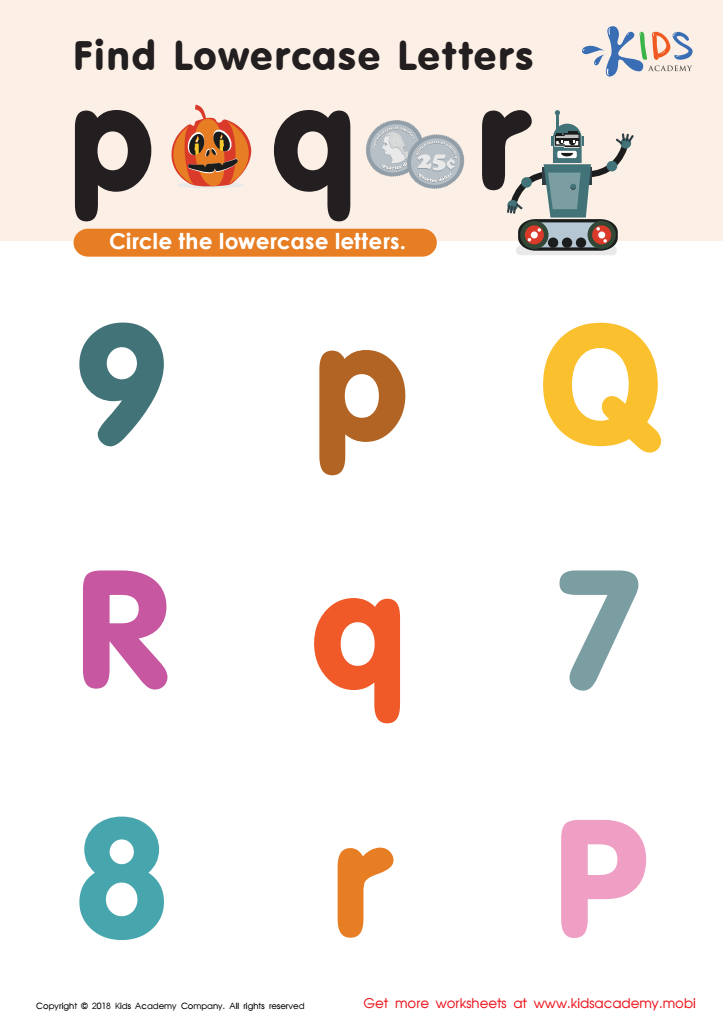
Find lowercase Letters p q r Worksheet
 Assign to My Students





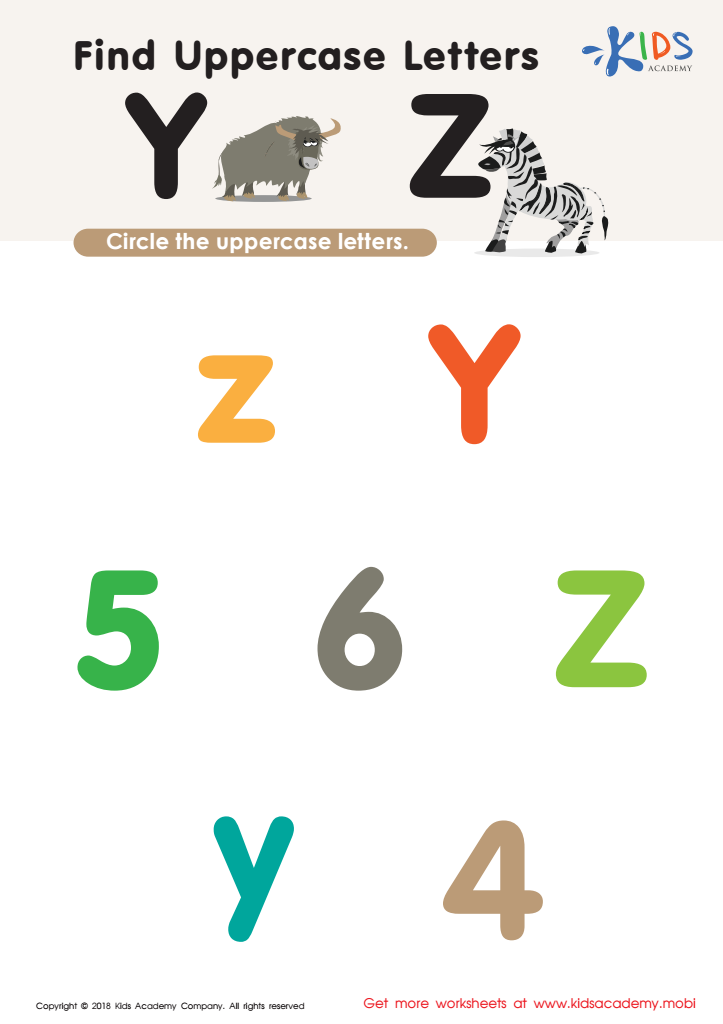
Find Uppercase Letters Y Z Worksheet
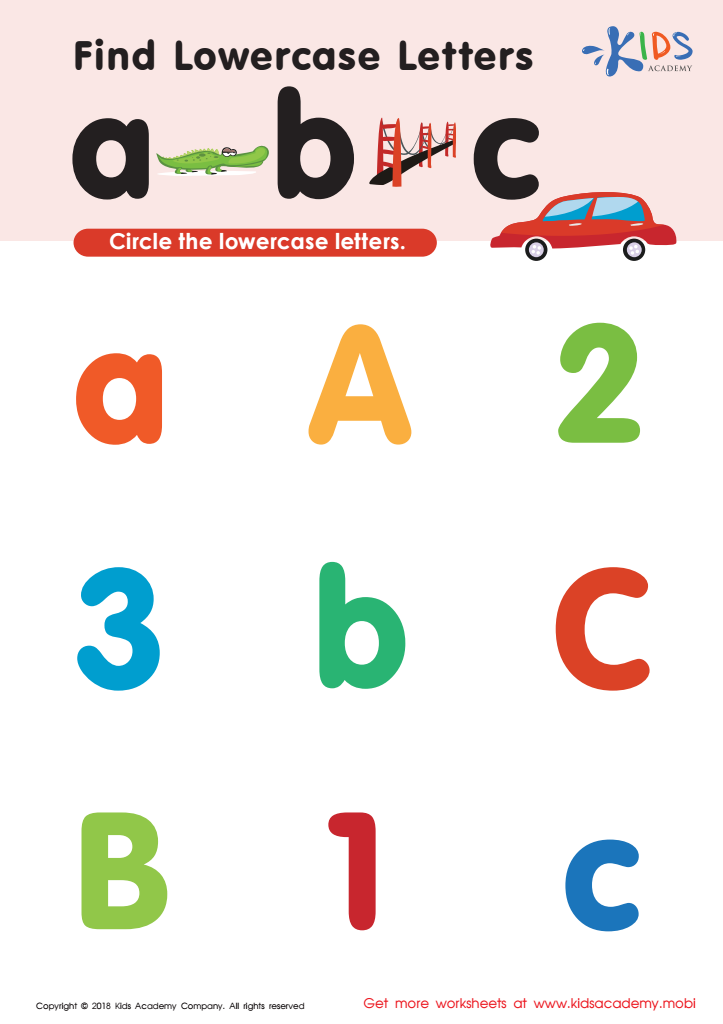
Find lowercase letters a b c Worksheet






Understanding uppercase and lowercase letters is essential for children aged 3-5 as it lays the foundation for their literacy skills. During these formative years, children are highly receptive to language acquisition, making this an ideal time for them to begin learning the alphabet.
First, recognizing and differentiating between uppercase and lowercase letters is crucial for reading and writing. Uppercase letters often denote the beginning of sentences or proper nouns, while lowercase letters are used in most of the text children will encounter. By grasping both forms, children's reading fluency and comprehension will significantly improve.
Second, learning the letters fosters fine motor skills. As children practice writing both uppercase and lowercase letters, they enhance their hand-eye coordination and dexterity, which are important for overall development.
Moreover, alphabet understanding supports social-emotional growth. As children become more familiar with letters, they gain confidence in their skills, which can enhance their enthusiasm for learning. Parents and teachers play a vital role in creating engaging activities, such as games and songs, to reinforce letter recognition in a fun manner.
Ultimately, a solid grasp of the alphabet paves the way for lifelong literacy, making it a priority for caregivers in early education.







