Visual discrimination Normal Upper & Lowercase Letters Worksheets for Ages 3-5
4 filtered results
-
From - To
Discover engaging Visual Discrimination Worksheets for normal uppercase and lowercase letters, designed specifically for children aged 3-5. Perfectly tailored to enhance early literacy skills, these worksheets not only help kids recognize and differentiate letters, but also promote fine motor skills and hand-eye coordination. Each activity is crafted to be enjoyable and educational, ensuring that young learners stay motivated as they progress. Parents and educators will appreciate the ease of access to printable resources that align with developmental milestones, making learning foundational skills fun and interactive. Explore our collection today and empower your child’s learning journey!
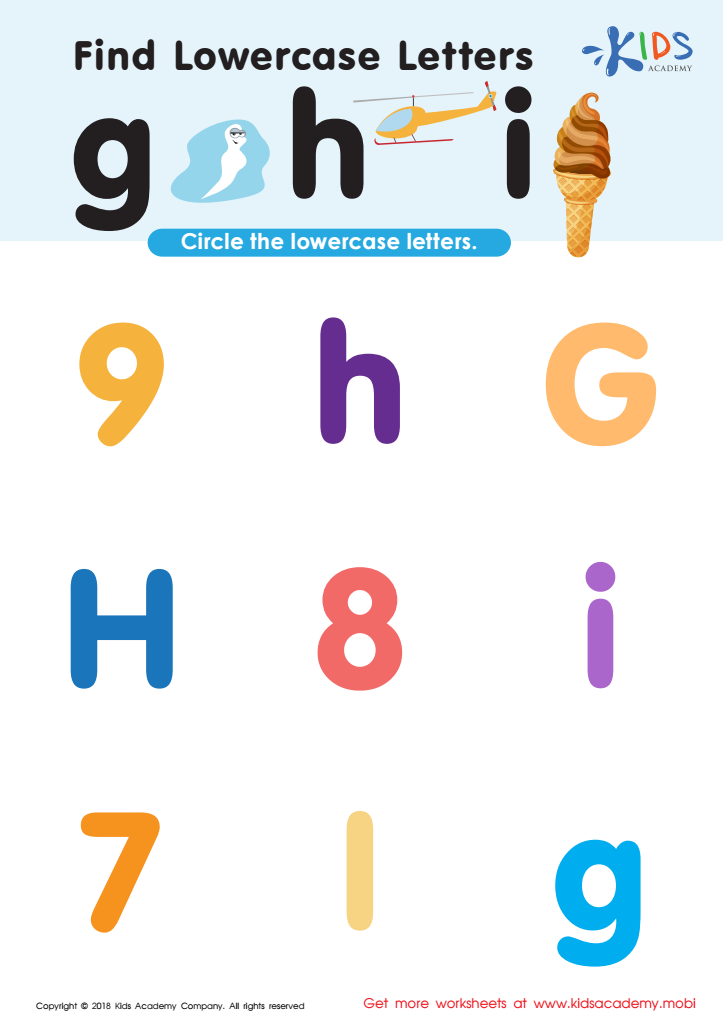
Find Lowercase Letters g h i Worksheet
 Assign to My Students








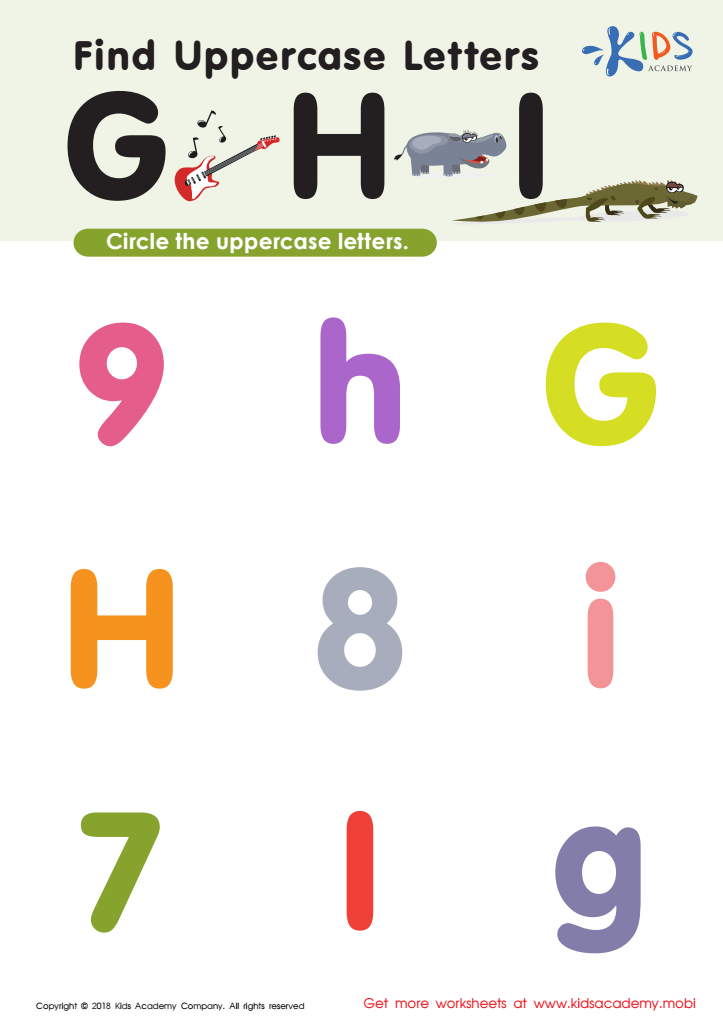
Find Uppercase Letters G, H, and I Worksheet
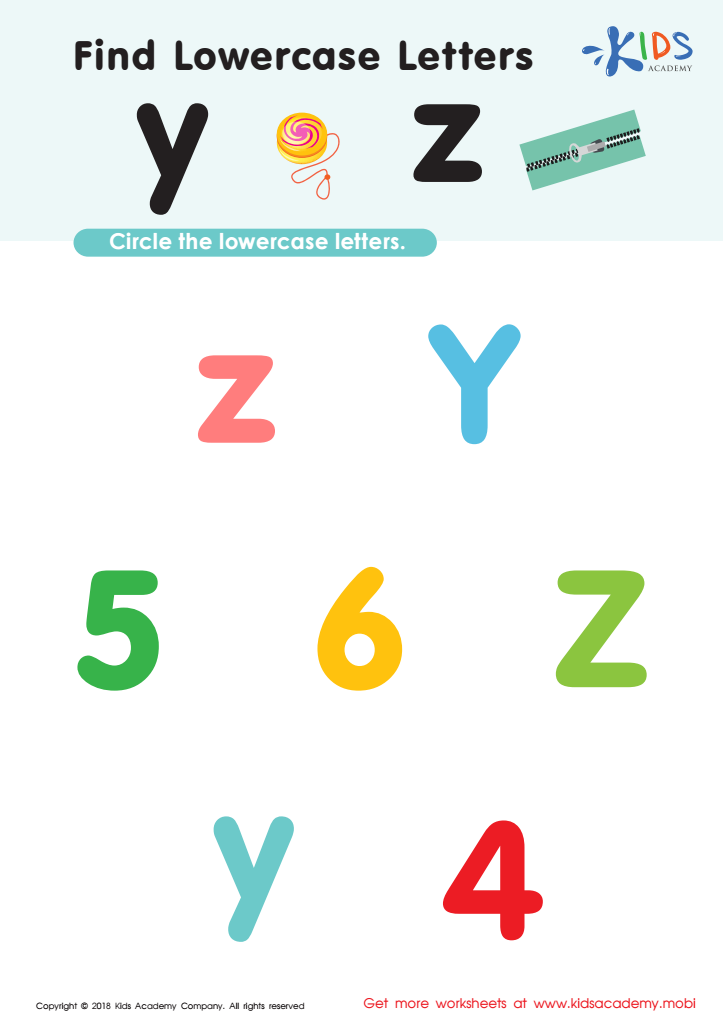
Find Lowercase Letters y z Worksheet

Find Uppercase Letters V, W, X Worksheet






Visual discrimination, the ability to distinguish between different shapes, forms, and letters, is crucial for young children ages 3-5 as they prepare for literacy and academic success. Parents and teachers should care about developing this skill because it serves as a foundational component in learning to read and write.
At this age, children are just beginning to learn the alphabet and to recognize letters in both uppercase and lowercase forms. If they struggle with visual discrimination, they may find it difficult to identify and differentiate letters, making reading and writing more challenging. For instance, recognizing "b" vs. "d" or "P" vs. "q" relies heavily on their ability to visually distinguish these shapes.
Additionally, enhancing visual discrimination supports overall cognitive development. Activities that involve identifying and matching letters can improve a child's focus and attention to detail. Engaging children in playful practices—like letter sorting, tracing, or games—can foster a love for learning and build confidence in their reading and writing abilities. By prioritizing visual discrimination skills, parents and teachers are investing in a child's lifelong literacy skills, making it easier for them to engage with text-based communication effectively as they grow.







