Basic Arithmetic Normal Addition and Subtraction Word Problems Worksheets for Ages 3-5
4 filtered results
-
From - To
Welcome to our engaging "Basic Arithmetic Normal Addition and Subtraction Word Problems Worksheets" designed specifically for ages 3-5. These worksheets cultivate early math skills through fun, relatable scenarios that help young learners grasp essential addition and subtraction concepts. With colorful illustrations and child-friendly language, each word problem encourages critical thinking while making math enjoyable. As children practice these worksheets, they enhance their problem-solving abilities and build a solid foundation in arithmetic. Perfect for homeschooling, classroom use, or supplemental learning, our worksheets provide parents and educators with valuable resources to support early mathematical development. Start your child's math journey today!
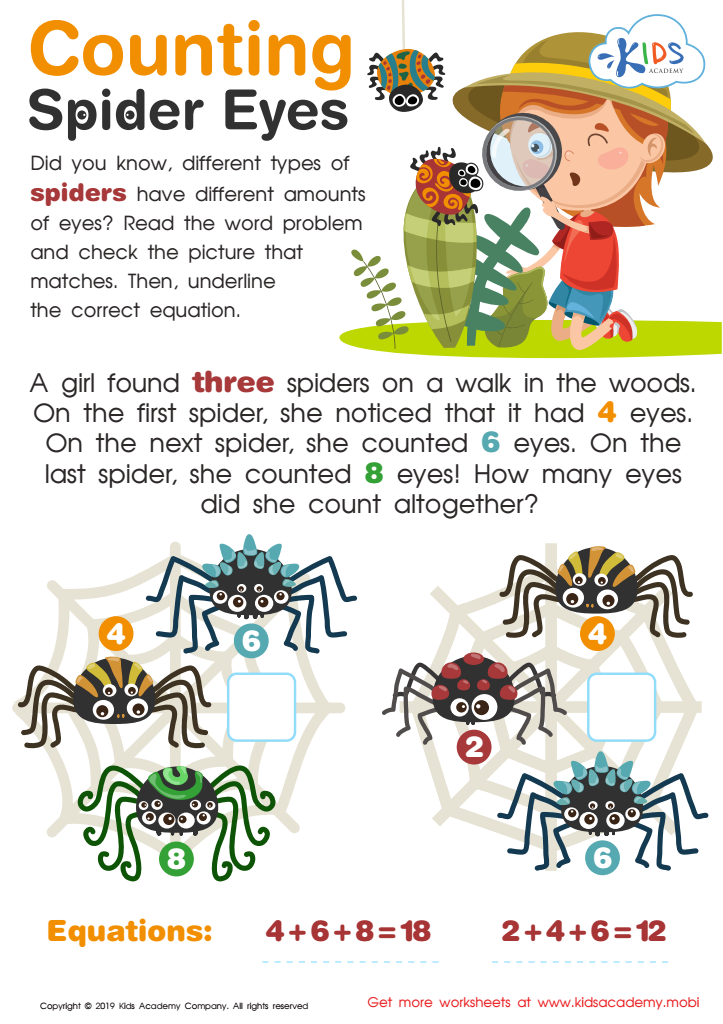
Counting Spider Eyes Worksheet
 Assign to My Students
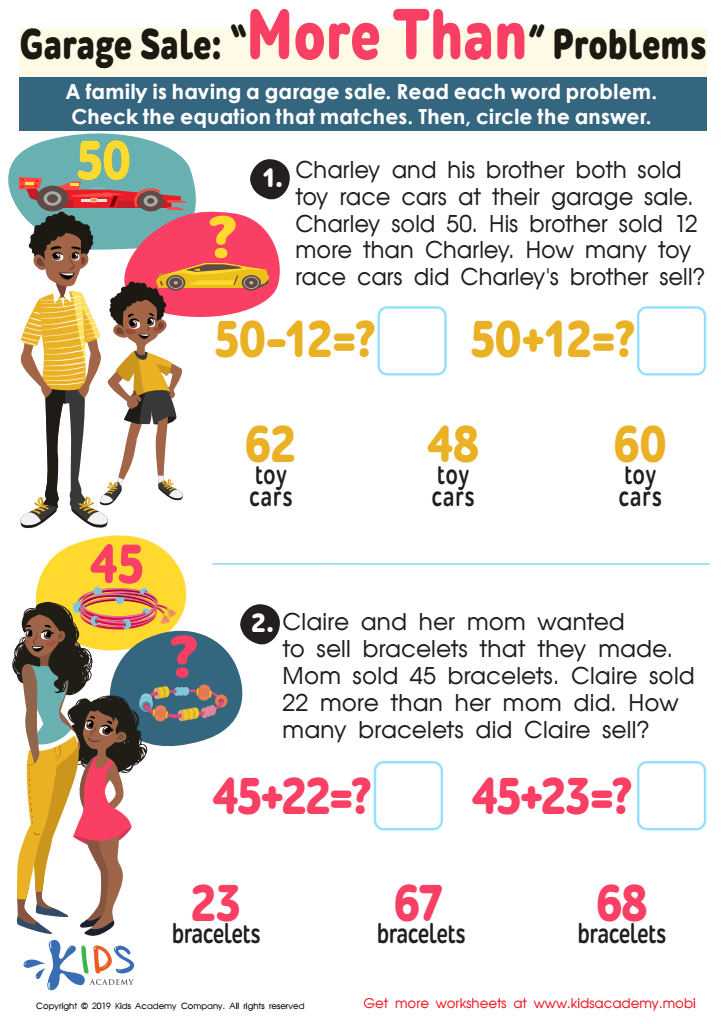
Garage Sale - More yhan Worksheet
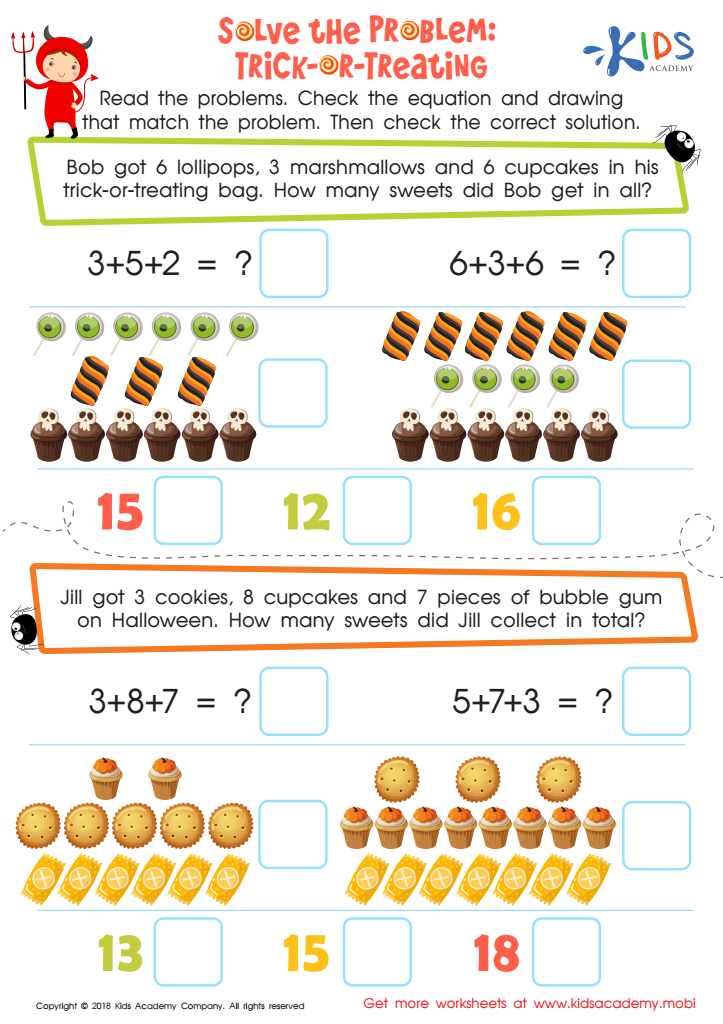
Solve the Problem: Trick–or–treating Worksheet
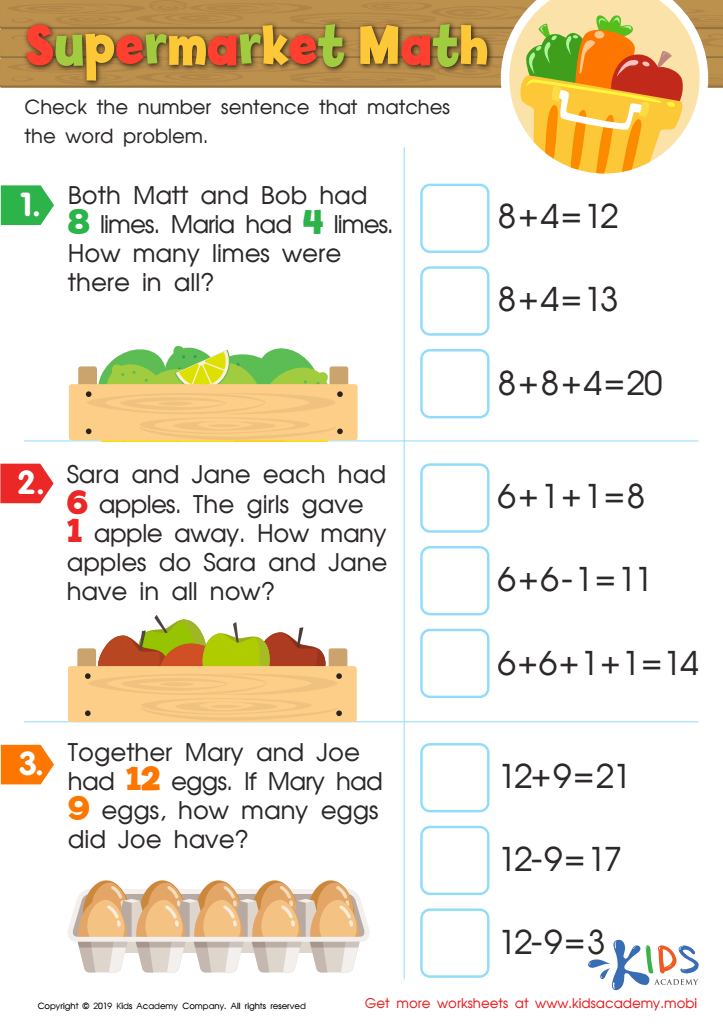
Supermarket Math Worksheet








Teaching basic arithmetic through normal addition and subtraction word problems is crucial for children ages 3-5, as it lays the foundation for later mathematical and cognitive skills. At this early developmental stage, children are naturally curious and eager to learn. Engaging them with word problems helps them connect numbers to real-life situations, fostering their understanding of quantification and basic arithmetic concepts. This approach not only enhances numerical comprehension but also develops critical thinking and problem-solving abilities.
Additionally, word problems promote language skills by encouraging children to articulate their thought processes and understand mathematical vocabulary. This integration of math and language supports their overall cognitive development. Teachers and parents can use everyday scenarios, such as sharing snacks or counting toys, making learning more relevant and enjoyable.
Furthermore, early exposure to these skills helps to build a positive attitude toward math. It combats common anxieties associated with numeracy later in life. Therefore, fostering an environment where children can practice basic arithmetic in engaging and meaningful contexts will equip them with the necessary tools to thrive academically, paving the way for future success in more complex mathematical concepts. Engaging with these simple yet effective problems is essential in supporting each child's educational journey.