Spatial awareness Normal Reading Worksheets for Ages 3-5
3 filtered results
-
From - To
Enhance your child's reading journey with our "Spatial Awareness Normal Reading Worksheets for Ages 3-5" from Kids Academy. These thoughtfully designed worksheets foster essential early learning skills, helping young kids understand spatial relationships, improve focus, and boost reading readiness. Engaging activities in each worksheet immerse your child in a world of fun and learning, aiding their cognitive development and problem-solving abilities. Ideal for home or classroom use, these tools ensure your little learner builds a strong foundation for future academic success. Explore our collection and support your child's early literacy skills today!
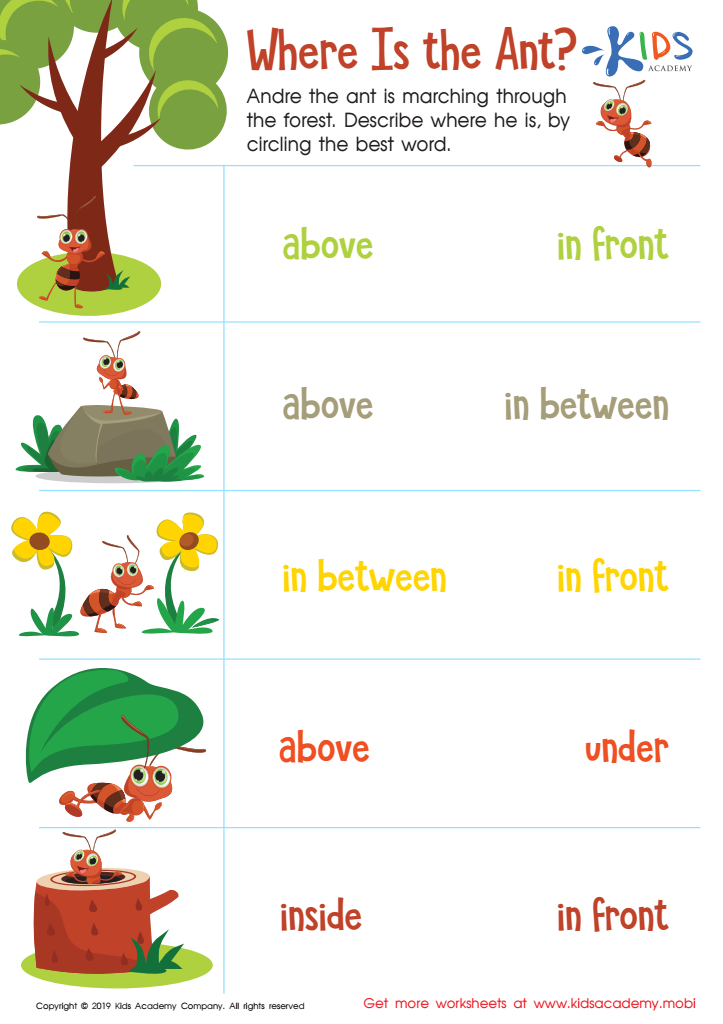
Where Is the Ant? Worksheet
 Assign to My Students
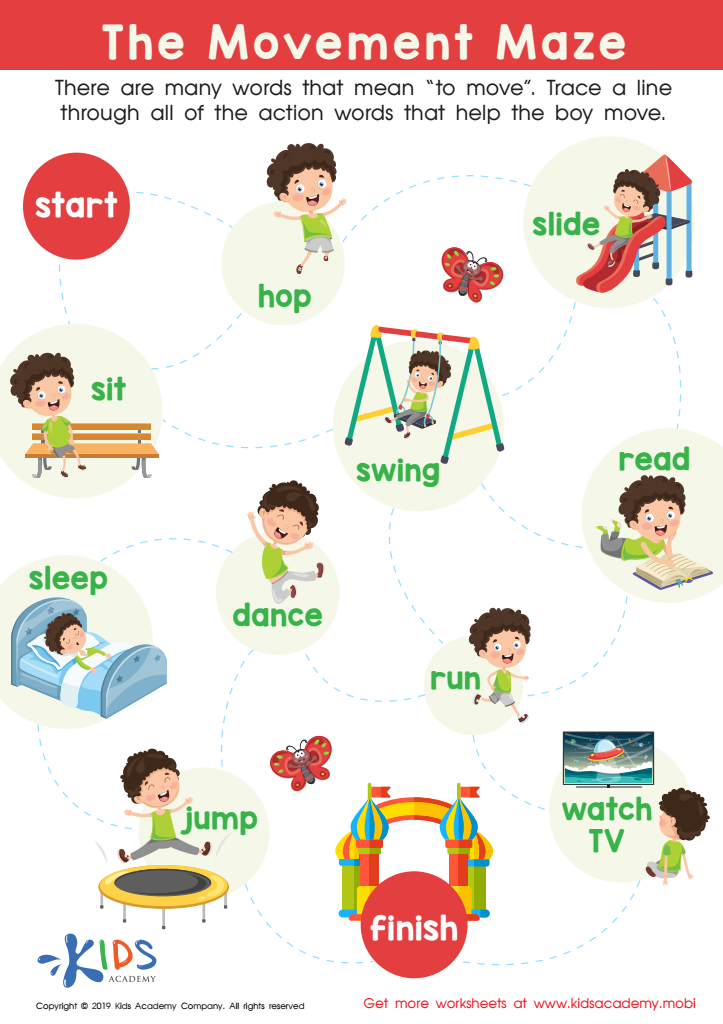
The Movement Maze Worksheet
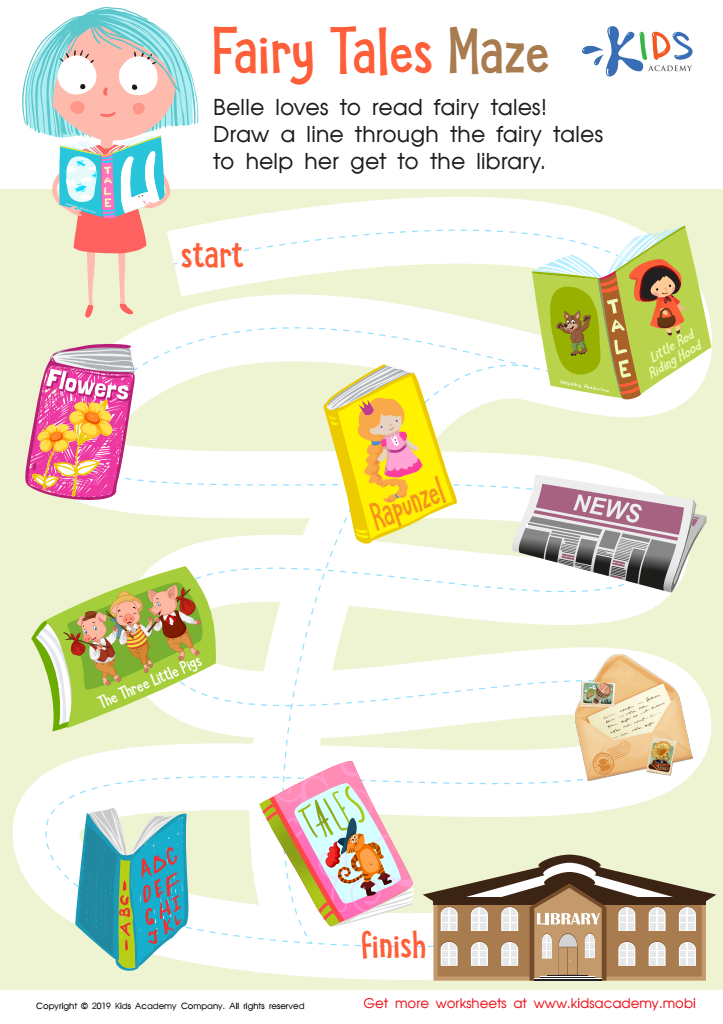
Fairy Tales Maze Worksheet



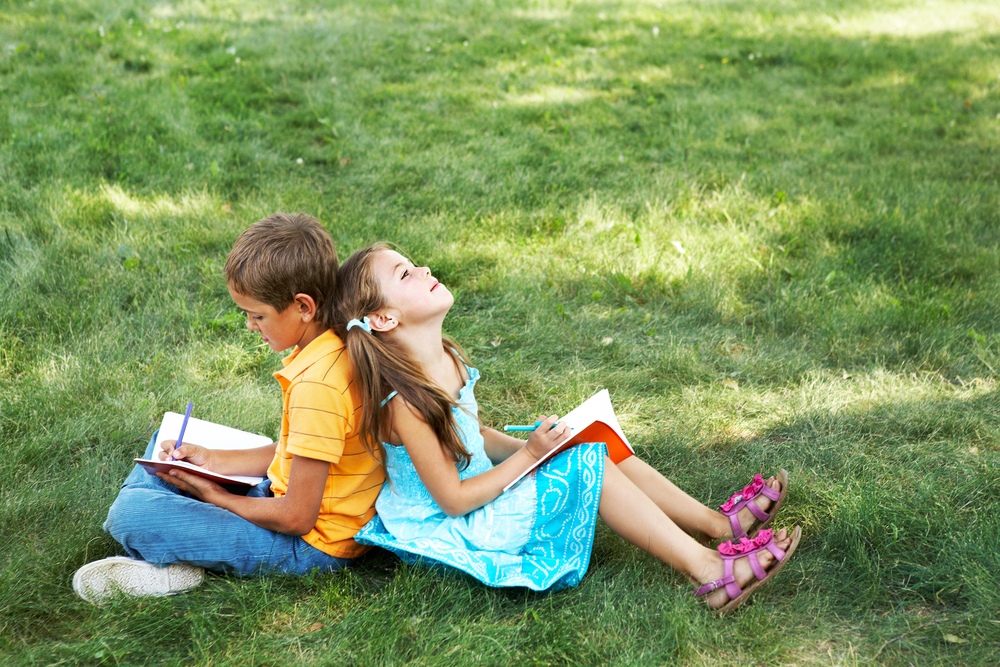


.jpg)

Spatial awareness and normal reading development are critical aspects of early childhood education, particularly for ages 3-5. Parents and teachers should prioritize these areas as they lay the groundwork for future academic success and daily life skills.
Spatial awareness involves understanding the position of objects in space and their relationship to each other. For young children, developing spatial skills enhances their ability to engage in play, follow directions, and understand concepts like inside, outside, above, and below. These skills are foundational for more complex tasks such as mathematics, geometry, and physical activities. For example, when children play with building blocks or fit puzzles together, they are honing their spatial reasoning ability, which will later translate into competencies in math and science.
Simultaneously, normal reading development during these formative years is equally important. Reading skills start with recognition of letters and sounds, which then evolve into word formation and simple sentence reading. Engaging with books, understanding stories, and developing vocabulary are instrumental in fostering language skills, critical thinking, and imagination.
Both spatial awareness and reading skills contribute to a child's overall cognitive development. By nurturing these abilities, parents and teachers help create a solid foundation that supports academic success and practical life skills, setting children up for a fruitful and balanced learning experience.








