Vocabulary development Normal Reading Worksheets for Ages 3-5
4 filtered results
-
From - To
Unlock your child’s potential with our "Vocabulary Development Normal Reading Worksheets" designed for ages 3-5! Our interactive worksheets offer captivating activities that simplify learning while enhancing vocabulary skills. Tailored to suit early learners, these worksheets combine fun illustrations with engaging exercises to foster a love for reading. By strategically introducing new words, our resources ensure children build a robust vocabulary foundation. Perfect for both classroom and home learning, these worksheets will aid in your child's reading journey, promoting stronger language skills and better comprehension. Empower your little ones to express themselves confidently and fluently with Kids Academy's expertly crafted worksheets!
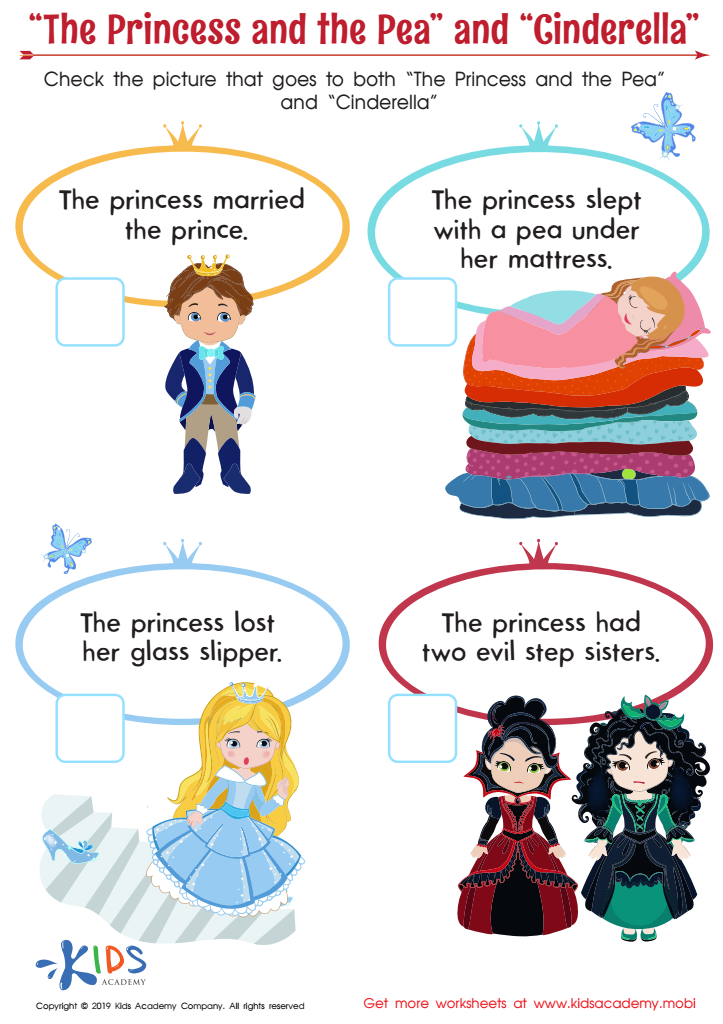
“The Princess and the Pea” and “Cinderella” Worksheet
 Assign to My Students
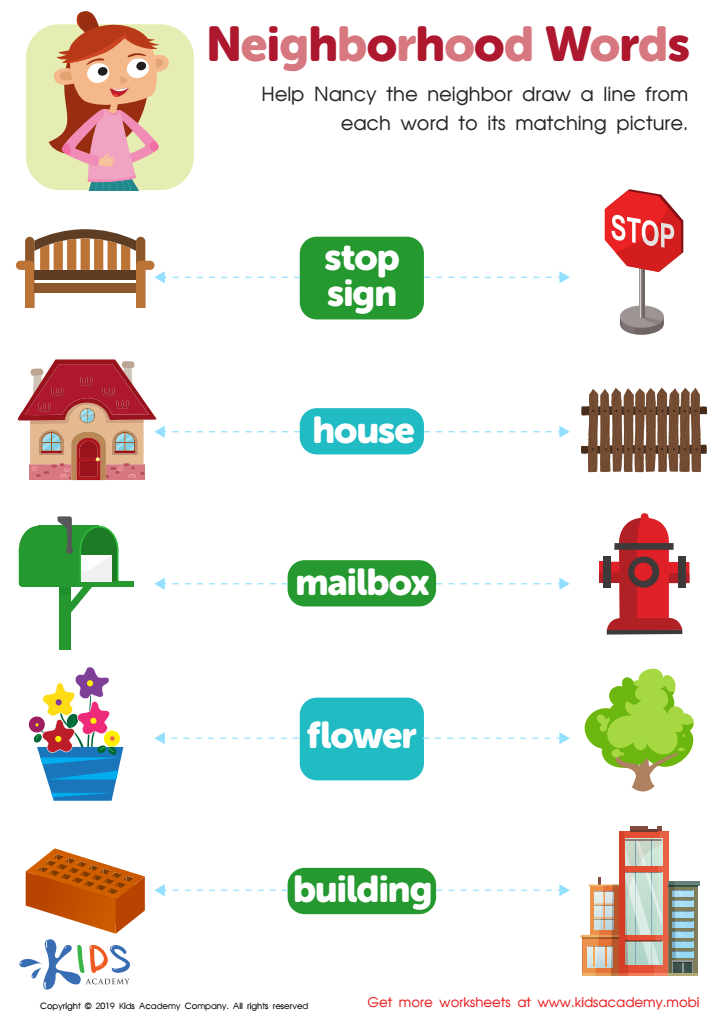
Neighborhood Words Worksheet
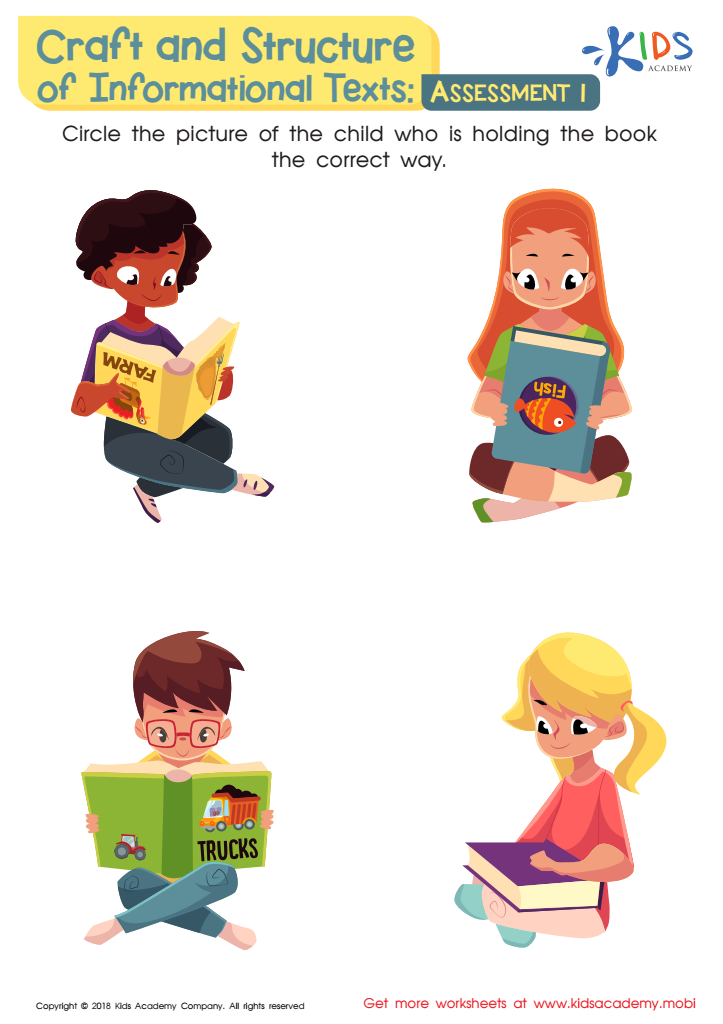
Craft and Structure of Informational Texts: Assessment 1 Worksheet
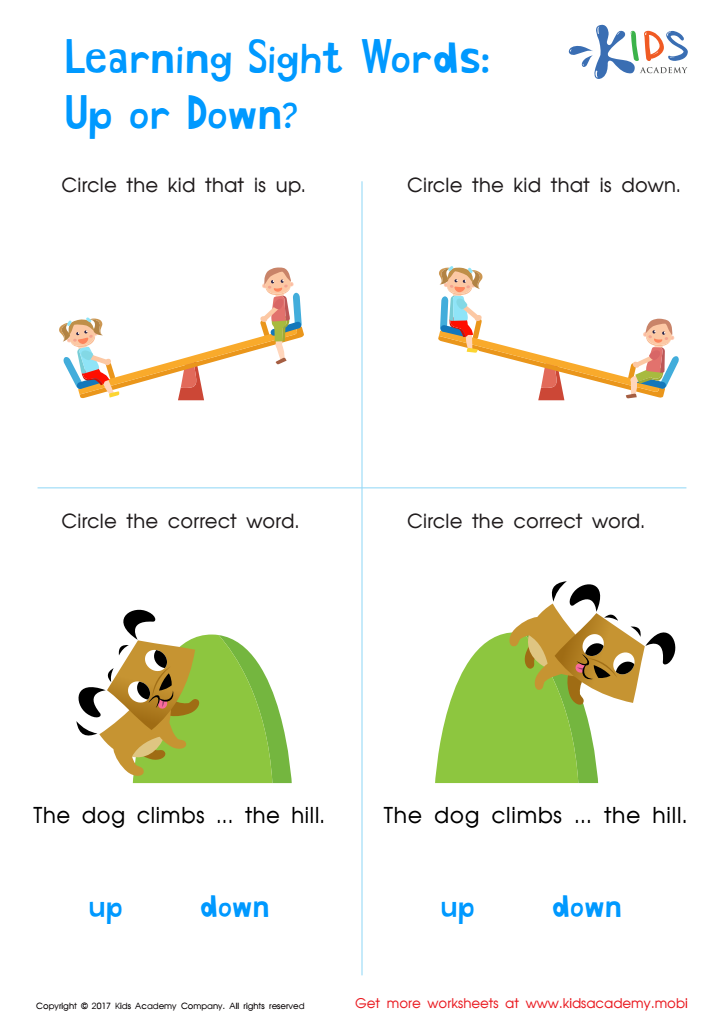
Up or Down Printable Sight Words Worksheet








Vocabulary development is a crucial component for normal reading and overall academic success, especially for children between the ages of 3-5. At this early age, children's brains are highly receptive to learning and language acquisition, laying the groundwork for future educational achievement.
For one, a robust vocabulary directly impacts reading comprehension. When children know the meaning of words, they can better grasp the overall context and details within a story or text. This foundational skill is essential as they progress to more complex reading materials.
Moreover, a strong vocabulary fosters confidence and effective communication. Children who can express their thoughts and feelings clearly are more likely to engage in social interactions, group activities, and classroom discussions, promoting both learning and emotional development.
In addition, early vocabulary acquisition is linked to higher academic performance. Studies show that children with a more extensive vocabulary enter kindergarten better prepared, often leading to better grades and a more positive attitude toward reading and learning in general.
Finally, vocabulary development supports cognitive abilities such as memory, attention, and critical thinking. By expanding their word knowledge, children develop their ability to understand concepts, follow instructions, and solve problems.
Given these benefits, parents and teachers should prioritize vocabulary development to ensure children build a strong foundation for their educational journey and life skills.








