Phonics development Normal Alphabet Worksheets for Ages 4-5
3 filtered results
-
From - To
Unlock the world of reading for your 4-5-year-olds with our Phonics Development Normal Alphabet Worksheets! These engaging and educational printables are designed to build foundational literacy skills through fun and interactive activities. Watch as your child learns to recognize letters, understand their sounds, and develop crucial phonemic awareness. Each worksheet offers a variety of exercises to keep young minds stimulated and excited about learning. Perfect for preschoolers and kindergarteners, our worksheets ensure that phonics development becomes an enjoyable adventure, laying the groundwork for fluent reading and confident communication. Empower your child's educational journey with these essential tools!
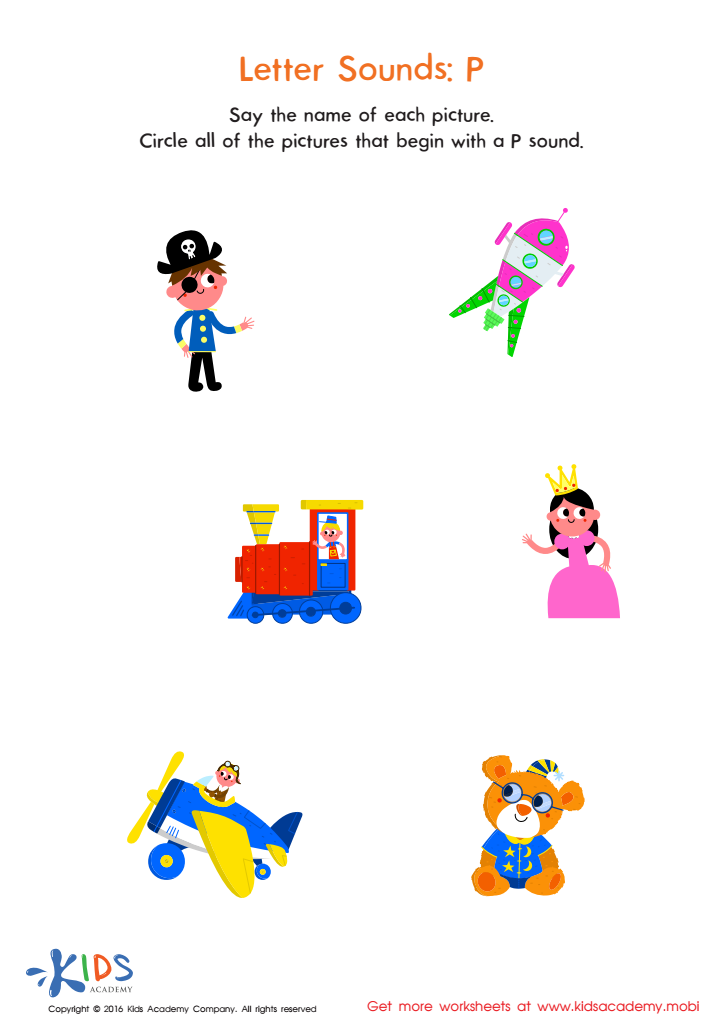
Letter P Sound Worksheet
 Assign to My Students
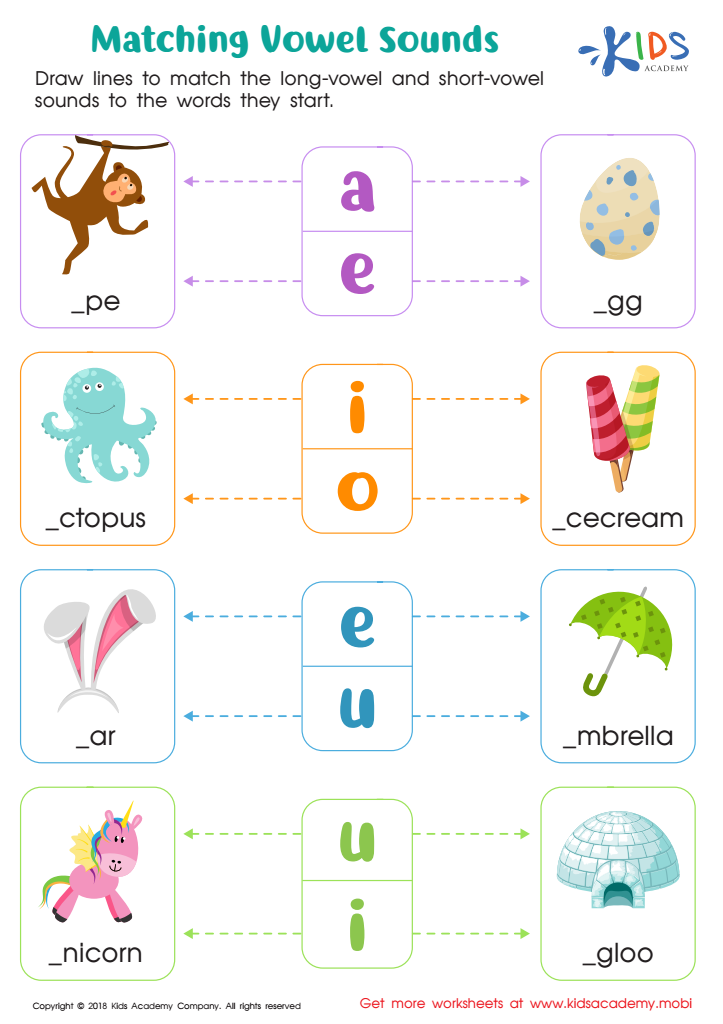
Matching Vowel Sounds Worksheet
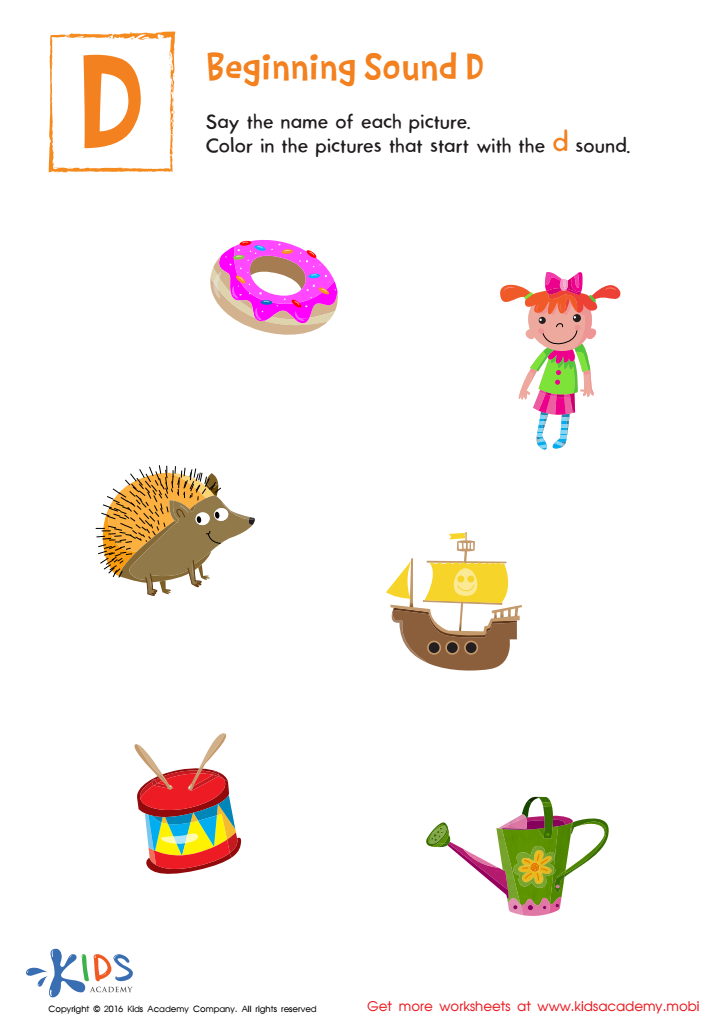
Beginning Sound D Worksheet








Phonics development, particularly around ages 4-5, is crucial as it lays the foundational skills required for proficient reading and writing. By focusing on phonics—the relationship between sounds and their corresponding letters—children learn to decode words, allowing them to read independently and accurately. This early literacy foundation boosts self-confidence and fosters a love for reading, which is vital for educational growth across all subjects.
When parents and teachers prioritize phonics, they equip children with skills to recognize patterns in words, making it easier for them to comprehend new vocabulary and complex texts in the future. Additionally, phonics instruction supports spelling proficiency and language development, ensuring kids can both read and articulate their thoughts clearly.
Phonics also plays a pivotal role in cognitive development by enhancing auditory and visual processing skills. As children learn to associate phonemes (sounds) with graphemes (letters), they improve their memory, attention, and analytical thinking.
Neglecting phonics at this formative age can lead to reading difficulties, impacting a child’s long-term academic progress and self-esteem. Thus, when parents and teachers provide early and effective phonics education, they pave the way for a successful and confident learner. This investment in early literacy is one of the most important contributions to a child’s lifelong learning journey.







