Alphabet sequencing Normal Letter Recognition Worksheets for Ages 4-5
3 filtered results
-
From - To
Discover our engaging Alphabet Sequencing Normal Letter Recognition Worksheets designed specifically for children ages 4-5. These worksheets help young learners develop essential letter recognition and sequencing skills through fun and interactive activities. Kids will enjoy tracing, identifying, and organizing letters in alphabetical order, promoting their cognitive abilities and fine motor skills. Suitable for both classroom settings and at-home learning, these resources provide a vibrant and supportive learning environment. Perfect for early literacy development, our worksheets encourage a love for reading and writing from an early age. Explore these valuable tools to nurture your child’s language growth and alphabet mastery!

Find Lowercase Letters g h i Worksheet
 Assign to My Students
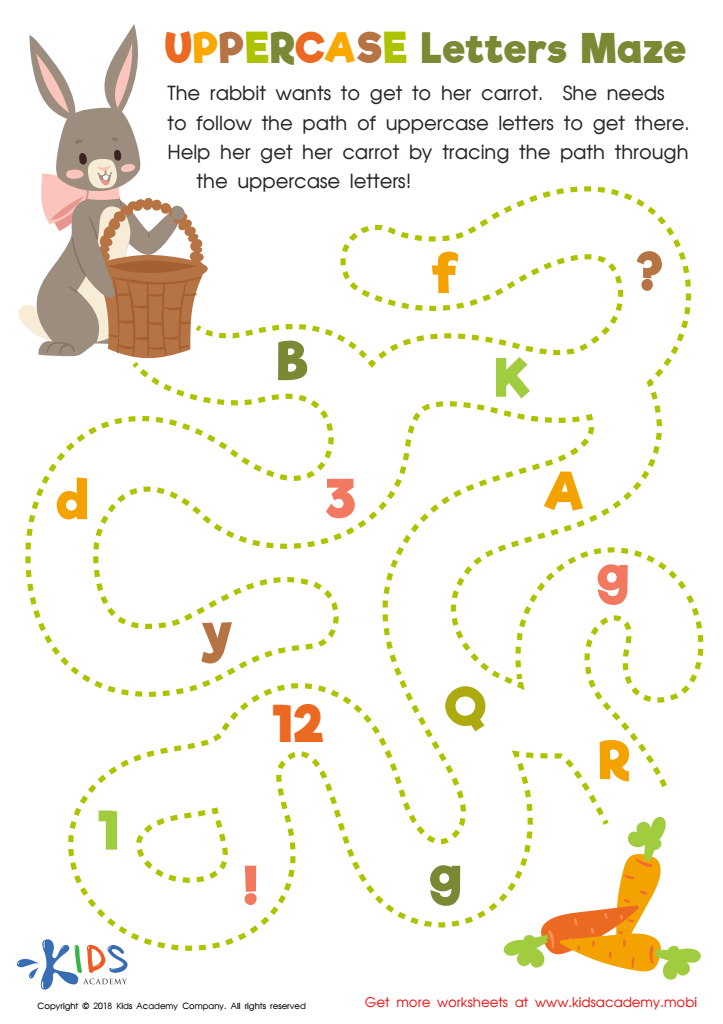
Uppercase Letters Maze Worksheet
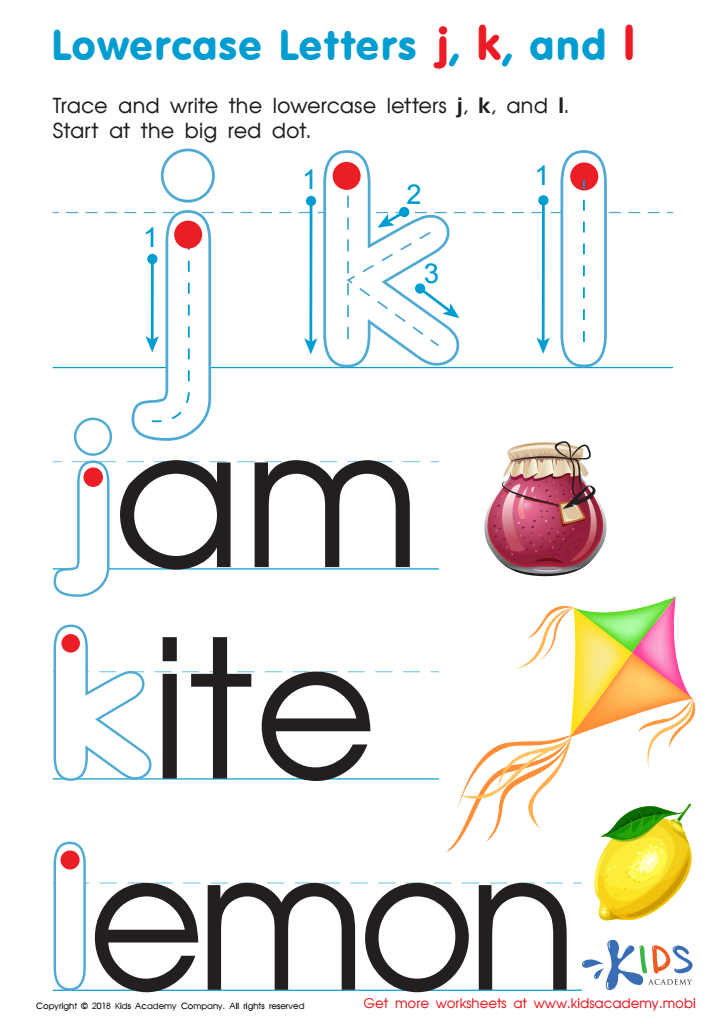
Lowercase Letters j k l Worksheet








Alphabet sequencing and normal letter recognition are foundational skills critical for early literacy development in children aged 4-5. Understanding and recognizing letters is not just about memorizing the alphabet; it's about laying the groundwork for reading and writing proficiency. For parents and teachers, nurturing these skills ensures that children can successfully identify letter sounds, which are essential when they start to form words and sentences.
When children can recognize letters, they gain the confidence to engage with text. This engagement nurtures a love for reading, enhancing their vocabulary and comprehension skills. Furthermore, proficient letter recognition directly influences academic performance; studies have shown that early literacy skills significantly correlate with later reading success.
Incorporating interactive activities, such as alphabet songs, games, and storytelling, engages children in learning while making it fun. Parents and teachers who prioritize these skills can monitor a child's progress, offering necessary support and reinforcement. Ultimately, fostering proficient alphabet sequencing and letter recognition not only prepares children for formal education but also enriches their cognitive development, social skills, and creative expression, setting a strong, positive trajectory for their future learning experiences.








