
Alphabet understanding Normal Letter Recognition Worksheets for Ages 4-5
5 filtered results
Difficulty Level
Grade
Age
-
From - To
Subject
Activity
Standards
Enhance your child's early literacy skills with our engaging Alphabet Understanding Normal Letter Recognition Worksheets, designed specifically for ages 4-5. These interactive worksheets provide a fun and effective way for young learners to identify and recognize both uppercase and lowercase letters. Through colorful illustrations and age-appropriate activities, kids will develop essential foundational skills while enjoying hands-on learning. Tailored to fit various learning styles, our worksheets encourage exploration and comprehension of letter sounds and shapes. Perfect for preschool educators and parents alike, start building your child's confidence in reading and writing today with these printable resources!
Favorites
With answer key
Interactive
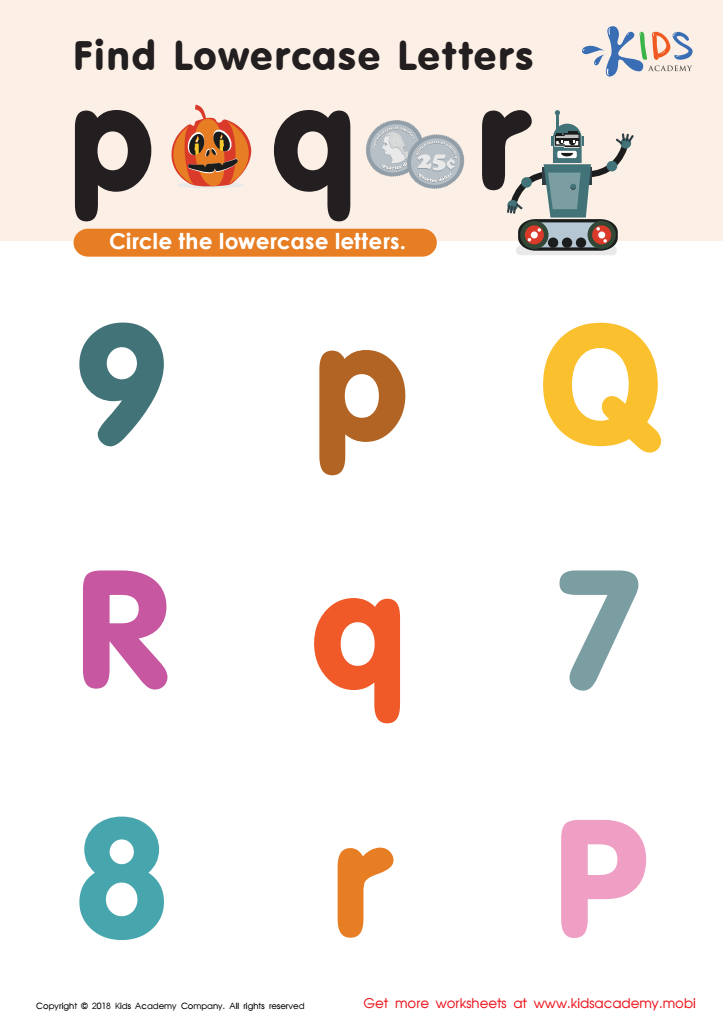
Find lowercase Letters p q r Worksheet
Help your child spot the lowercase letters among the numbers and uppercase letters in this worksheet. It's a great way to teach them to identify and write the lowercase and uppercase letters. Assist them in completing the exercise to give them a better understanding of the alphabets.
 Assign to My Students
Find lowercase Letters p q r Worksheet
Worksheet
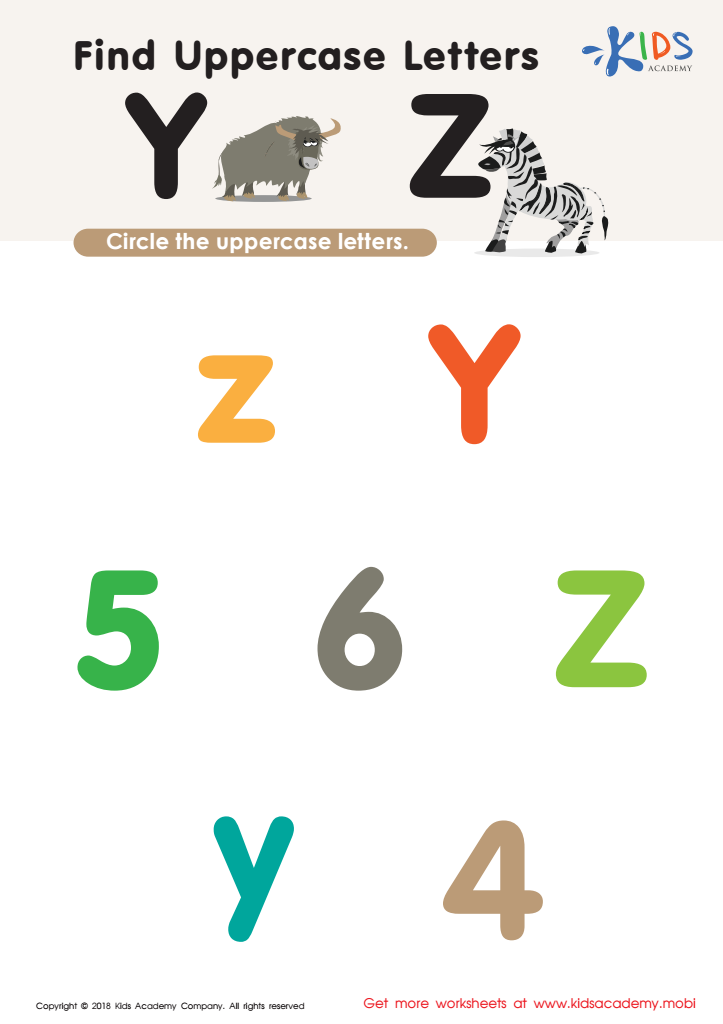
Find Uppercase Letters Y Z Worksheet
Download the worksheet! Help your youngster to learn the alphabet and distinguish uppercase from lowercase letters by having them circle the uppercase ones. It's an important first step towards reading and writing success!
Find Uppercase Letters Y Z Worksheet
Worksheet
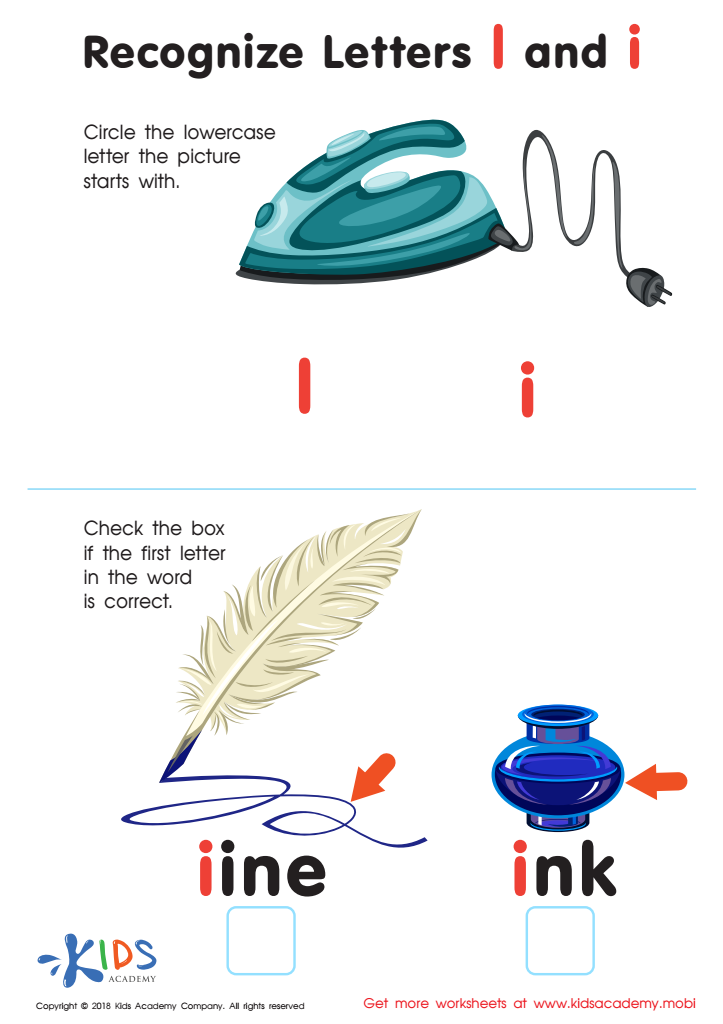
Recognize Letters l and i Worksheet
Help your child become familiar with uppercase and lowercase letters. Have them look at the pictures in the worksheet and circle the lowercase letter the picture starts with. For example: which one is the lowercase "i", the capital "I" or the small "i"?
Recognize Letters l and i Worksheet
Worksheet
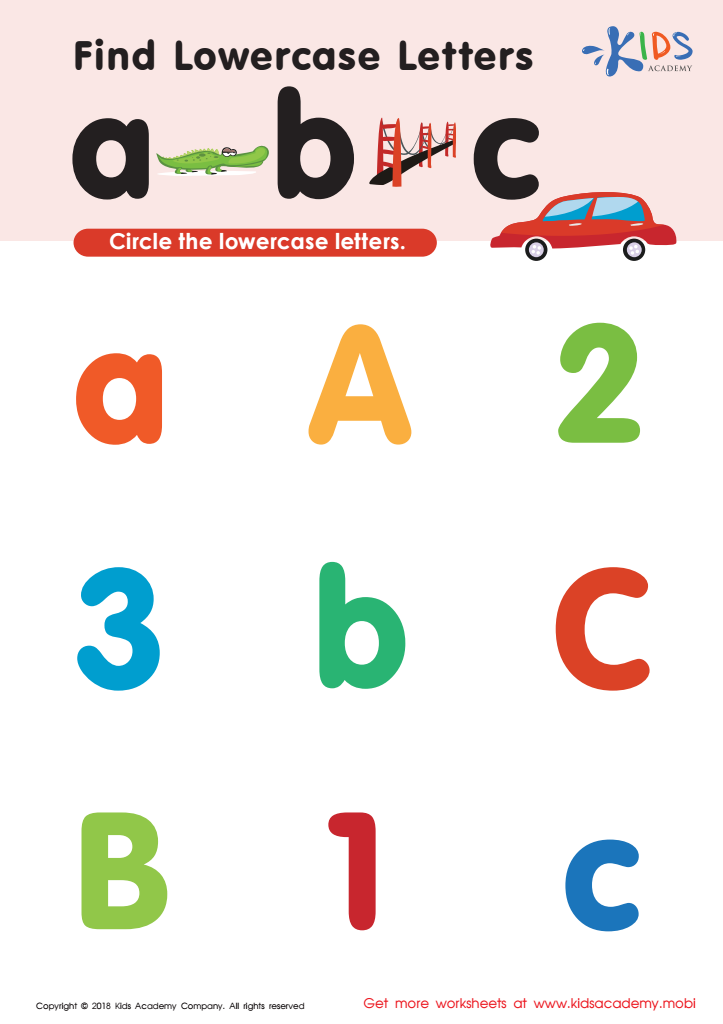
Find lowercase letters a b c Worksheet
Help your child identify lowercase letters with this worksheet. Carefully look at each letter and have your child circle the lowercase ones. This exercise is vital in helping them understand the alphabet and the difference between lower and uppercase letters.
Find lowercase letters a b c Worksheet
Worksheet
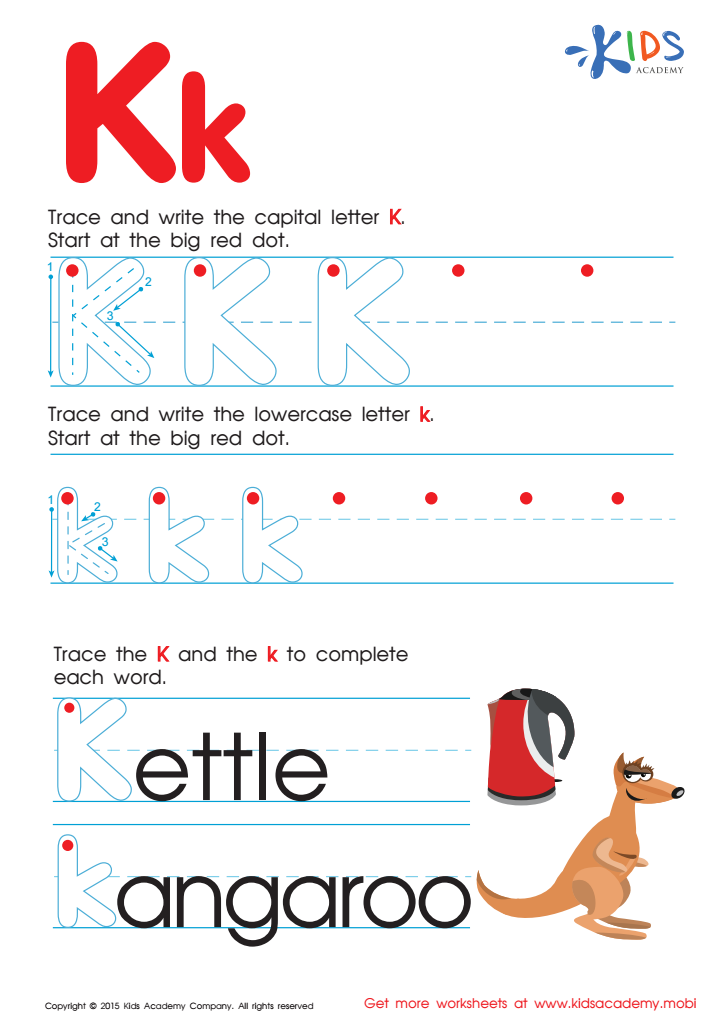
Letter K Tracing Page
Trace and write the letter K; start at the big red dot. Use it to complete words like "Kettle" and "Kangaroo". Visit Kids Academy for more free alphabet worksheets for kindergarten.
Letter K Tracing Page
Worksheet
Join Kids Academy for Free
Who is primarily going to use this learning content?








Alphabet understanding and normal letter recognition are crucial skills for children ages 4-5 as they lay the foundation for future reading and writing abilities. During this developmental stage, children are naturally curious and eager to learn. Recognizing letters not only involves identifying their shapes and sounds but also helps in building essential phonetic awareness, enabling children to decode words as they progress in literacy skills.
When parents and teachers prioritize letter recognition, they foster a supportive learning environment that enhances children's confidence and enthusiasm for reading. Mastery of the alphabet allows for smoother transitions into more complex language concepts, as children start to associate sounds with letters—an essential precursor to reading fluency.
Furthermore, early exposure to letter recognition can significantly impact a child's academic success. Studies show that children who develop strong foundational literacy skills in preschool tend to perform better in later grades. Engaging activities, such as letter games, reading together, and utilizing educational resources, can significantly enhance understanding. By focusing on alphabet understanding at this formative age, parents and teachers can set the stage for lifelong learning, making literacy an enjoyable and empowering experience for young learners.








