Fine motor skills development Normal Letter Recognition Worksheets for Ages 4-5
3 filtered results
-
From - To
Discover our engaging “Normal Letter Recognition Worksheets” designed for children aged 4-5, focusing on the development of fine motor skills. These worksheets offer fun activities that enhance children's ability to recognize letters while simultaneously improving their handwriting dexterity. Each worksheet features vibrant illustrations and interactive exercises that captivate young learners, fostering both alphabet familiarity and motor skill coordination. Perfect for early childhood education, these resources provide a balanced approach to learning, promoting cognitive growth and physical development. Give your child the tools they need for successful literacy skills with our carefully crafted letter recognition exercises that make learning enjoyable!
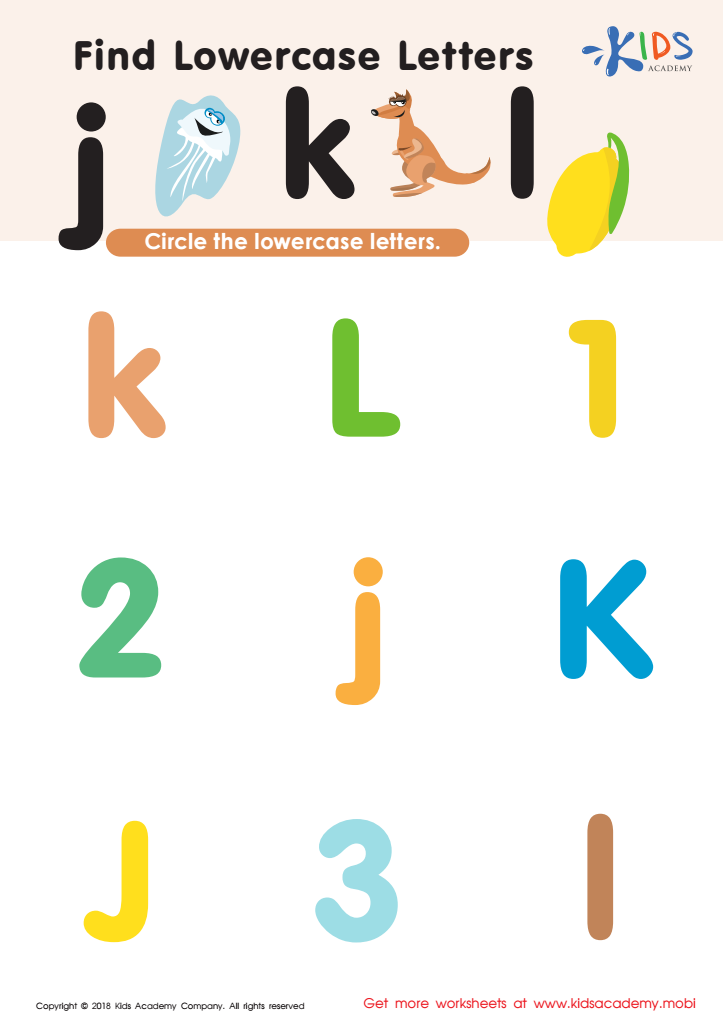
Find Lowercase Letters j k l Worksheet
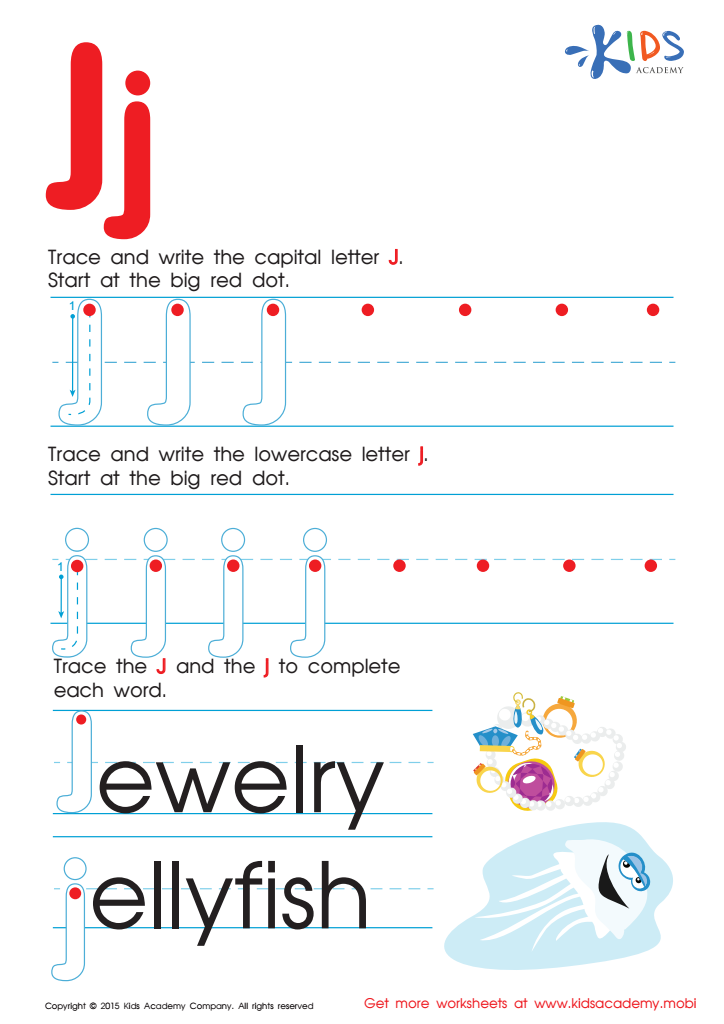
Letter J Tracing Page
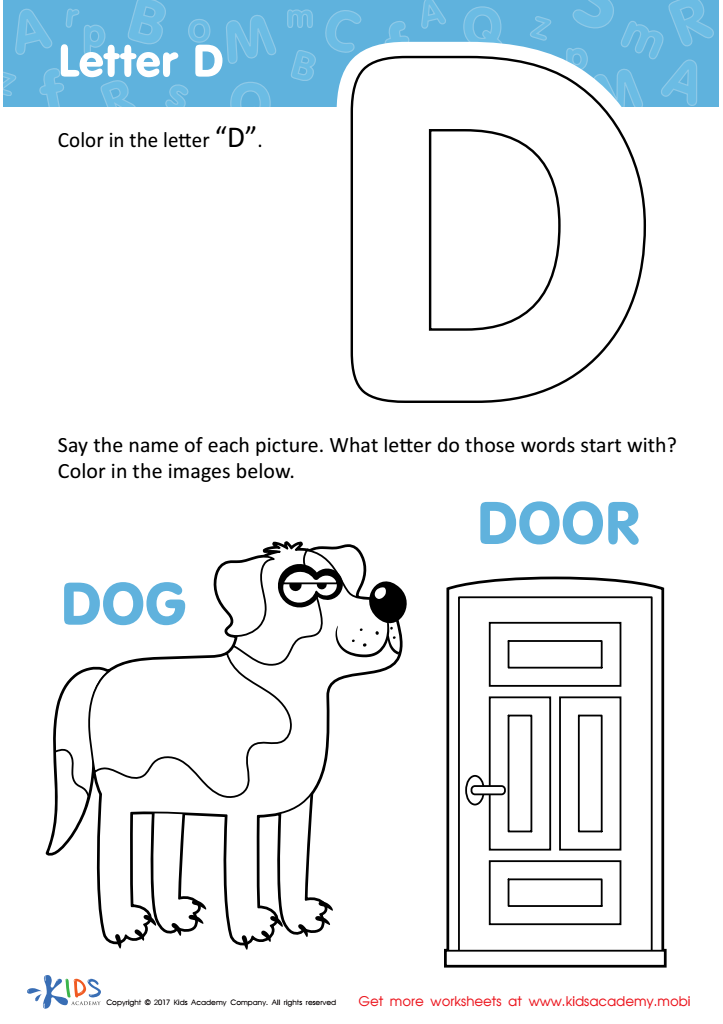
Letter D Coloring Sheet
 Assign to My Students








Fine motor skills development and normal letter recognition are critical components of early childhood education that significantly impact a child’s future learning experiences. For children aged 4-5, fine motor skills encompass actions like gripping a pencil, cutting with scissors, or manipulating small objects. These skills are essential not only for academic tasks like writing but also for everyday activities, enhancing a child’s independence and confidence.
Similarly, letter recognition is foundational for literacy. At this stage, children begin to understand the alphabet, recognizing letters and their corresponding sounds, which lays the groundwork for reading and writing. Mastery of letter recognition helps children decode words, promoting early reading skills and fostering a love for books.
When parents and teachers focus on developing these skills, they create a solid educational foundation. Engaging in activities that improve fine motor skills, such as tracing letters, threading beads, or playing with playdough, while also emphasizing alphabet games reinforces these vital concepts. This multimodal approach not only supports cognitive development but also nurtures a child’s creativity and problem-solving abilities, ensuring they are well-equipped for their academic journey ahead. By prioritizing these skills, adults play a crucial role in shaping confident, capable learners.








