Handwriting practice Normal Letter Sounds Worksheets for Ages 4-5
4 filtered results
-
From - To
Introducing our Handwriting Practice Normal Letter Sounds Worksheets, specially designed for children ages 4-5! These engaging worksheets help young learners master their handwriting while connecting letters with sounds. Each worksheet features a variety of fun activities that encourage children to trace and write letters in a clear and structured manner, promoting fine motor skills and letter recognition. With vibrant illustrations and guided prompts, kids will enjoy practicing both uppercase and lowercase letters, enhancing their phonemic awareness. Perfect for preschool and early kindergarten classrooms, our worksheets make learning phonics and handwriting enjoyable and effective, empowering children to build a strong foundation for literacy skills.
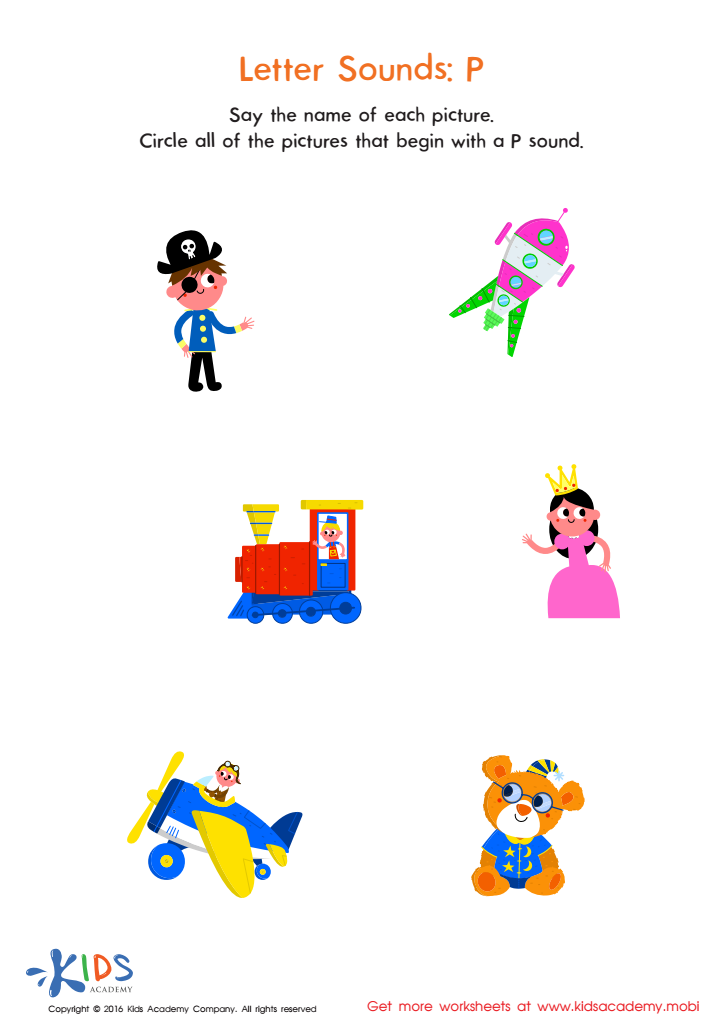
Letter P Sound Worksheet
 Assign to My Students
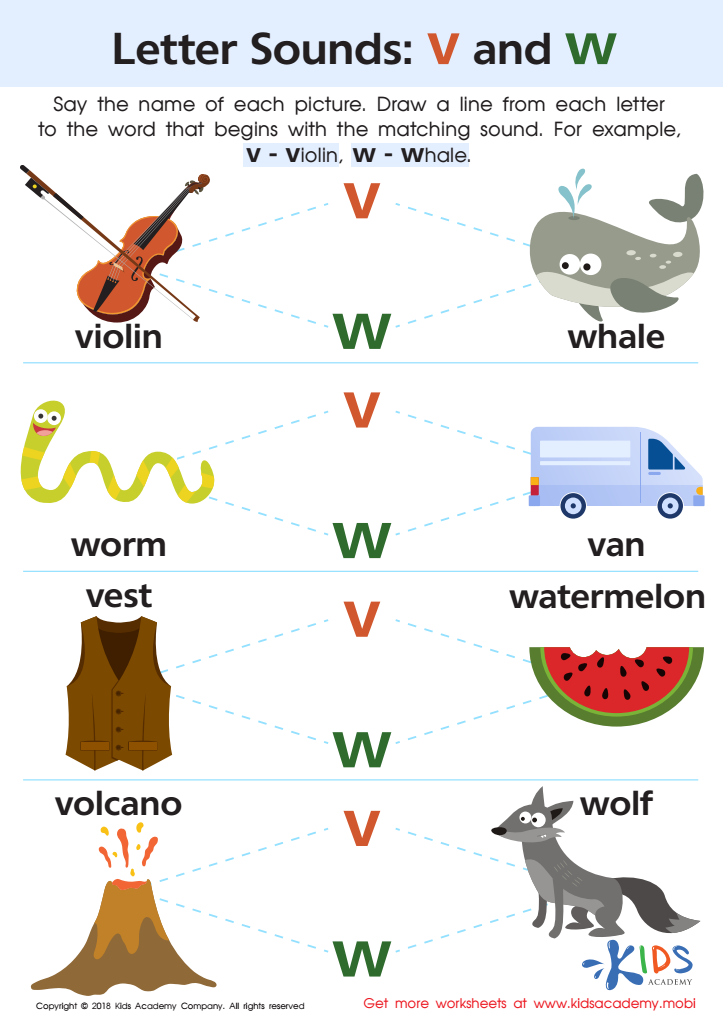
Letter V and W Sounds Worksheet
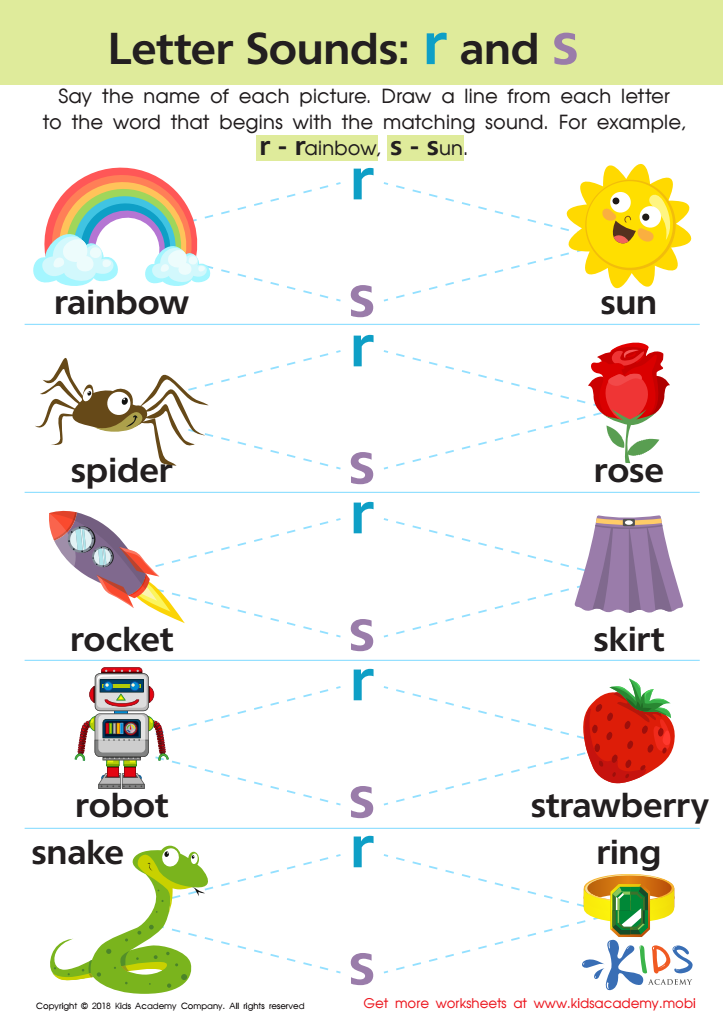
Letter R and S Sounds Worksheet
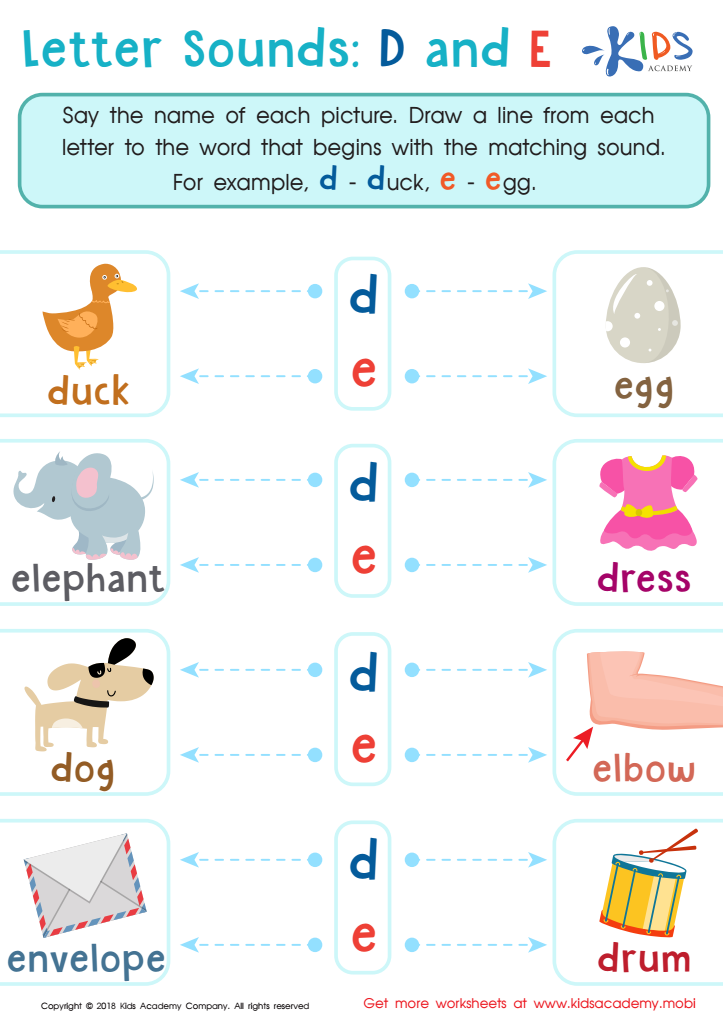
Letter D and E Sounds Worksheet








Handwriting practice and normal letter sounds are foundational skills for young children aged 4-5, making them critical areas of focus for parents and teachers alike. First, the ability to form letters correctly is essential for developing fine motor skills, which are vital for various tasks in childhood and adulthood. These motor skills help children gain independence in activities like dressing, eating, and, ultimately, writing fluently.
Additionally, the connection between handwriting and phonemic awareness cannot be overlooked. Learning letter sounds while engaging in handwriting practice reinforces language skills, enabling children to form words and sentences. As they practice writing, they activate auditory and visual memories, making it easier to recall letter sounds when reading.
Moreover, handwriting relates to cognitive development. Crafting letters encourages critical thinking and focus, nurturing a child's ability to follow direction, pay attention to detail, and express creativity. It builds foundational literacy skills necessary for future learning.
Fostering an early interest in both handwriting and letter sounds encourages a love for reading and writing that can last a lifetime. By prioritizing these skills, parents and teachers help ensure that children have the tools for academic success and personal expression as they continue their educational journey.






