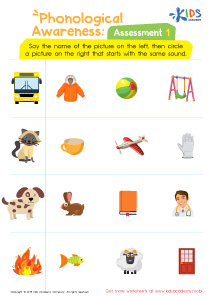
Reading comprehension Normal Rhyming Worksheets for Ages 4-5
4 filtered results
-
From - To
Enhance your child's reading comprehension skills with our engaging Normal Rhyming Worksheets designed specifically for ages 4-5. These worksheets combine fun rhyming activities with comprehension exercises to make learning enjoyable. Each sheet encourages young learners to identify rhyming words, fostering an early love for language while developing critical thinking. Our literacy resources are perfect for parents and educators who want to nurture phonemic awareness and reading skills. With colorful illustrations and thoughtfully crafted activities, these worksheets are both educational and entertaining. Jumpstart your child's reading journey today and watch them thrive in literacy with our interactive and playful approach!
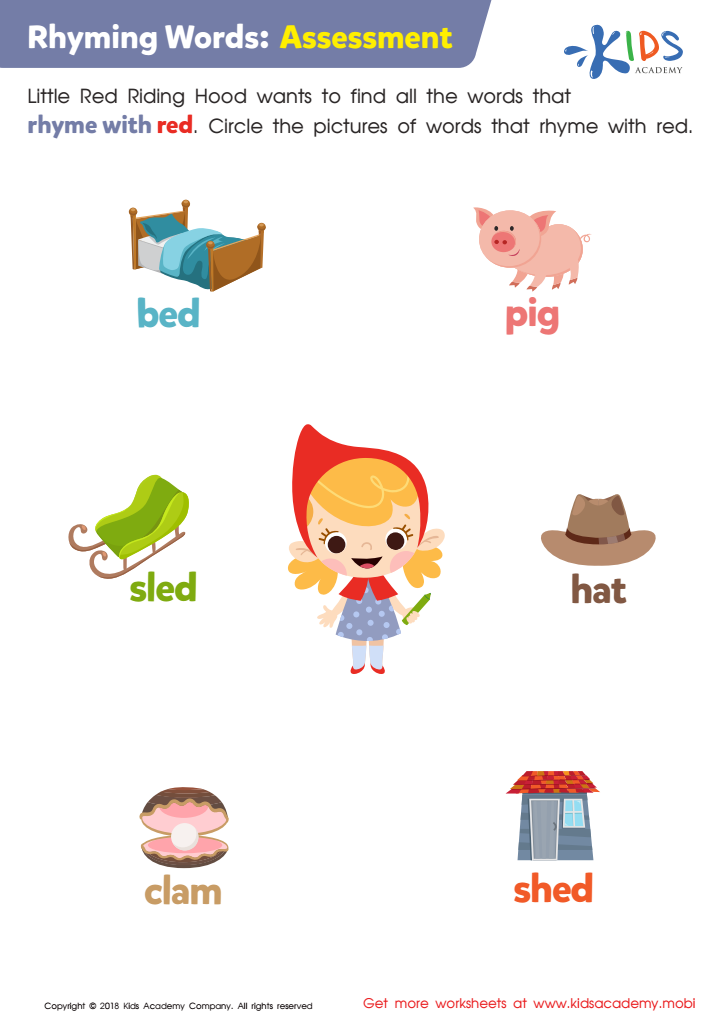
Rhyming Words: Assessment Worksheet
 Assign to My Students
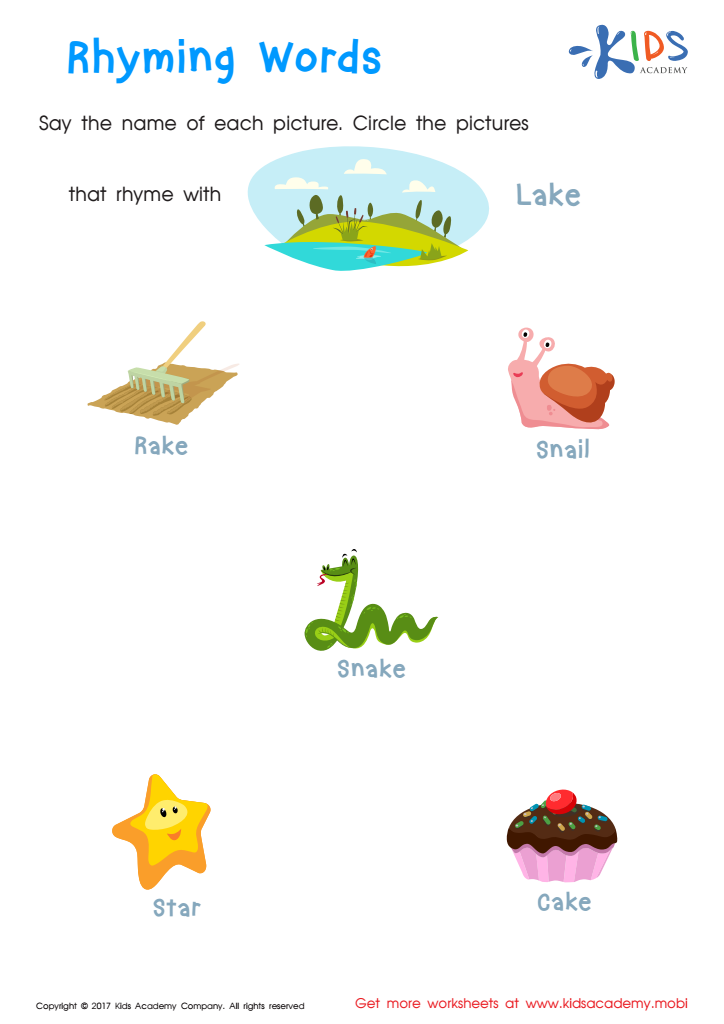
Rhyming Words Rhyming Worksheet
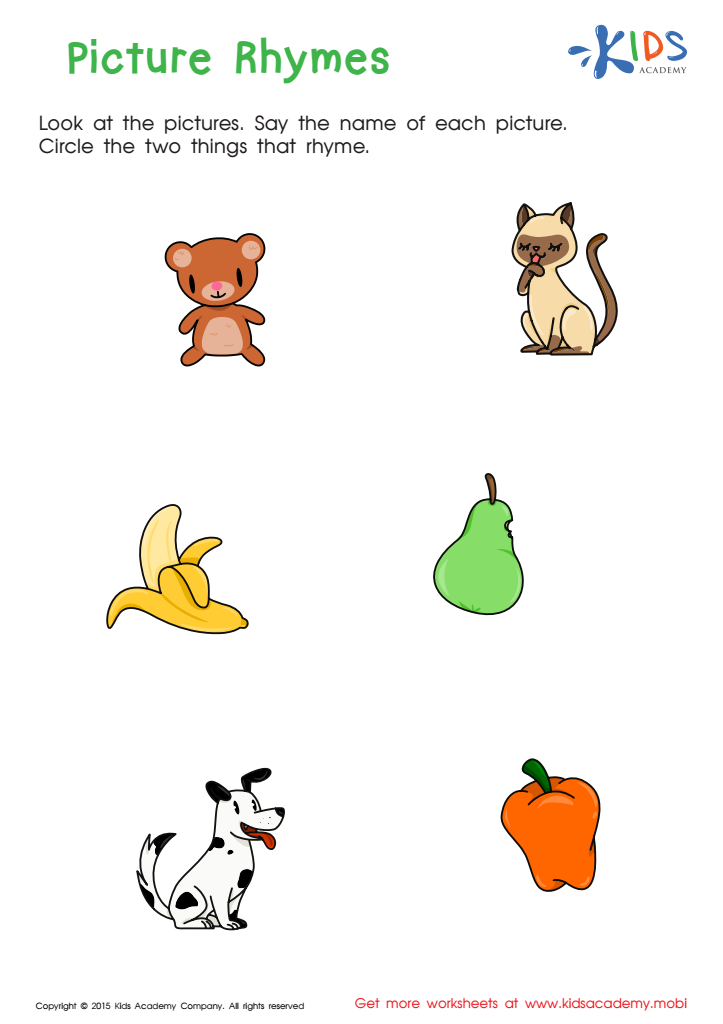
First Words: Picture Rhymes Worksheet
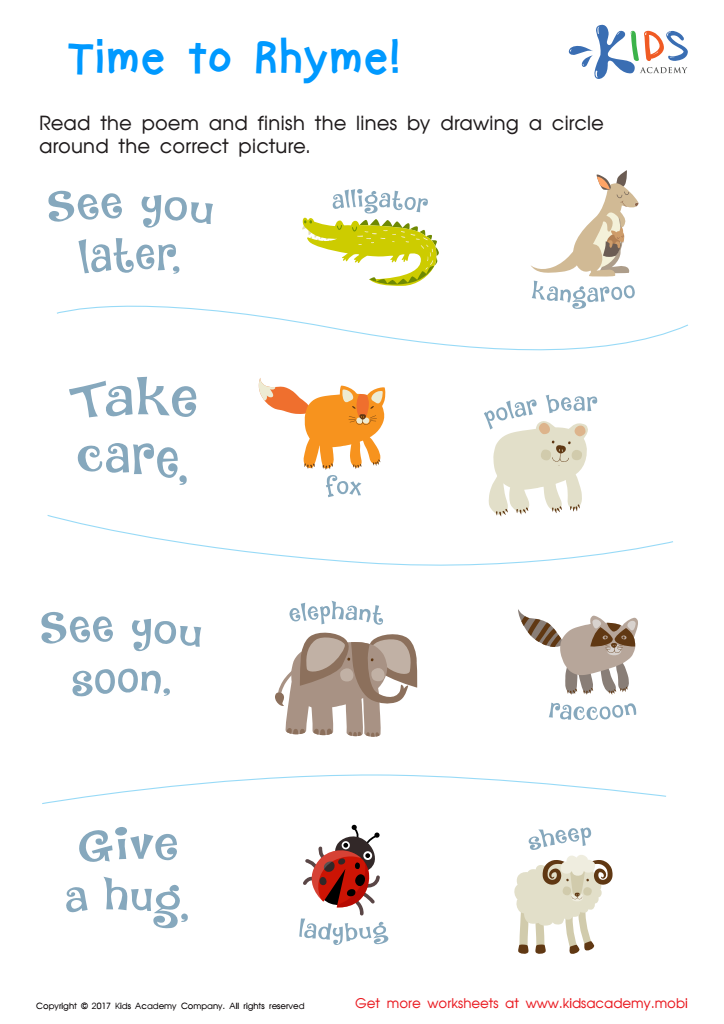
Time to Rhyme Rhyming Worksheet







Reading comprehension and normal rhyming are crucial components of early childhood education, particularly for children aged 4-5. At this age, children are developing foundational literacy skills that shape their future academic success. Understanding reading comprehension helps young learners grasp the meaning of texts, which is essential for effective communication and critical thinking.
Normal rhyming plays a significant role in this process. Engaging with rhymes not only makes reading enjoyable but also helps children recognize sound patterns, which is key in phonemic awareness. This awareness leads to better decoding abilities, enabling children to read unfamiliar words independently. Rhyming activities also strengthen memory and boost vocabulary, as children are more likely to remember words that sound similar.
Moreover, when parents and teachers incorporate reading comprehension strategies alongside rhyming, they foster a love for reading, encouraging a habit that extends beyond the classroom. This combination can significantly influence a child’s confidence and motivation in learning. By prioritizing these skills, adults can help shape well-rounded, literate individuals who possess the tools needed for future academic endeavors and lifelong learning. Therefore, both parents and teachers should prioritize these elements in early literacy experiences.