Letter Tracing Practice Normal Tracing Letters Worksheets for Ages 4-5
3 filtered results
-
From - To
Our "Letter Tracing Practice normal tracing letters worksheets for ages 4-5" are designed to help young learners master letter formation and sequencing. These engaging worksheets guide children in steadily tracing letters, enhancing their fine motor skills and improving handwriting. Perfect for preschoolers and kindergarteners, each worksheet combines fun activities with effective learning techniques. Our colorful and well-structured sheets ensure your child enjoys the learning process while building essential literacy skills. Set your child on the right path to reading and writing success with our thoughtfully crafted tracing letter worksheets. Ideal for both classroom and home use.
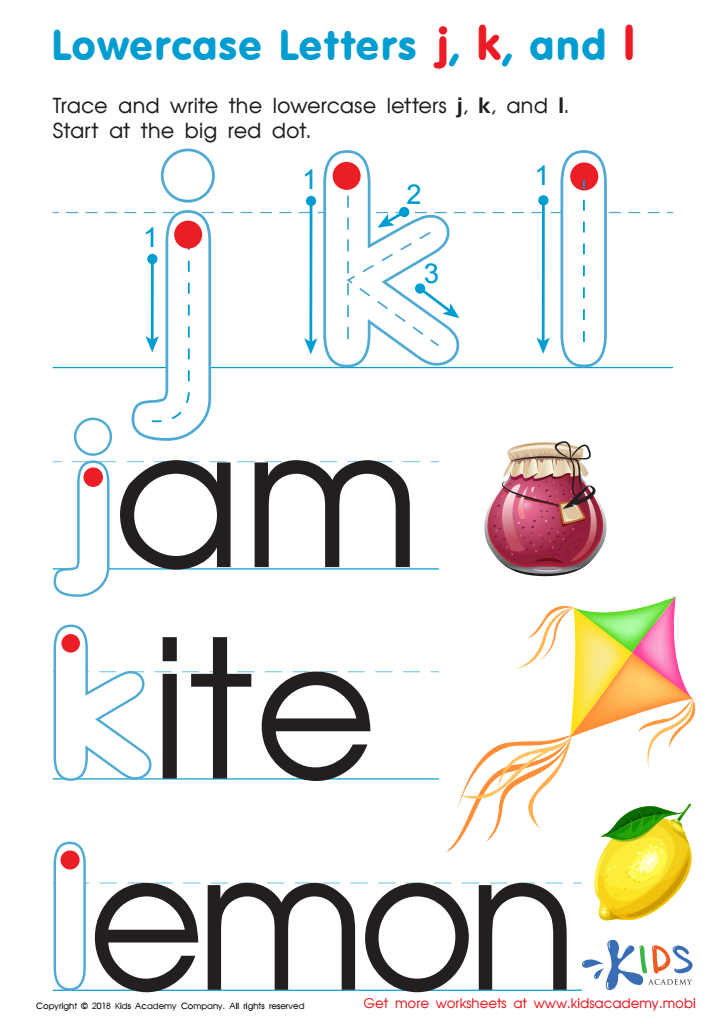
Lowercase Letters j k l Worksheet
 Assign to My Students
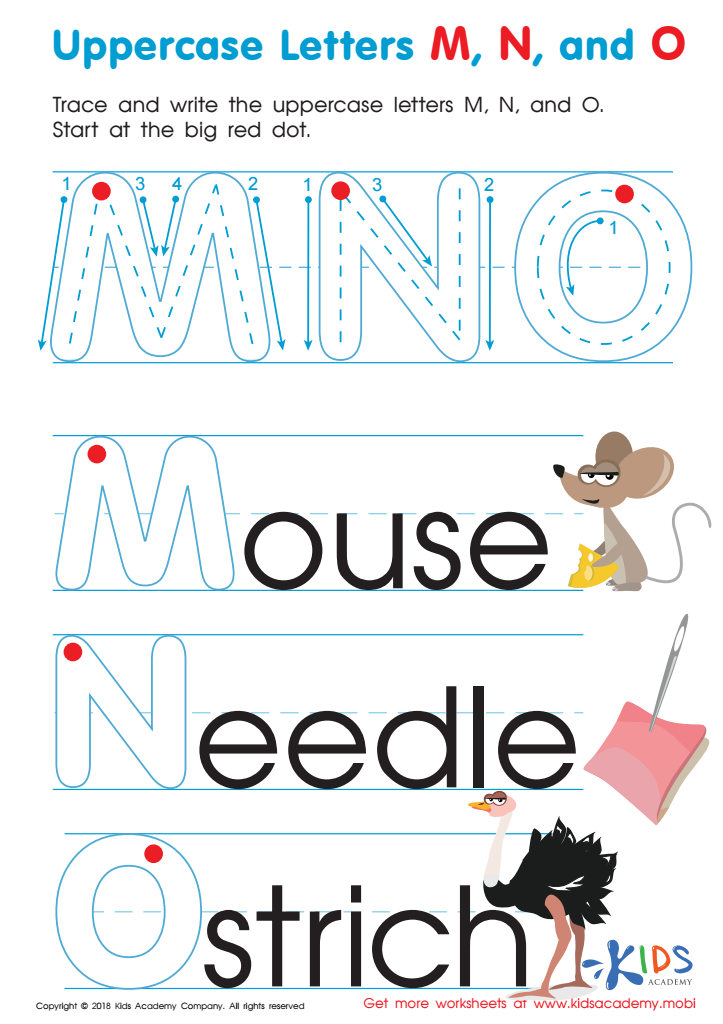
Uppercase Letters M, N, and O Worksheet
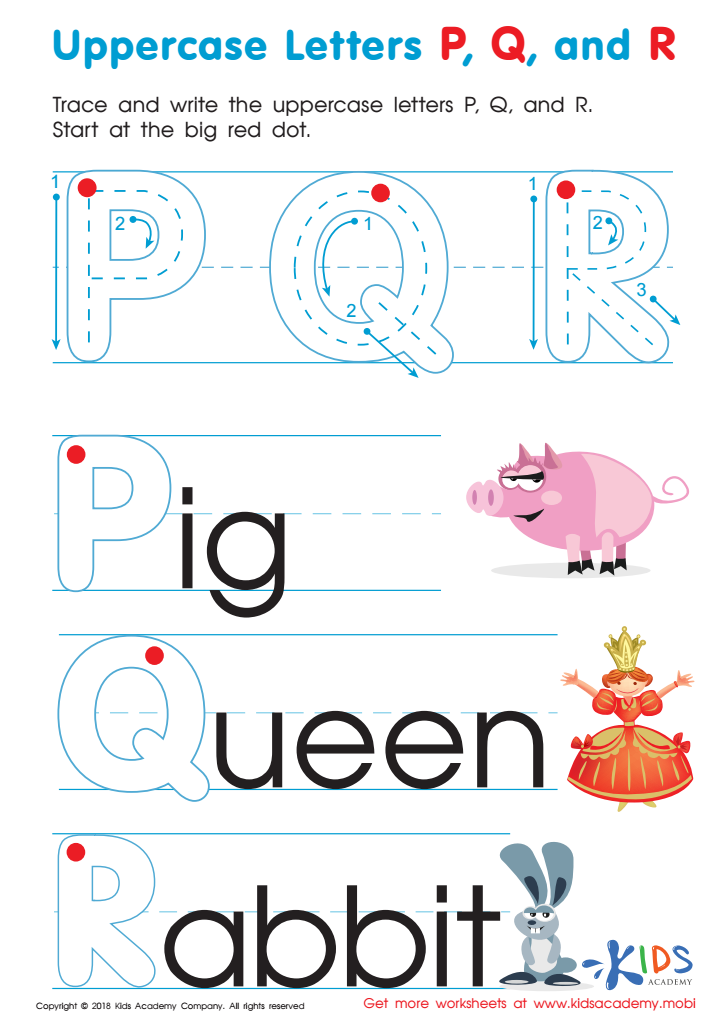
Uppercase Letters P, Q, and R Worksheet








Letter tracing practice for children ages 4-5 is critical for several developmental reasons, making it essential for parents and teachers to care about and engage in these activities. At this age, children are in a crucial stage of developing fine motor skills, which are necessary for tasks such as writing, drawing, and daily activities like buttoning a shirt. Tracing letters helps strengthen the small muscles in children’s hands, improving their coordination and control.
Furthermore, letter tracing is foundational for literacy development. As children practice tracing, they become familiar with the shapes and forms of each letter, enhancing their ability to recognize and differentiate them. This recognition is the first step toward reading and writing proficiency.
Additionally, tracing encourages cognitive skills such as focus, attention to detail, and memory. By following patterns and sequences, young learners develop their ability to concentrate on tasks, which is essential for academic success.
Moreover, these practice sessions can also be an enjoyable experience, fostering a love for learning. When parents and teachers participate in these activities, they provide a supportive environment that values education and personal growth. Overall, letter tracing practice sets a firm foundation for essential skills and positive experiences in a child's educational journey.








