Letter Tracing Practice Normal Upper & Lowercase Letters Worksheets for Ages 4-5
3 filtered results
-
From - To
Introduce your 4-5-year-olds to the exciting world of letters with our Letter Tracing Practice Worksheets. Designed specifically for young learners, these fun and engaging resources help children master both uppercase and lowercase letters through guided tracing activities. Each worksheet reinforces fine motor skills and letter recognition, laying the foundation for reading and writing success. Parents and teachers can conveniently print these worksheets for home or classroom use. Make learning enjoyable with colorful, interactive designs that captivate young minds! Perfect for early education settings, our worksheets ensure a playful, effective approach to letter mastery and preparation for future learning challenges.
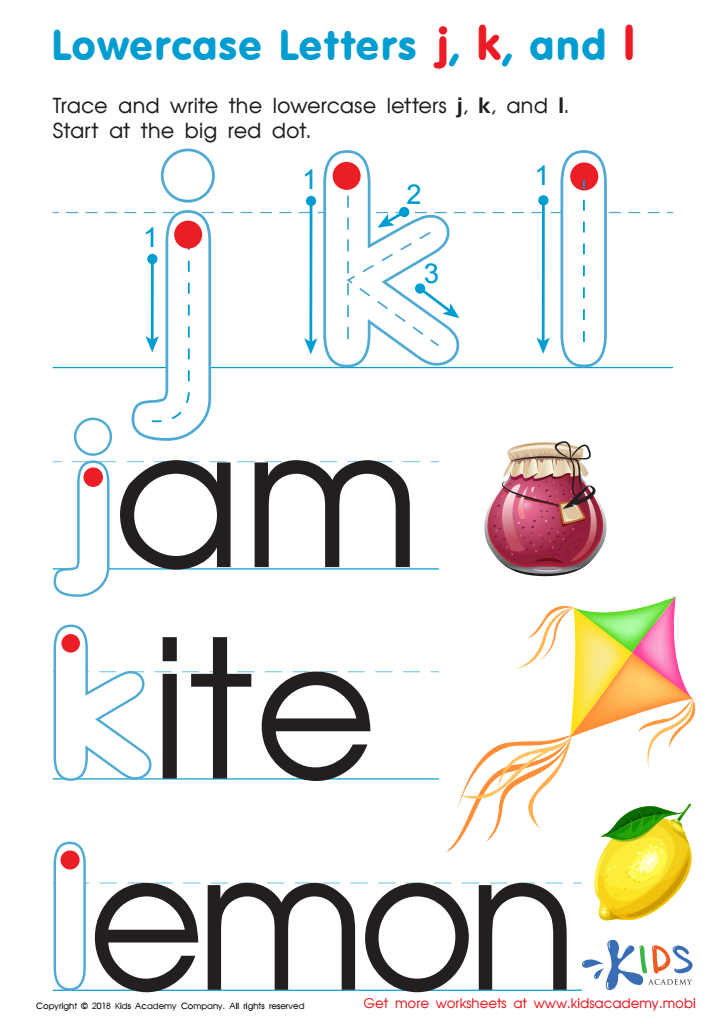
Lowercase Letters j k l Worksheet
 Assign to My Students


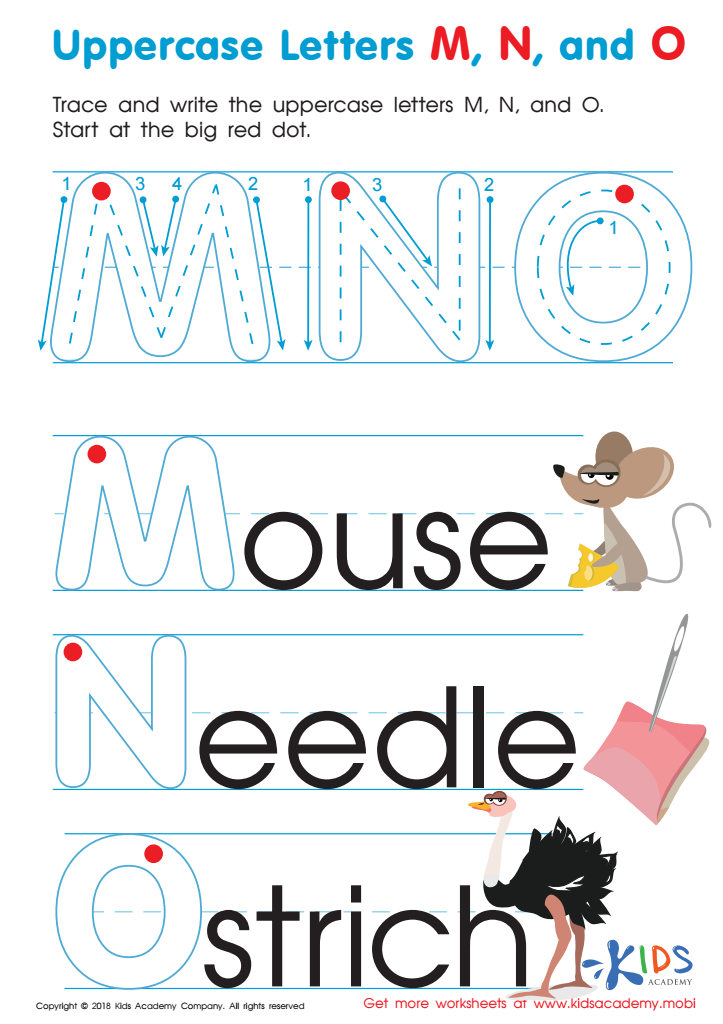
Uppercase Letters M, N, and O Worksheet
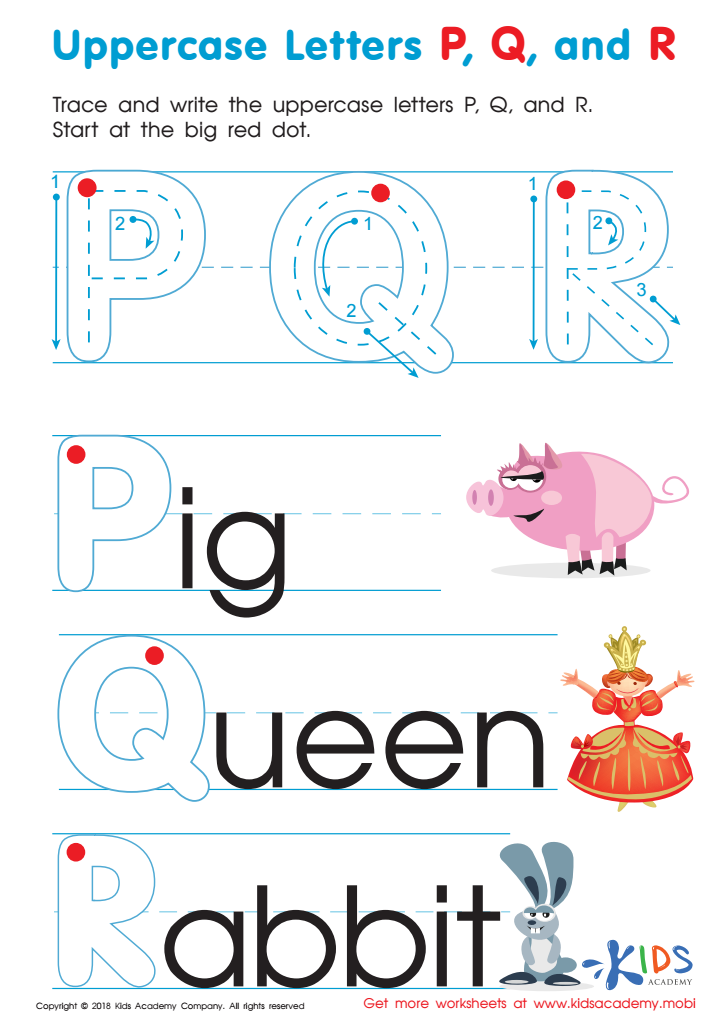
Uppercase Letters P, Q, and R Worksheet






Letter tracing practice for uppercase and lowercase letters is crucial for children aged 4-5 as it lays the foundation for their literacy development. At this age, children are naturally curious and eager to explore the world of letters and sounds. Engaging in letter tracing helps them develop fine motor skills, which are essential for writing. By retracing the shapes of letters, children learn how to hold writing tools correctly, enhancing their coordination and control.
Additionally, tracing letters reinforces visual recognition. Familiarity with both uppercase and lowercase letters primes children to understand that letters can take different forms but represent the same sounds. This knowledge is vital for early reading skills.
Teachers and parents should also note that tracing can instill a sense of accomplishment in children. As they master each letter, their confidence and enthusiasm for learning grow, motivating them to engage further with letters and words.
Furthermore, incorporating letter tracing into play can enhance the learning experience, making it enjoyable. By fostering a positive association with letters at an early age, adults can support children's lifelong literacy journey, setting them up for academic success and a love of reading and writing.







