Uppercase identification Normal Upper & Lowercase Letters Worksheets for Ages 4-5
5 filtered results
-
From - To
Introduce your little learners to the world of letters with our "Uppercase Identification Normal Upper & Lowercase Letters Worksheets," tailored for ages 4-5! These engaging activities help young children identify and differentiate between uppercase and lowercase letters through fun exercises and adorable characters. Perfect for preschool and kindergarten students, our worksheets foster early reading and writing skills, enhancing letter recognition and hand-eye coordination. Delightful and interactive, these printables make learning enjoyable while building a strong foundation for lifelong literacy. Watch your children master the alphabet with confidence and excitement, one worksheet at a time.
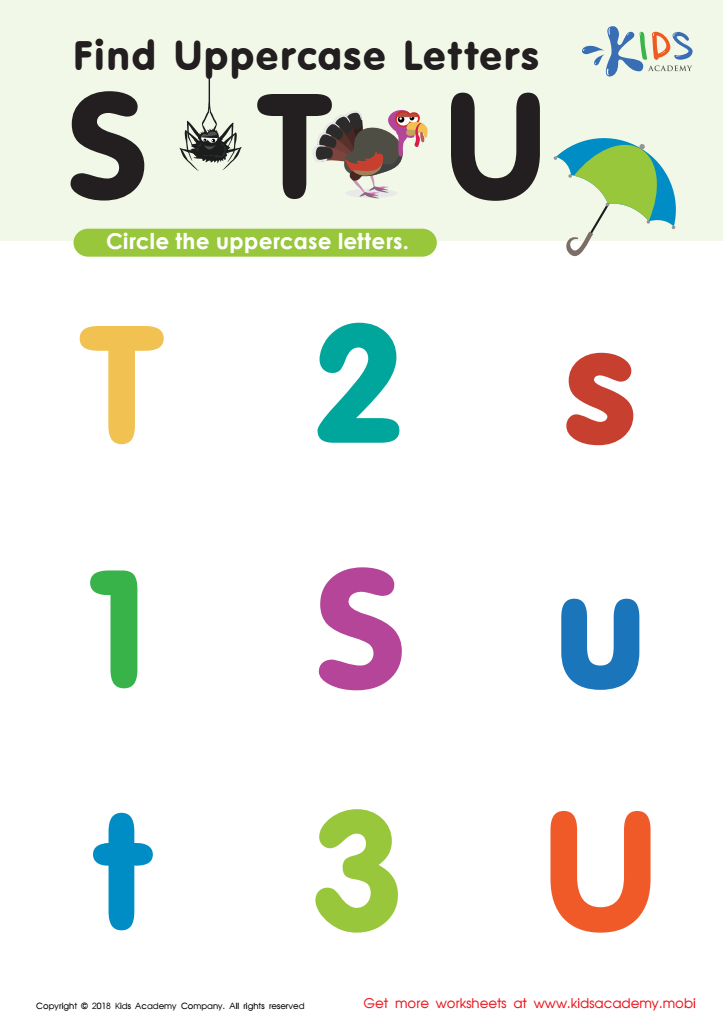
Find Uppercase Letters Worksheet
 Assign to My Students

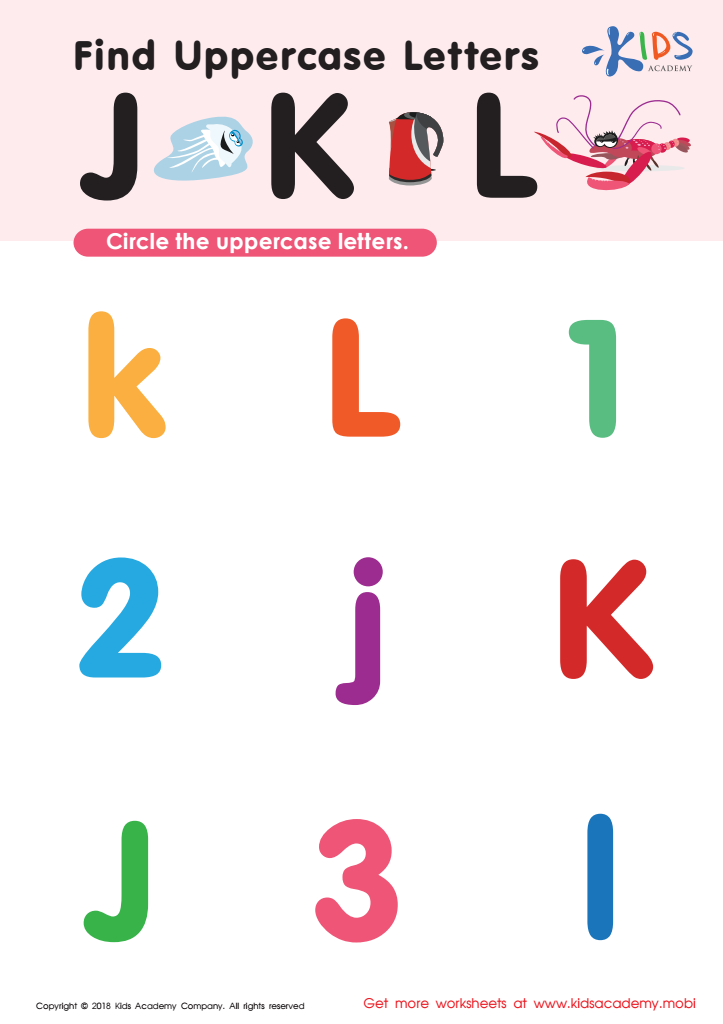
Find Uppercase Letters J, K, and L Worksheet

Find Uppercase Letters A, B, and C Worksheet
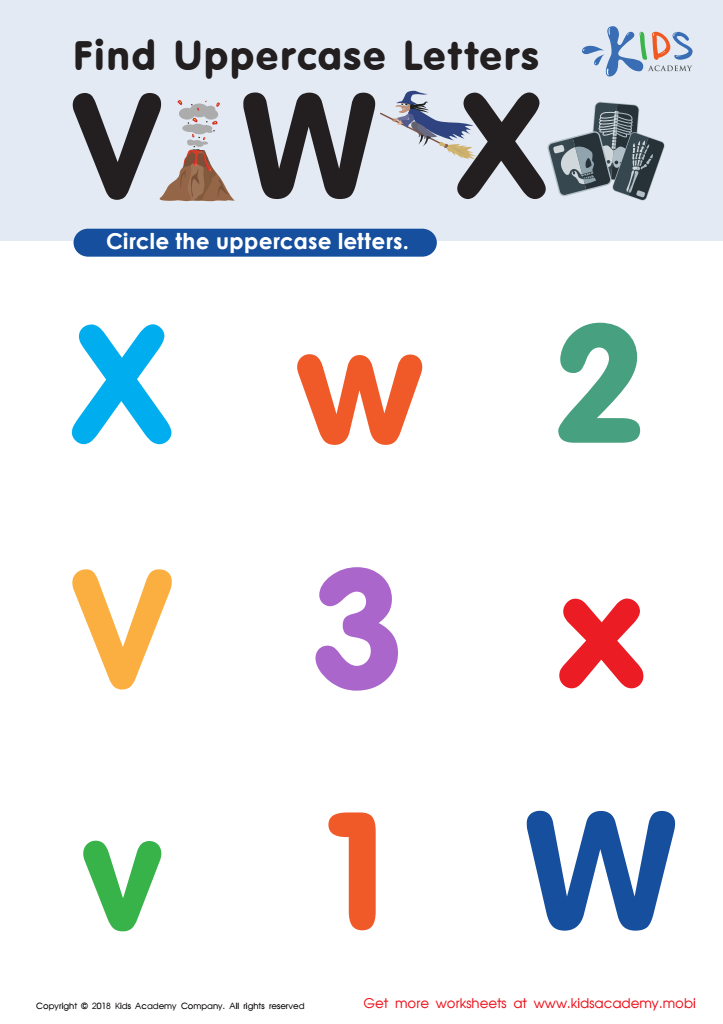
Find Uppercase Letters V, W, X Worksheet
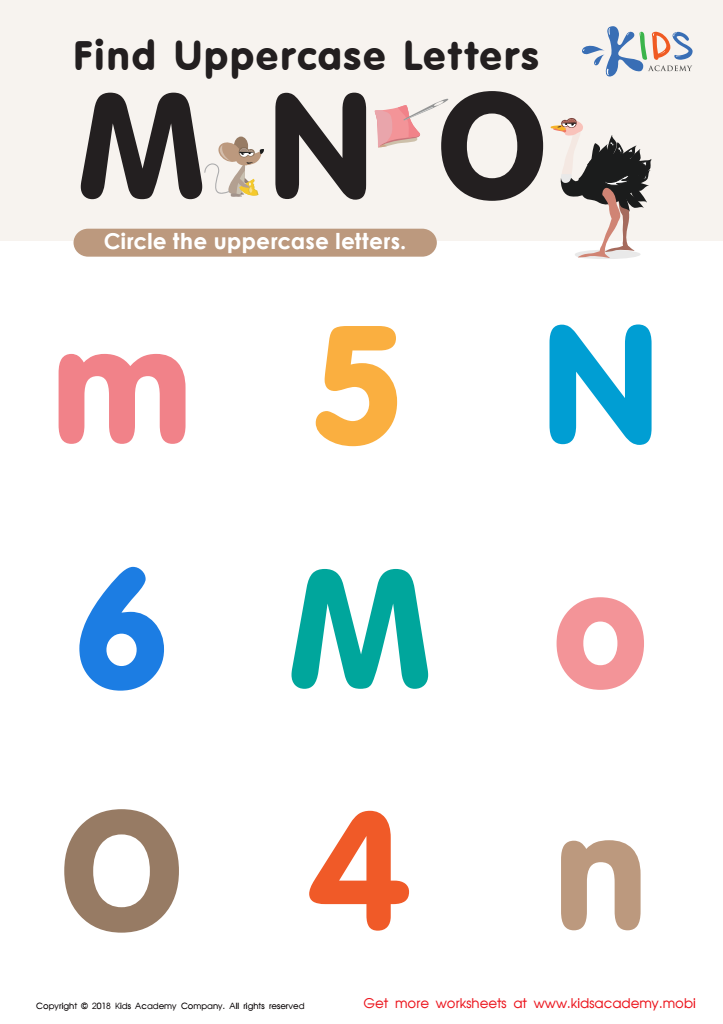
Find Uppercase Letters M, N, and O Worksheet






Early identification of uppercase and lowercase letters is crucial for children aged 4-5 as it lays the foundation for literacy development, a fundamental skill essential for future academic success. At this age, children's brains are primed for learning to decode written language, and recognizing different letter forms is a key component.
Uppercase letters are generally easier for young children to identify because of their distinct and simpler shapes. However, understanding that each uppercase letter pairs with a lowercase counterpart aids in reading fluency and comprehension. When children can smoothly transition between uppercase and lowercase letters, they become more proficient in recognizing words and building basic reading skills.
For parents and teachers, fostering this skill ensures children do not fall behind their peers, preventing future struggle and frustration in learning to read. Engaging kids in playful and interactive activities that reinforce letter recognition keeps them motivated and makes the learning process enjoyable.
Additionally, mastering letter identification enhances a child’s confidence and self-esteem, encouraging a positive attitude toward learning. This early advantage propels them forward, opening doors to more complex language skills, critical thinking, and broader educational opportunities. Thus, prioritizing letter recognition at this formative age is an investment in a child's long-term educational journey.







