Motor skills development Normal English for Beginners Worksheets for Ages 4-5
3 filtered results
Difficulty Level
Grade
Age
-
From - To
Subject
Activity
Standards
Welcome to our collection of "Motor Skills Development Normal English for Beginners Worksheets" designed specifically for children ages 4-5. These engaging worksheets focus on enhancing motor skills through fun and interactive activities that promote hand-eye coordination, fine motor control, and dexterity. Perfect for early learners, our resources utilize age-appropriate vocabulary and illustrations that make learning enjoyable. Parents and educators can benefit from these printable materials, which are perfect for ESL learners and reinforce language skills while encouraging physical development. Explore our worksheets today to support your child's growth and confidence in both motor skills and language learning!
Favorites
With answer key
Interactive
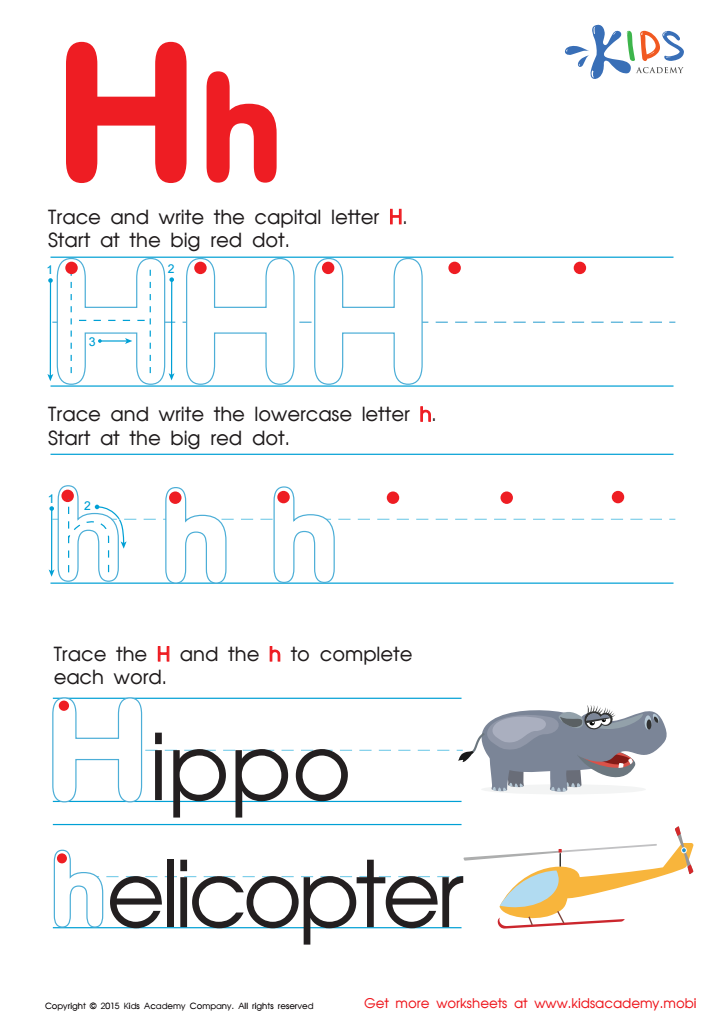
Letter H Tracing Page
Trace the letter "H", then practice writing its lowercase form. Finally, choose your favorite form of transport and ride away! Get our worksheets to make learning fun and easy.
Letter H Tracing Page
Worksheet
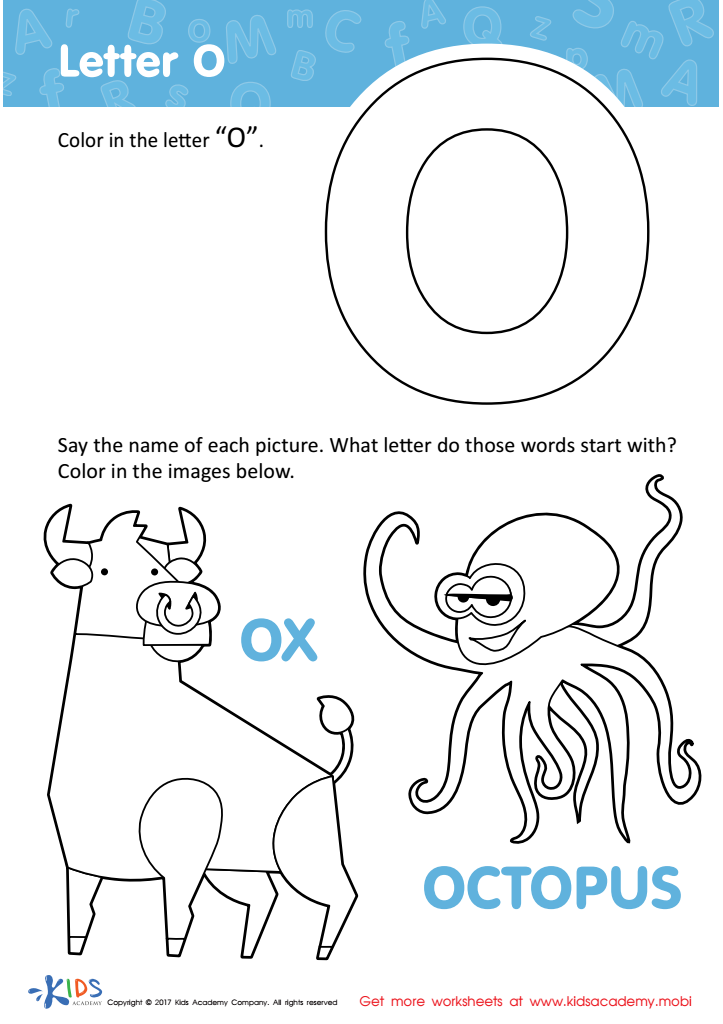
Letter O Coloring Sheet
Oh my! The letter "O" is so much fun. Coloring in the octopus and ox on this delightful letter "O" coloring page can help your child have fun while strengthening their recognition of the letter and sound.
Download (PDF)
 Assign to My Students
Assign to My Students
Letter O Coloring Sheet
Worksheet
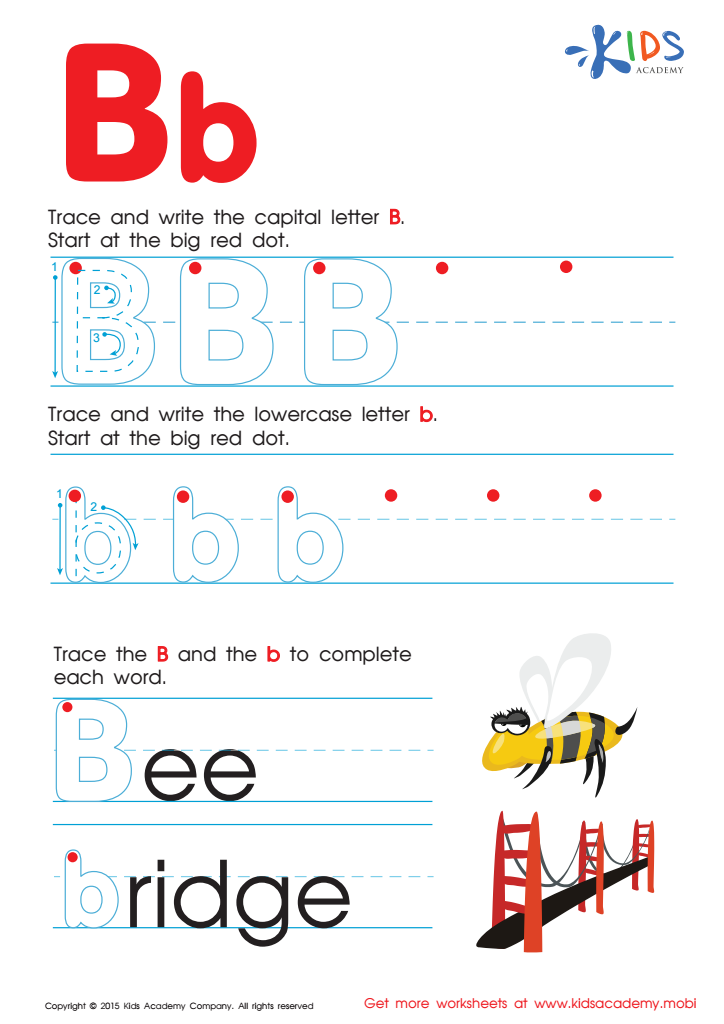
Letter B Tracing Page
Ready to learn the Alphabet? Put your pencil on the red dot and trace & write both capital & lowercase "B". Then have a look at the pictures. Catch the bee, cross the bridge & write the letters to complete the words. More ABC worksheets for kindergarten available!
Letter B Tracing Page
Worksheet
Join Kids Academy for Free
Who is primarily going to use this learning content?




Motor skills development is very important for young children, especially for those aged 4-5 years. Motor skills are the abilities that help children move their bodies, like running, jumping, or holding a pencil. Good motor skills help children learn to do everyday tasks, such as buttoning their clothes or tying their shoes.
When parents and teachers support motor skill development, they help children build confidence and gain independence. Strong motor skills are also linked to better learning in school. Children who can move well often find it easier to pay attention and participate in classroom activities.
Playing outside, doing arts and crafts, and simple games can help improve these skills. When children jump, climb, or throw a ball, they are not just having fun; they are also learning and growing.
In addition, good motor skills contribute to social skills. When children can play physical games with their friends, they learn to share and cooperate. Parents and teachers should care about children's motor skills because they are key to helping children develop physically, socially, and academically. Supporting this growth sets children up for success in the future.