Spatial awareness Normal Reading Worksheets for Ages 4-5
3 filtered results
-
From - To
Enhance your child's visual-spatial awareness with our engaging Normal Reading Worksheets designed for ages 4-5! These worksheets promote essential skills, helping young learners understand shapes, positions, and their relationship to the surrounding space. Our fun and interactive activities include identifying directions, completing mazes, and matching shapes, all contributing to improved cognitive development. As children explore these worksheets, they'll not only boost their reading readiness but also foster critical thinking and problem-solving abilities. Perfect for home or classroom use, these spatial awareness worksheets create a solid foundation for future learning adventures. Start your journey today with these captivating, age-appropriate resources!
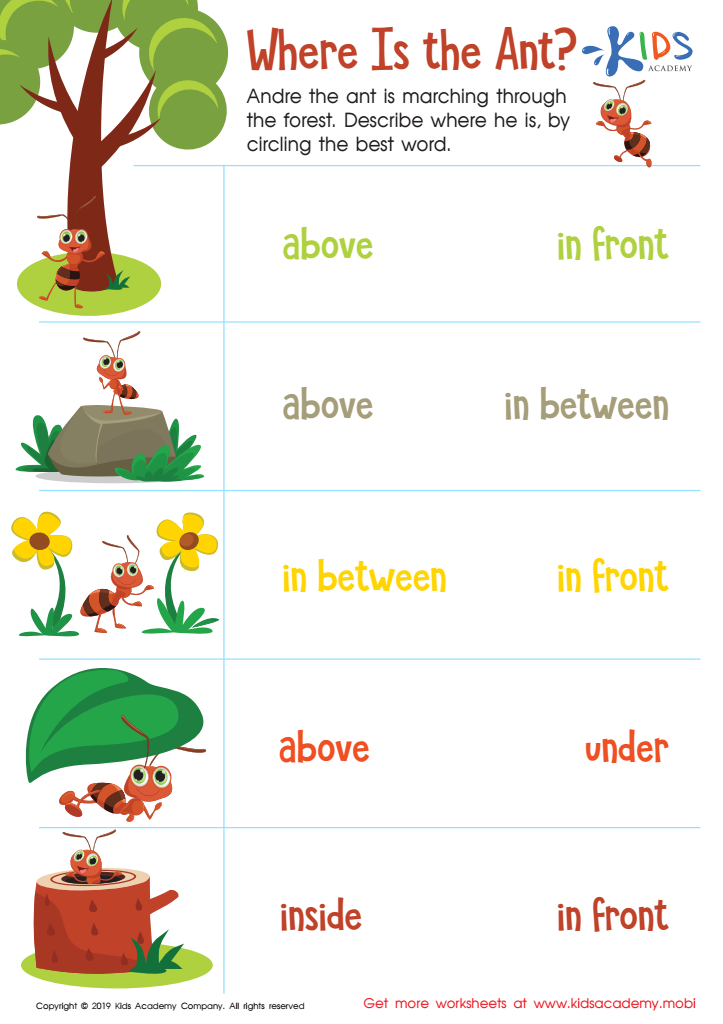
Where Is the Ant? Worksheet
 Assign to My Students
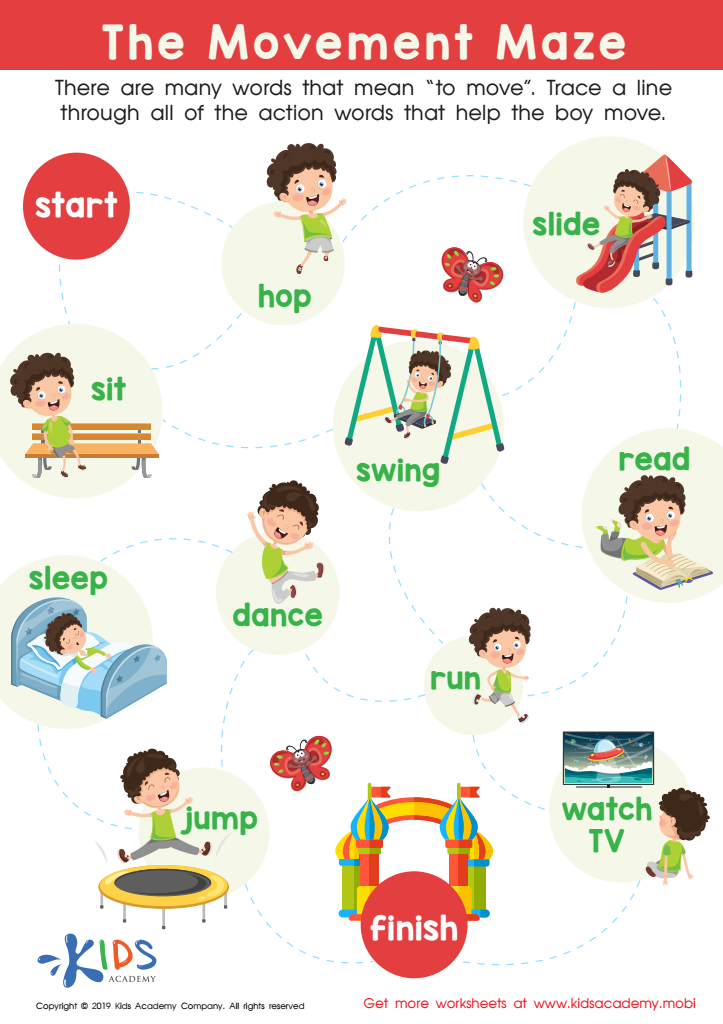
The Movement Maze Worksheet
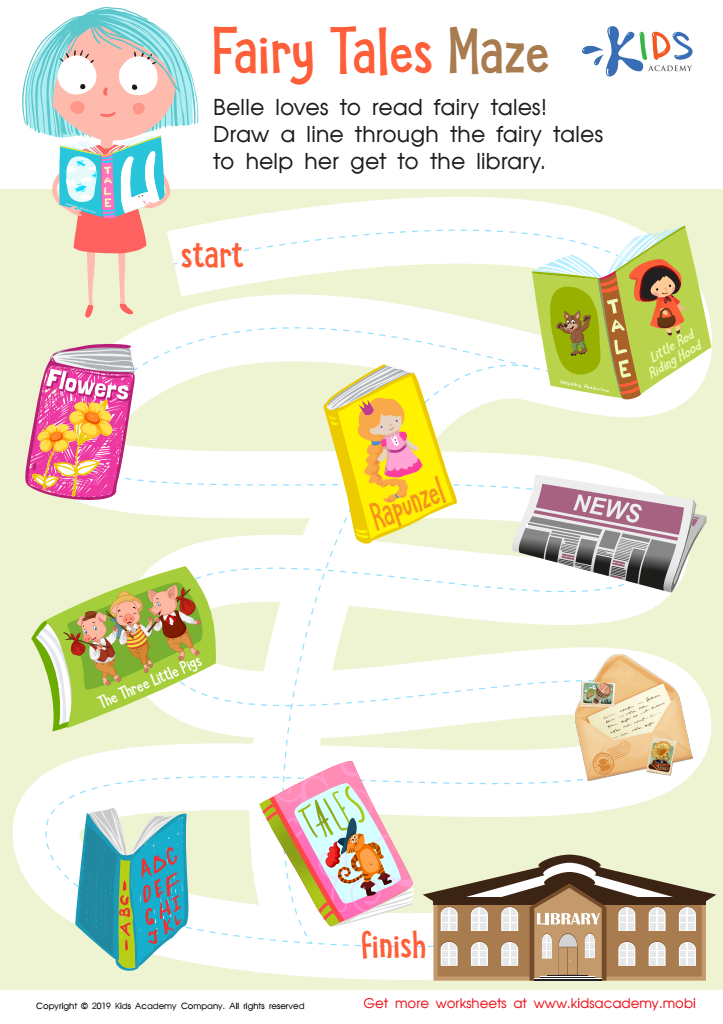
Fairy Tales Maze Worksheet



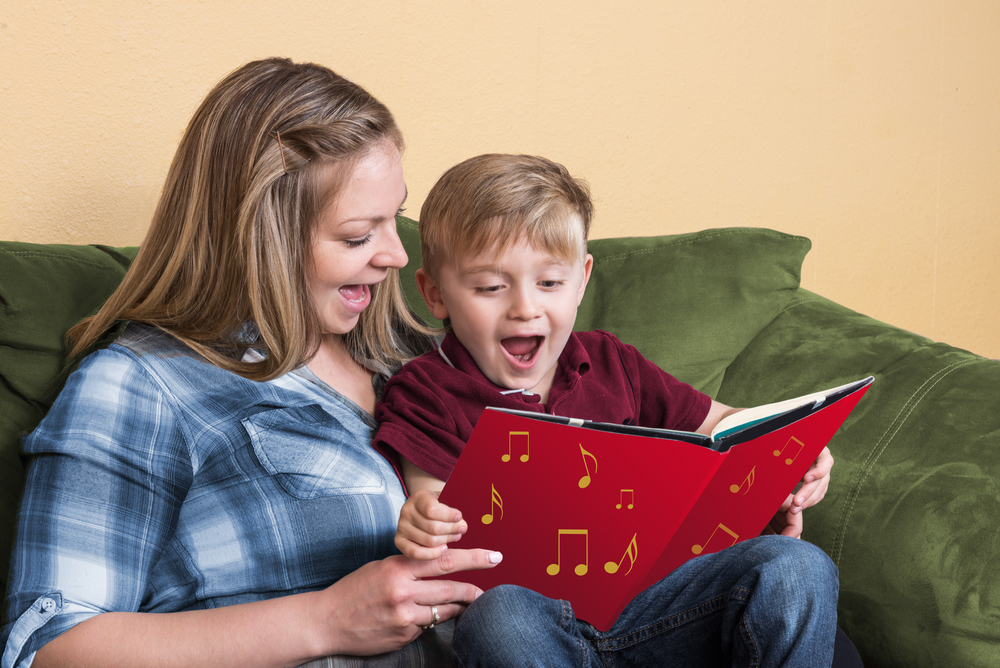


Spatial awareness is a crucial skill for young children, especially those aged 4 to 5, as it lays the foundation for math, reading, and everyday problem-solving. During this stage, kids start to understand how objects relate to each other in space, which enhances their ability to navigate their environment and carry out tasks like following instructions or predicting outcomes.
For parents and teachers, fostering spatial awareness helps children develop critical thinking and creativity. Activities that promote spatial skills, such as building blocks, puzzles, and educational games, encourage exploration and play, making learning enjoyable. By engaging with children in these activities, adults can reinforce concepts while also nurturing their curiosity.
Moreover, strong spatial awareness contributes to academic success. Research shows that children with developed spatial skills tend to perform better in subjects like mathematics and science. This aptitude can also enhance reading comprehension, as it helps children visualize stories and understand plots.
Ultimately, supporting spatial awareness in young children not only boosts their intellectual abilities but also builds confidence and prepares them for future challenges. Investing time in these skills is vital for every child's growth and learning journey.








