
Letter recognition Normal Alphabet Coloring Pages Worksheets for Ages 4-6
7 filtered results
Difficulty Level
Grade
Age
-
From - To
Subject
Activity
Standards
Discover our fun and educational Letter Recognition Normal Alphabet Coloring Pages Worksheets for Ages 4-6. Perfectly designed for early learners, these printable worksheets will help your child identify and recognize letters through engaging coloring activities. Watch as your little one develops fine motor skills and a strong foundation in literacy while enjoying creative play. These worksheets combine visual learning with interactive fun to ensure your child thrives in their early education journey. Download now and make learning an enjoyable experience for your preschoolers!
Favorites
With answer key
Interactive
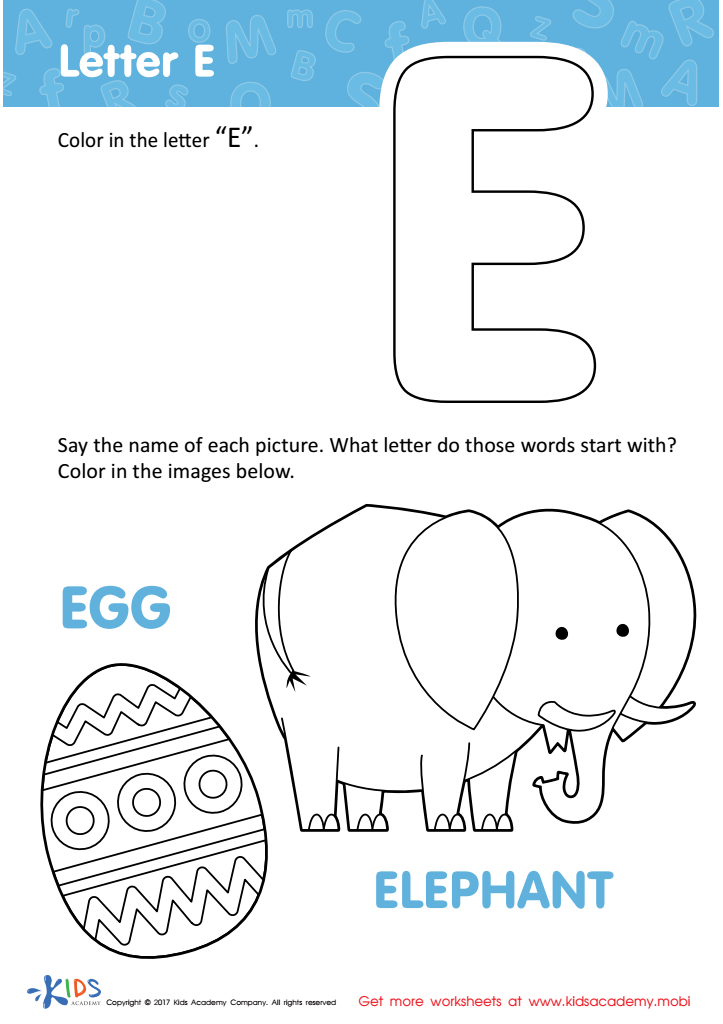
Letter E Coloring Sheet
Coloring pages are great for teaching kids the alphabet and words! This "E" page features a cute elephant and Easter egg. Kids will love it and learn the letter "E" at the same time. 80 words
Download (PDF)
 Assign to My Students
Assign to My Students
Letter E Coloring Sheet
Worksheet
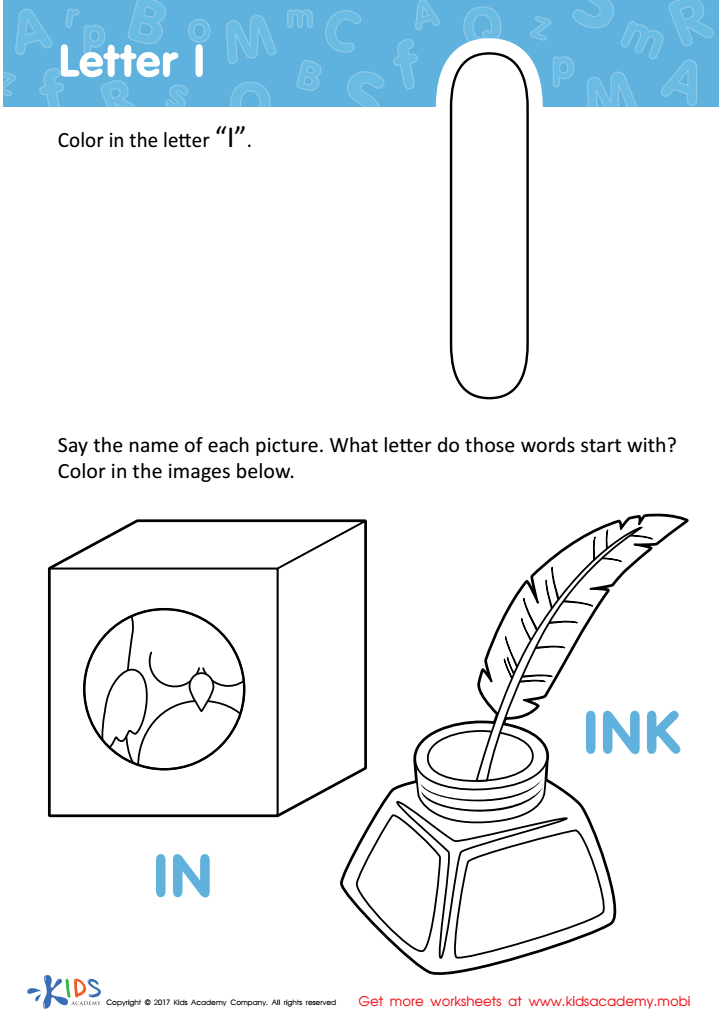
Letter I Coloring Sheet
This coloring page helps your child recognize the letter "I" and the positional word "in". It also introduces them to sight words, enhancing language skills. It's great for teaching parts of speech and boosting your little learner's confidence!
Download (PDF)
Assign to My Students
Assign to My Students
Letter I Coloring Sheet
Worksheet
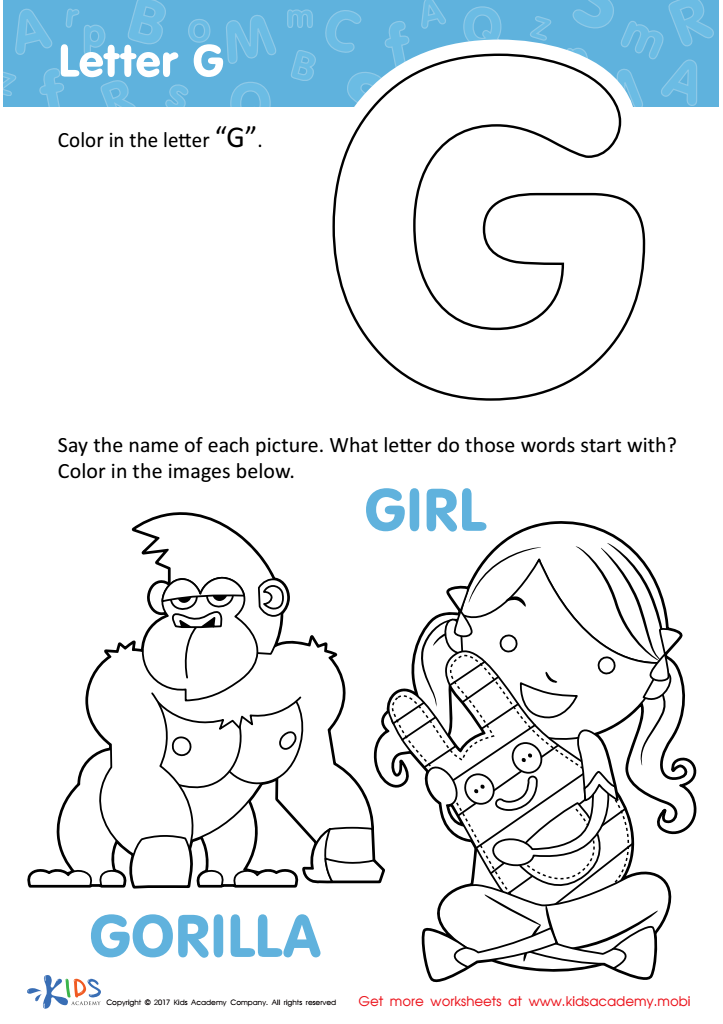
Letter G Coloring Sheet
This "G" coloring page encourages creativity and teaches kids the letter "G" sound. With its fun visuals and familiar words, it's sure to excite your child. Plus, you can talk about the letter’s sound with the pictures given.
Download (PDF)
Assign to My Students
Assign to My Students
Letter G Coloring Sheet
Worksheet
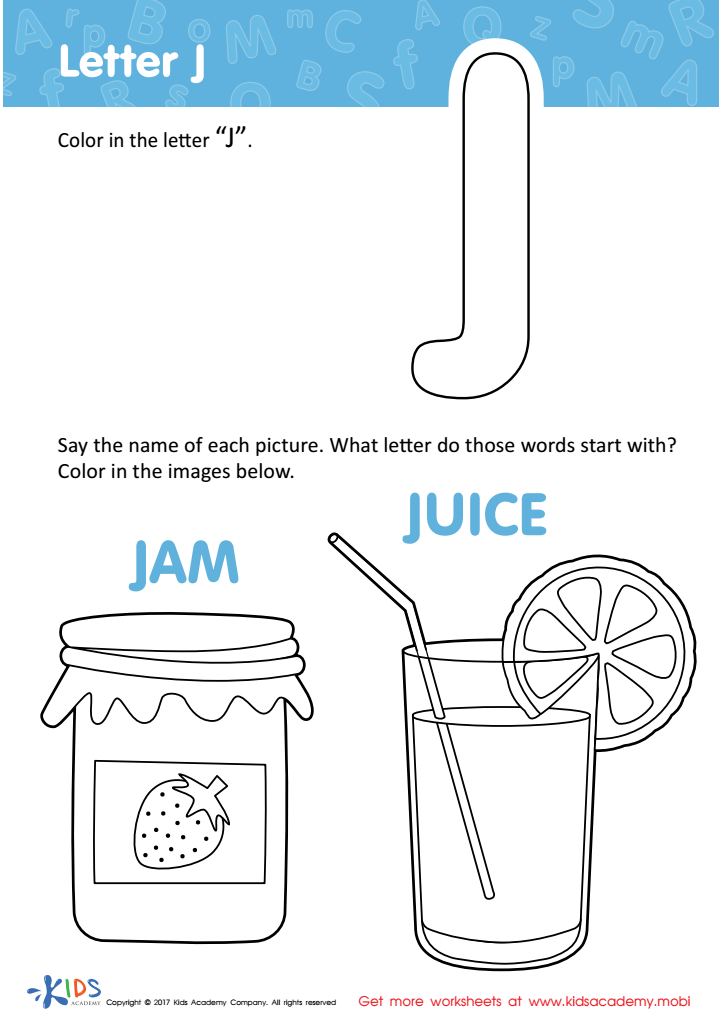
Letter J Coloring Sheet
Practice the letter 'J' with your little one with this fun coloring page! Pictures of jar, juice, jam and jelly make it an enjoyable experience for kids. Learning the letter and coloring is fun for even the youngest learners.
Download (PDF)
Assign to My Students
Assign to My Students
Letter J Coloring Sheet
Worksheet
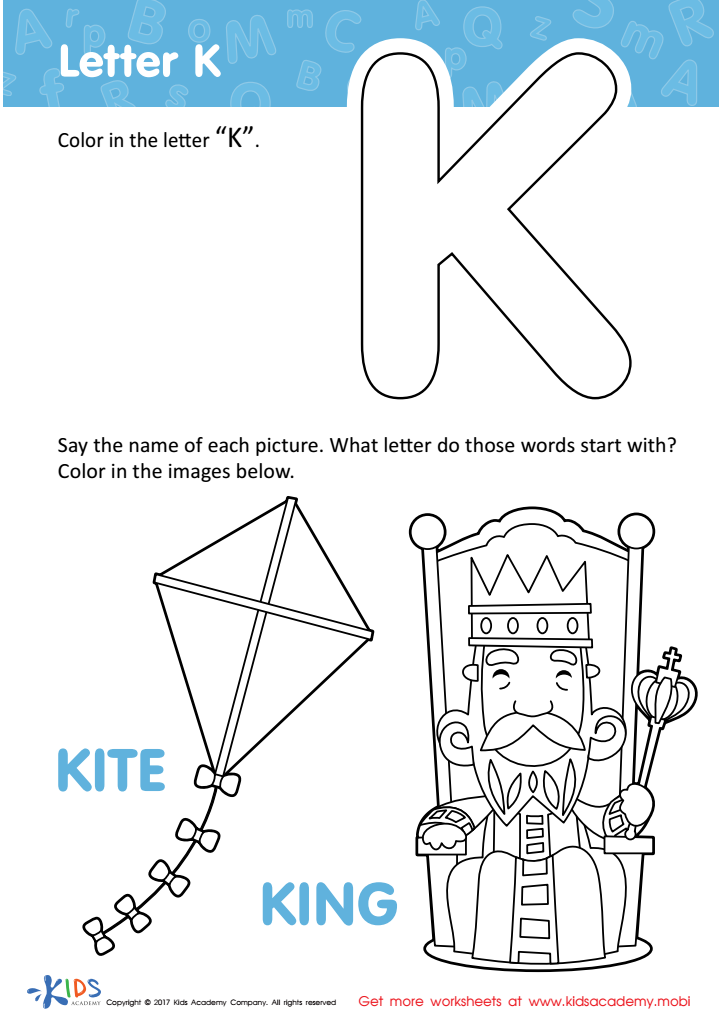
Letter K Coloring Sheet
This letter K coloring page captivates your child's creativity while learning the letter! Showcasing a king and kite, common words for their age group, it's sure to spark their imagination.
Download (PDF)
Assign to My Students
Assign to My Students
Letter K Coloring Sheet
Worksheet
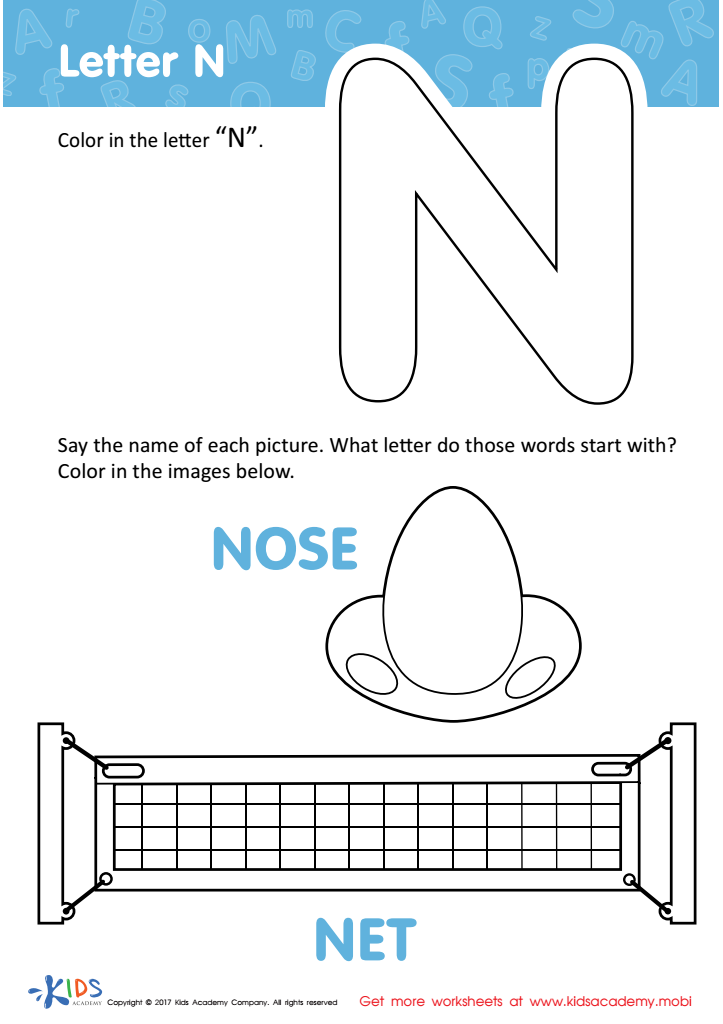
Letter N Coloring Sheet
Let your child get creative and learn the alphabet with this letter "N" coloring page! It's a fun way to recognize the letter, featuring a body part all kids know. Coloring and reinforcing recognition of "N" will help your child have fun while learning!
Download (PDF)
Assign to My Students
Assign to My Students
Letter N Coloring Sheet
Worksheet
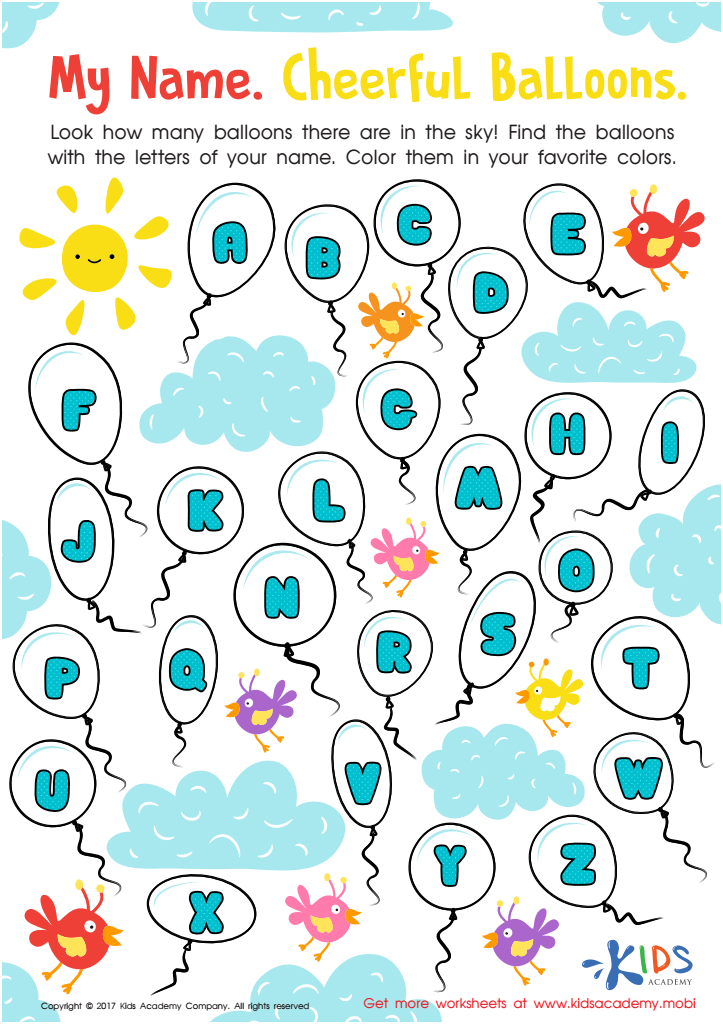
My Name: Cheerful Balloons Worksheet
Encourage toddlers and preschoolers to soar with this fun worksheet! Find the letters in the balloons and help your child find the letters of their name. Then, fill in each balloon with their favorite colors and turn the paper over to write their name on the back. A great way to give imaginations wings!
Download (PDF)
Assign to My Students
Assign to My Students
My Name: Cheerful Balloons Worksheet
Worksheet
Join Kids Academy for Free
Who is primarily going to use this learning content?





Parents and teachers should care about letter recognition coloring pages for children ages 4-6 because they provide an educational yet entertaining approach to early literacy skills. At this developmental stage, children are highly visual and learn best through interactive and engaging activities. Normal Alphabet Coloring Pages help to reinforce letter identification, which is a foundational skill for reading and writing. As children color each letter, they become more familiar with its shape and learn to distinguish it from others, an essential step toward effective decoding and encoding in the literacy process.
Furthermore, these coloring activities can enhance fine motor skills as children learn to control crayons and stay within lines. This increased dexterity is crucial for writing. When parents or teachers guide children through these exercises, they can also introduce phonics concepts by associating each letter with its sound, further strengthening their language development.
In addition, coloring together can be a bonding experience, promoting positive attitudes toward learning. It allows for conversations about colors, letters, and associated words, enriching vocabulary. Given that letter recognition predicts future reading success, incorporating alphabet coloring pages into an early learning routine is a valuable, cost-effective tool that holistically supports a child’s educational growth.







