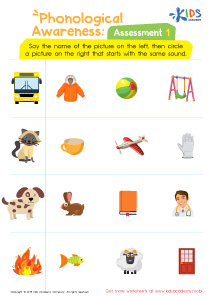
Reading readiness Normal Beginning Sounds Worksheets for Ages 4-6
3 filtered results
-
From - To
Discover our "Reading Readiness Normal Beginning Sounds Worksheets" designed for children ages 4-6. These engaging printables provide a fun and interactive way for young learners to explore and understand beginning sounds, an essential phonics skill for reading development. Each worksheet is carefully crafted to encourage active participation and promote sound recognition through vibrant images and simple activities. Perfect for both classroom settings and at-home learning, these worksheets will help your child build confidence in their reading abilities while honing their listening skills. Equip your budding reader with the tools they need for literacy success—start their reading journey today!
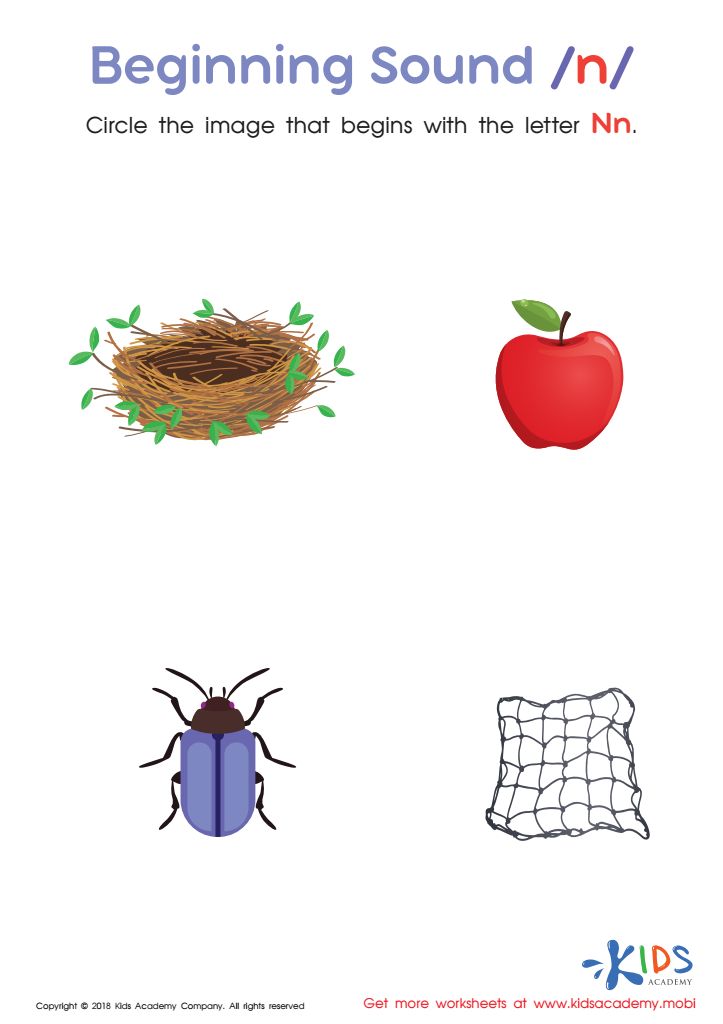
Beginning Sound «n» Worksheet
 Assign to My Students
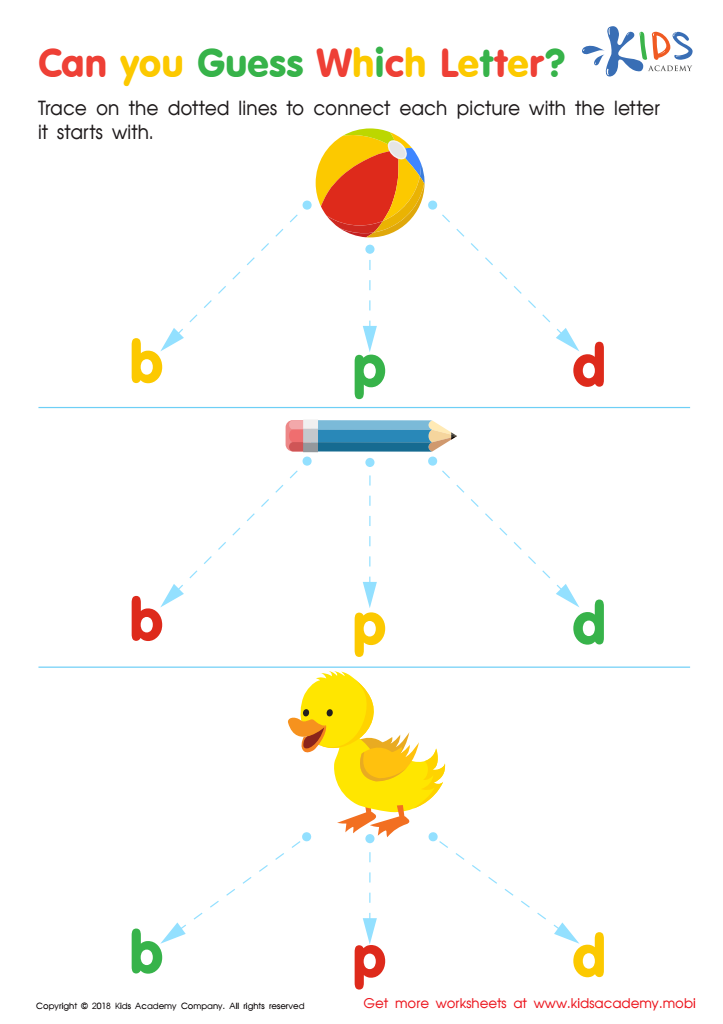
Can you Guess Which Letter? Worksheet
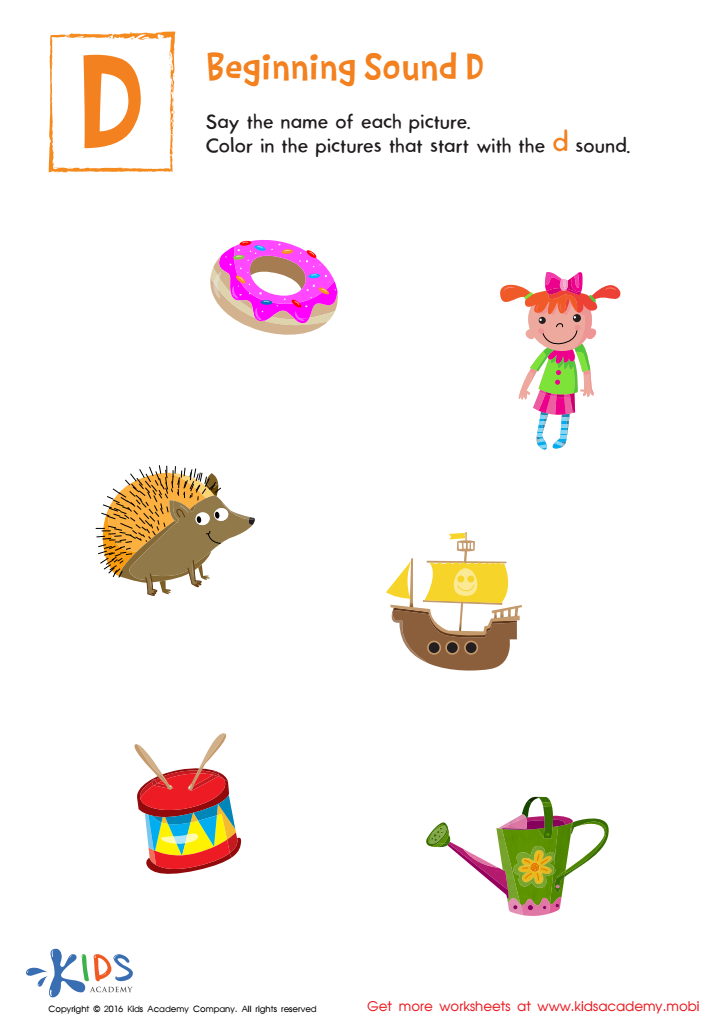
Beginning Sound D Worksheet








Reading readiness, particularly the ability to recognize normal beginning sounds, is crucial for children aged 4-6 as it lays the foundation for effective literacy skills. At this developmental stage, children are honing their phonemic awareness, which is the understanding that words are made up of individual sounds, or phonemes. Notably, focusing on beginning sounds helps children connect sounds to letters, making it easier for them to decode and spell words later on.
When parents and teachers emphasize normal beginning sounds, they aid in children's overall language development. This awareness enhances vocabulary, listening skills, and reading comprehension. As children learn to identify and produce sounds, they become more confident in their reading abilities, leading to a positive attitude towards literature. Furthermore, mastery of these skills encourages children to enjoy reading, which is essential for lifelong learning.
By investing time in activities that promote beginning sound recognition—like rhyming games or sound-based story sessions—adults nurture a child's literacy journey, making reading an integral part of their daily lives. Ultimately, fostering early reading readiness not only benefits the child academically but also supports their self-esteem and love of learning, helping them thrive in their educational journey.