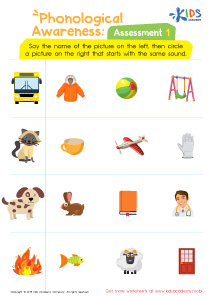
Vocabulary expansion Normal Beginning Sounds Worksheets for Ages 4-6
5 filtered results
-
From - To
Enhance your child's vocabulary with our engaging Normal Beginning Sounds Worksheets, specially designed for ages 4-6. These worksheets promote phonetic awareness by introducing children to the sounds that begin various words, laying the foundation for effective reading and language skills. Each worksheet is filled with colorful illustrations and fun activities that make learning exciting. By engaging with these exercises, your child will explore new vocabulary while strengthening their understanding of letter-sound relationships. Perfect for home or classroom use, these resources help young learners build confidence in their reading abilities and embrace a lifelong love of language. Explore our collection today!
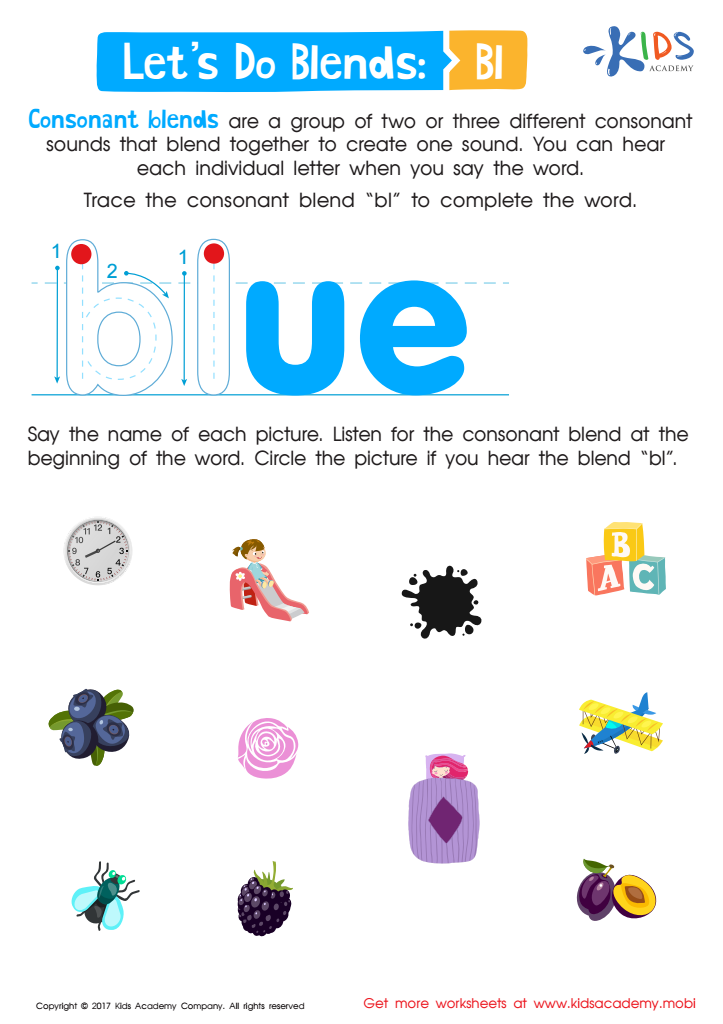
Beginning Blends: "Bl" Words Worksheet
 Assign to My Students
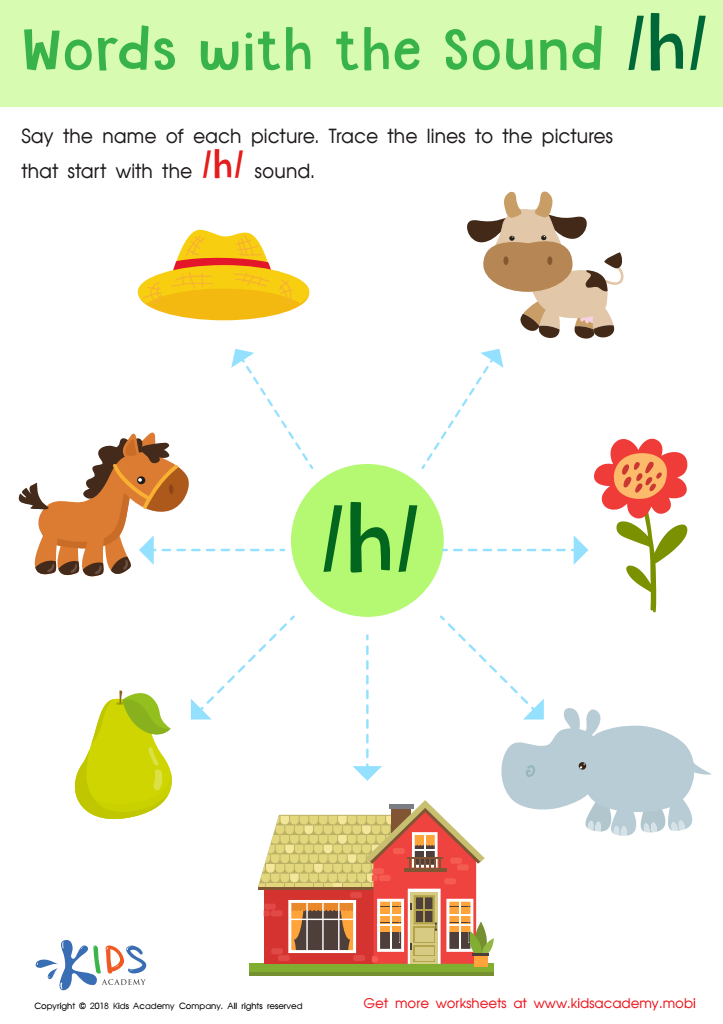
Words with sound h Reading Worksheet
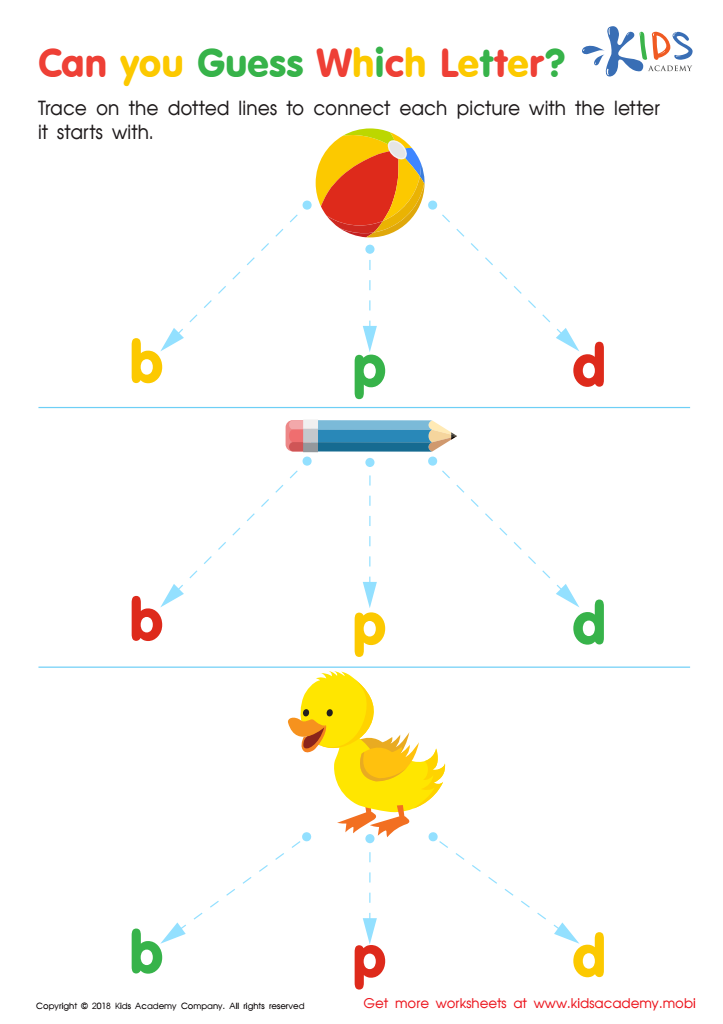
Can you Guess Which Letter? Worksheet
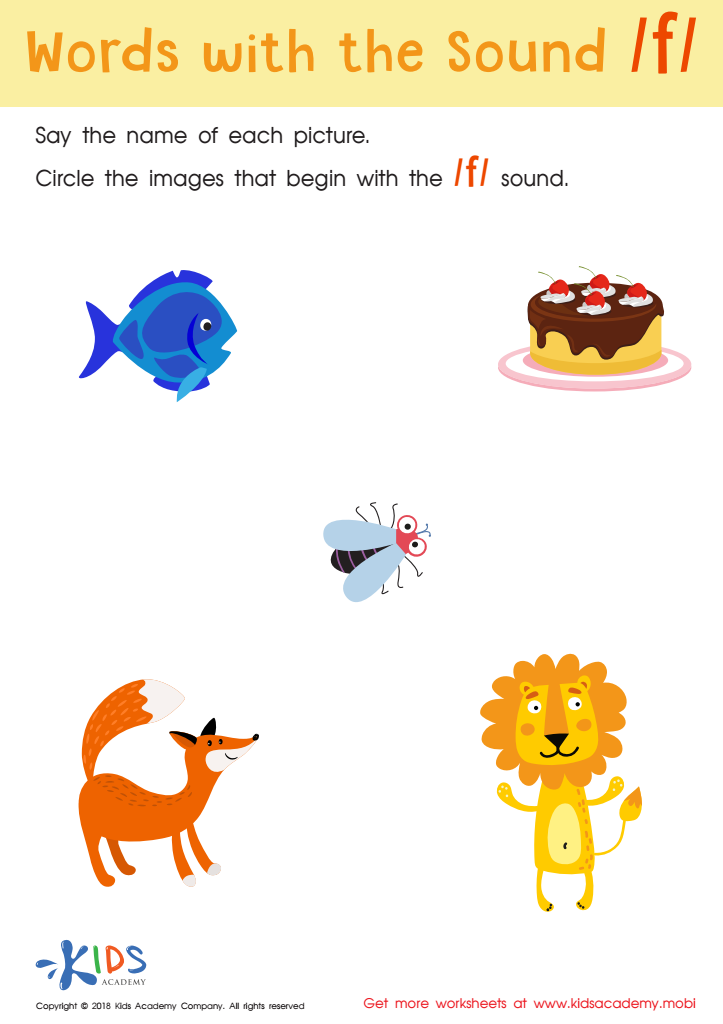
Words with sound f Reading Worksheet
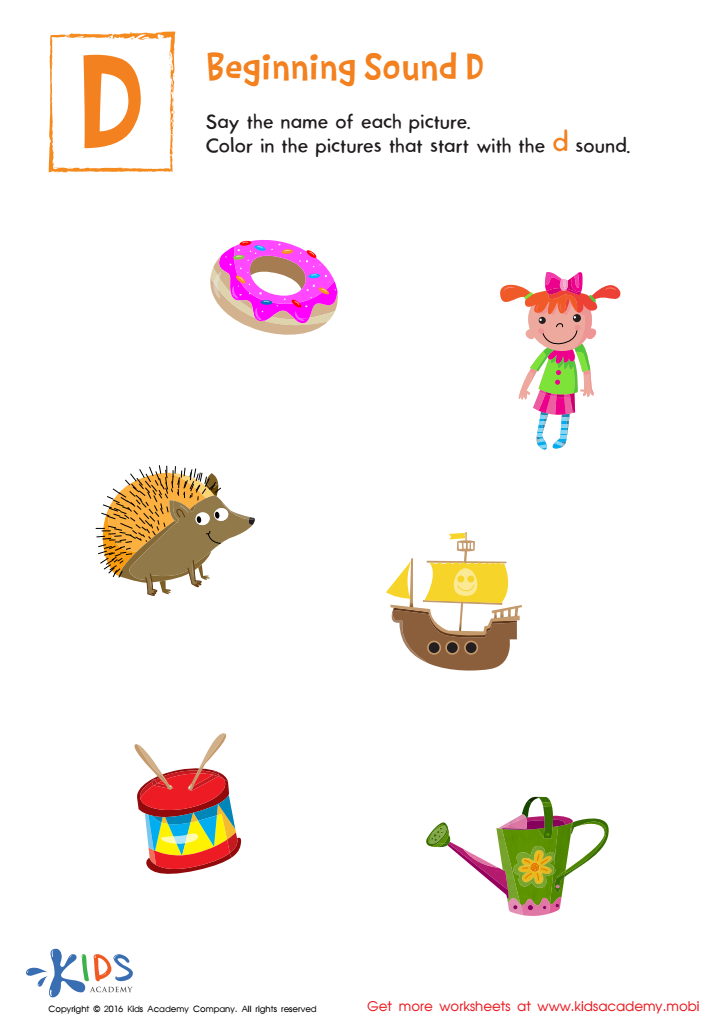
Beginning Sound D Worksheet








Vocabulary expansion, particularly in developing normal beginning sounds, is crucial for children aged 4-6 because it lays the foundation for their reading and language skills. During these formative years, children are rapidly acquiring language, and their ability to understand and use sounds is instrumental for word recognition and phonics. When parents and teachers focus on normal beginning sounds, they help children differentiate between various phonetic components of words, which is essential for successful literacy development.
Enhanced vocabulary through sound recognition not only aids in reading but also boosts children's confidence in expressing themselves verbally. As they learn to articulate and grasp new words, their overall communication skills improve, allowing them to participate more fully in conversations, storytelling, and social interactions. This is important for both cognitive and emotional development.
Moreover, vocabulary and sound recognition can ignite a child’s curiosity and passion for learning. Interactive and playful approaches to teaching vocabulary sound can captivate young minds, making learning enjoyable. By prioritizing vocabulary expansion during this critical age, parents and teachers can ensure that children are equipped with essential skills that support a lifelong love for learning and effective communication. Investing in these areas fosters literacy and success in both academic and social spheres.