Alphabet understanding Normal Letter Recognition Worksheets for Ages 4-6
5 filtered results
-
From - To
Discover our engaging Alphabet Understanding Normal Letter Recognition Worksheets, designed specifically for children ages 4-6! These interactive activities help young learners master letter recognition through fun and educational exercises. Kids will enjoy identifying, tracing, and coloring letters, promoting essential skills for their reading journey. Each worksheet is tailored to enhance fine motor skills and boost confidence in letter familiarity, setting the foundation for early literacy. Ideal for parents and teachers alike, these worksheets can be easily printed and integrated into any curriculum. Help your child develop a strong understanding of the alphabet and pave the way for a lifelong love of learning!
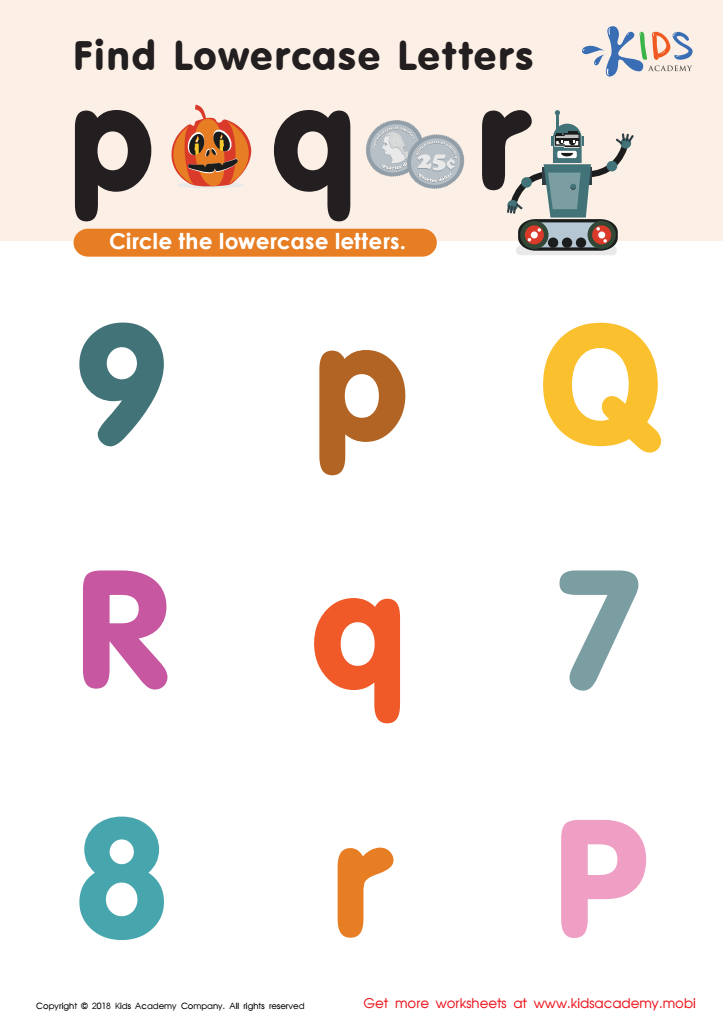
Find lowercase Letters p q r Worksheet
 Assign to My Students
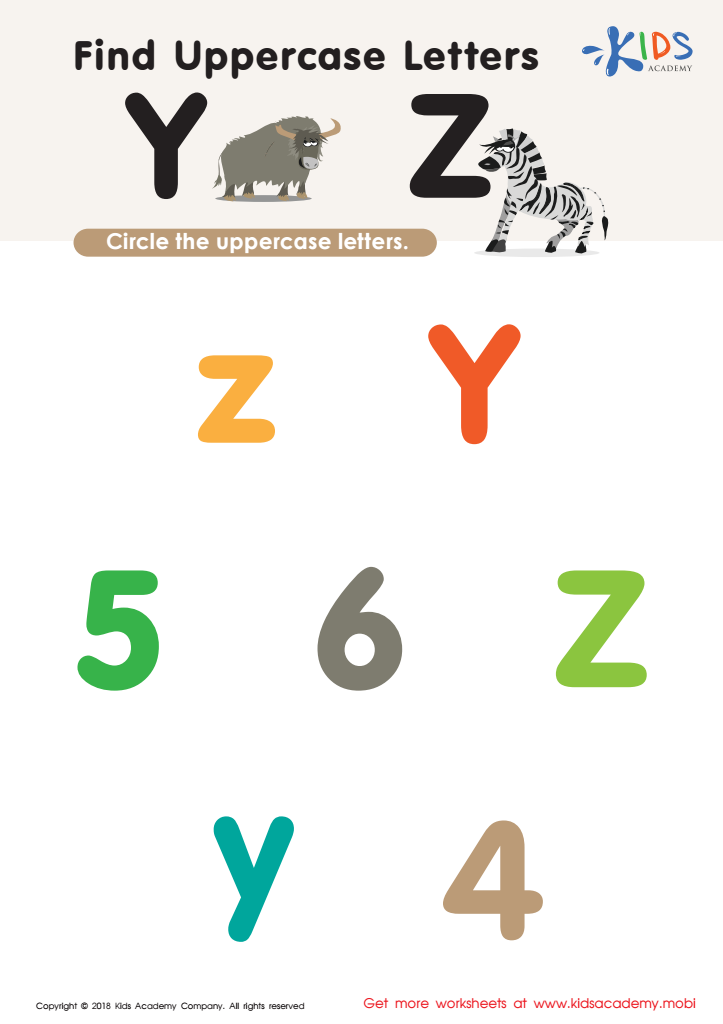
Find Uppercase Letters Y Z Worksheet
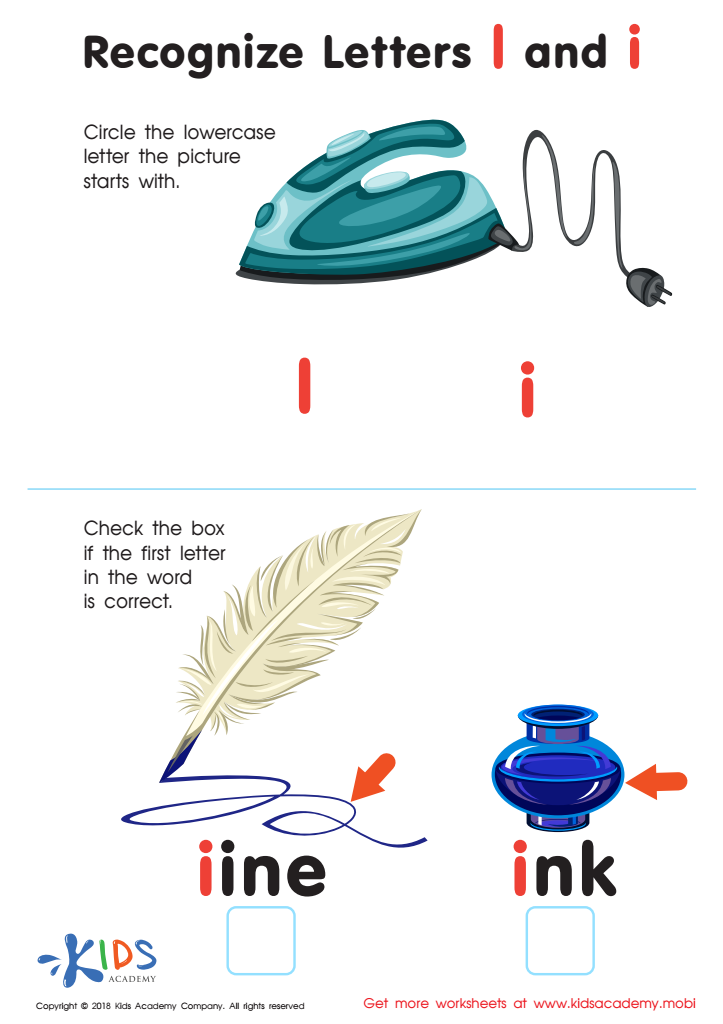
Recognize Letters l and i Worksheet
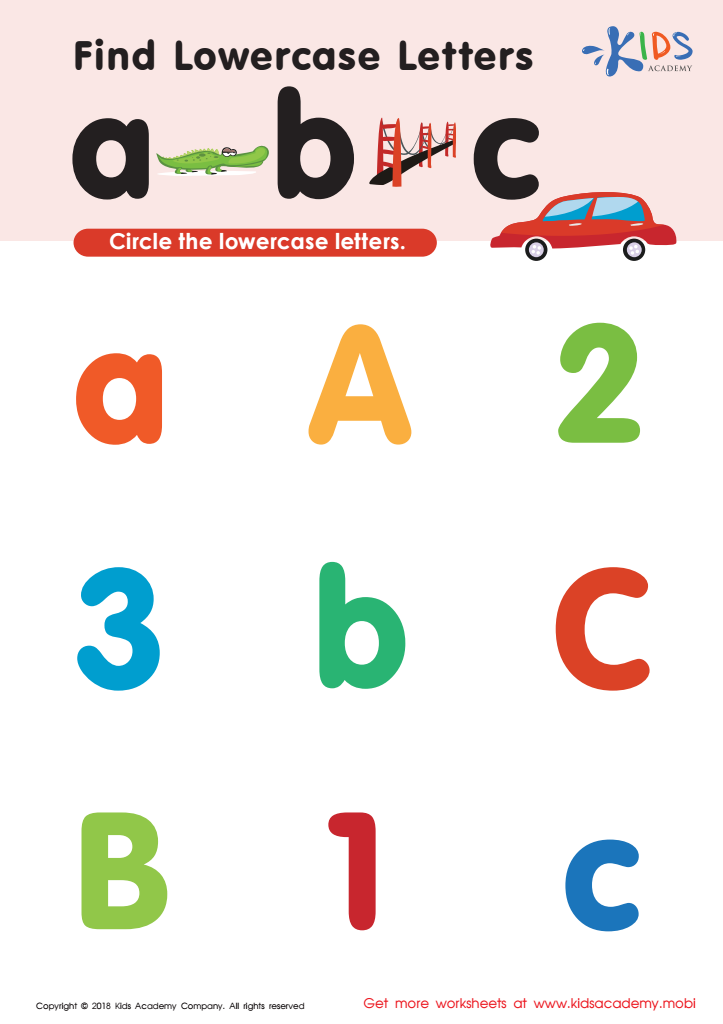
Find lowercase letters a b c Worksheet
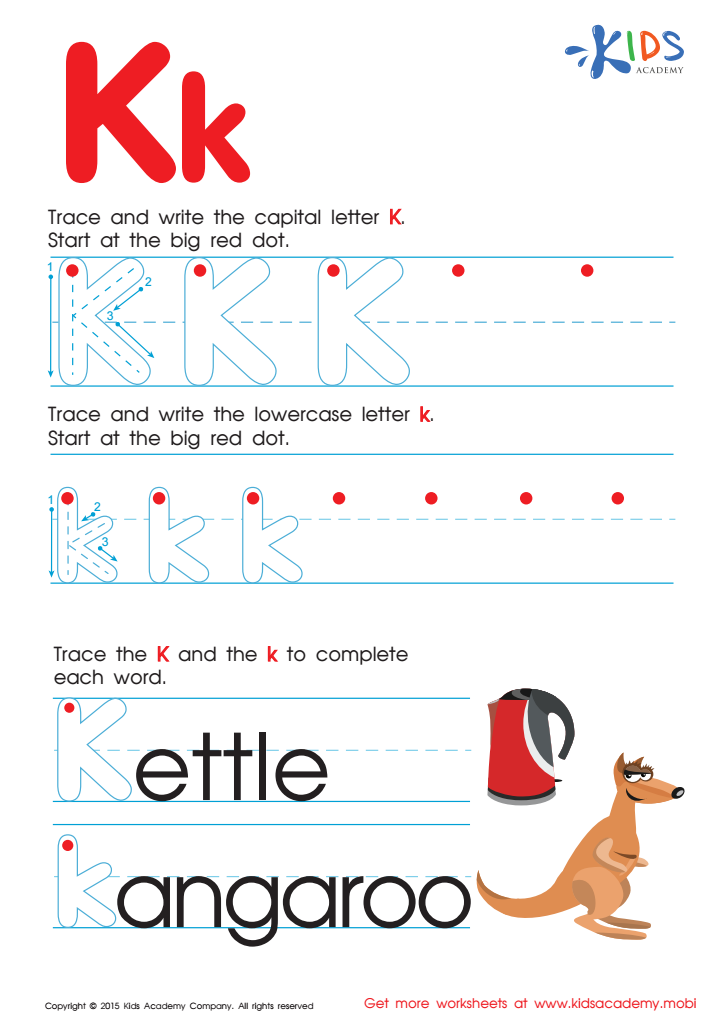
Letter K Tracing Page








Alphabet understanding and normal letter recognition are foundational skills crucial for children aged 4-6 as they embark on their literacy journey. During these formative years, children develop the cognitive and linguistic abilities necessary to decode and understand written language. Recognizing letters is an essential stepping stone that leads to reading and writing proficiency, which are vital for academic success.
Teachers and parents play a pivotal role in nurturing these skills. By fostering letter recognition, they help children identify letters in different contexts, making real-world connections and enhancing their vocabulary. This engagement builds not only cognitive skills but also confidence and enthusiasm for learning.
Moreover, strong alphabet knowledge supports the development of phonemic awareness, making the transition to reading more seamless. Early letter recognition correlates with long-term literacy outcomes, reducing the risk of delays in reading comprehension and writing skills as children progress through their education.
By prioritizing alphabet understanding, teachers and parents create a rich, supportive environment that enables children to thrive. Ultimately, investing in these early literacy skills lays the groundwork for a lifetime of learning and communication, ensuring that children are well-prepared for future academic challenges.








