Fine motor skills development Normal Letter Recognition Worksheets for Ages 4-6
3 filtered results
-
From - To
Enhance your child's fine motor skills while promoting letter recognition with our expertly designed worksheets for ages 4-6. These fun and engaging activities not only teach children the alphabet but also foster important hand-eye coordination and dexterity. Through tracing, coloring, and interactive projects, your little ones will develop the foundational skills they need for writing and other essential tasks. Each worksheet is crafted to make learning enjoyable, ensuring that children stay focused and motivated. Perfect for homeschoolers or classroom enrichment, our printable worksheets provide a valuable resource for early education. Download them today to give your child a head start in literacy and motor skill development!
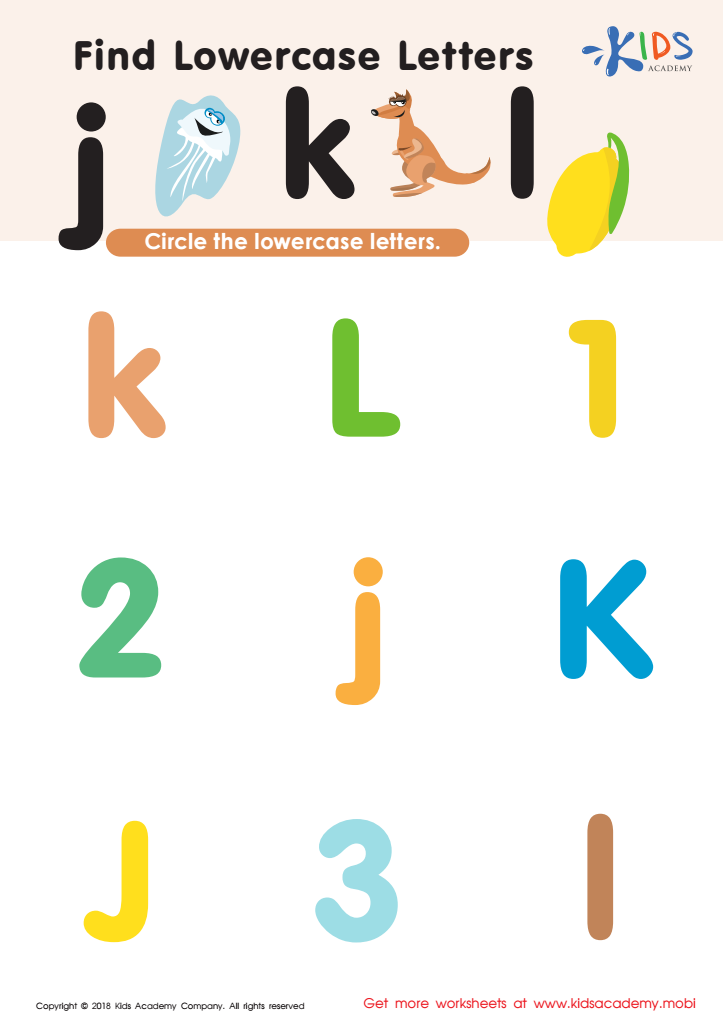
Find Lowercase Letters j k l Worksheet
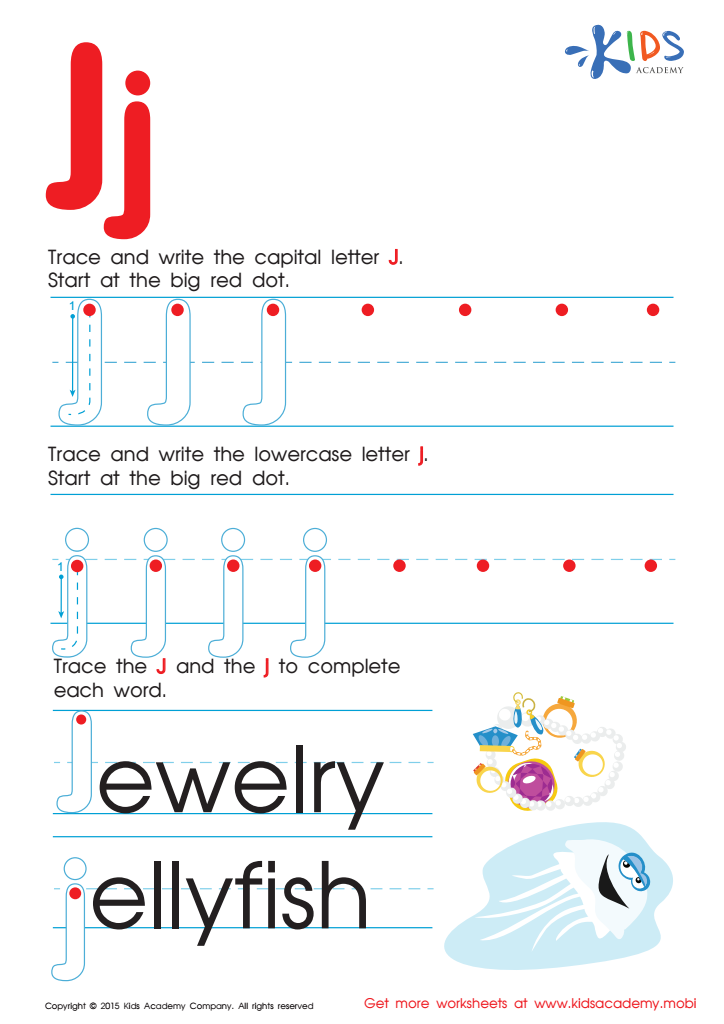
Letter J Tracing Page
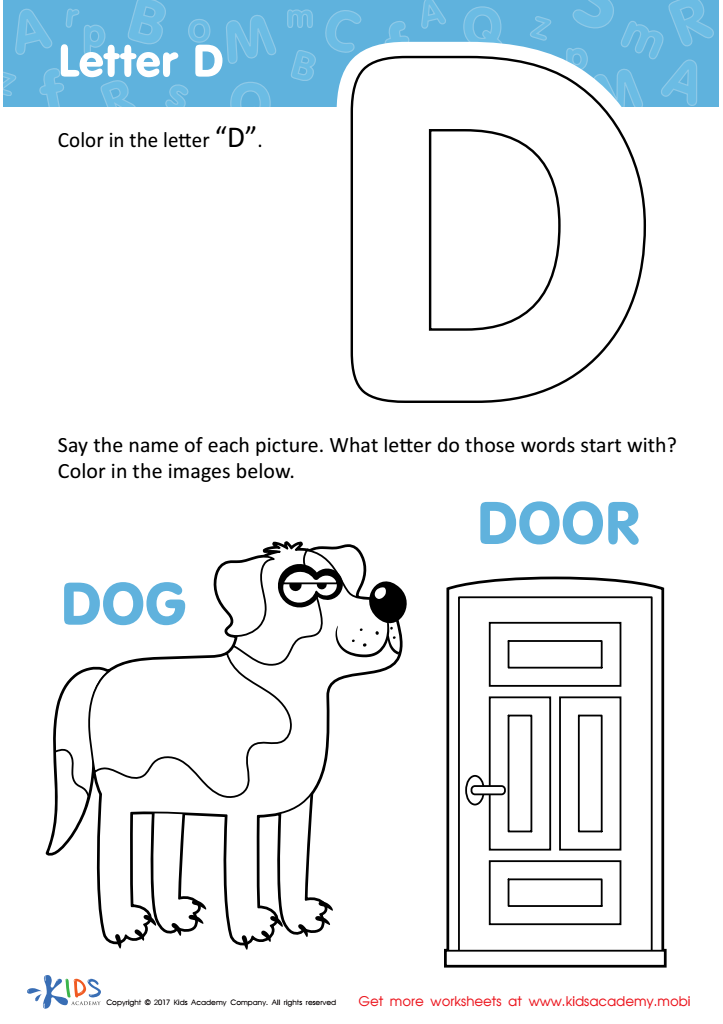
Letter D Coloring Sheet
 Assign to My Students








Fine motor skills and letter recognition are critical developmental milestones for children ages 4-6. These skills form the foundation for more complex learning tasks and everyday activities. Parents and teachers should care about fine motor skills development because they enable children to perform necessary tasks, such as writing, tying shoelaces, and using utensils. Developing these skills boosts children's independence and confidence, equipping them with essential tools for school readiness and life.
Similarly, normal letter recognition is vital during these formative years. Recognizing letters is a precursor to reading, which is crucial for academic success. When children can identify letters, they can understand basic phonics, which helps with spelling, writing, and reading fluency. Strong letter recognition fosters a love of reading, cultivates curiosity, and enhances cognitive skills, establishing a strong literacy foundation.
Incorporating fine motor skill activities and letter recognition games into daily routines makes learning enjoyable and engaging. By focusing on these areas, parents and teachers actively contribute to building competent, confident learners who are better positioned to tackle future academic challenges. Investing time in these developmental aspects ultimately leads to improved educational outcomes and a lifelong appreciation for learning.








